
Electoral Process – SS2 Government Lesson Note (First Term)
Download this term · ₦1,000Lesson note at a glance
- Subject
- Government
- Class
- SS2
- Term
- First Term
- Topic
- Electoral Process
- Order
- Topic 1 of 8 this term
- Reading time
- 6 min
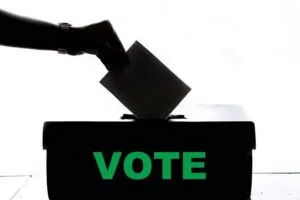
An election is the process by which citizens choose people to hold offices in government through voting.
Behavioural objectives
By the end of the lesson, students should be able to:
- define an election;
- state the functions and advantages of elections;
- state the demerits of elections;
- list the main stages of the electoral process;
- distinguish between direct and indirect elections;
- state the advantages and demerits of direct and indirect elections.
What is an election?
An election is the act of choosing candidates for different offices in government through the ballot.
- Representation: the candidates represent the people in parliament or other government positions.
- Competition: political parties or groups contest for political power.
- Ballot: the vote of the people, which gives the winner the electorate’s mandate.
- Electorate: all citizens who are qualified to vote.
- Mandate: the authority given to a winner by the voters to govern on their behalf.
What are the stages of the electoral process?
The electoral process is the series of steps through which an election is organised, from registration of voters to the declaration of results.
- Delimitation: the electoral body divides the country into constituencies, wards and polling units.
- Registration of voters: qualified citizens are placed on the voters’ register.
- Party primaries and nomination: parties choose their candidates and submit their names to the electoral body.
- Campaigns: candidates and parties present their manifestoes to the voters.
- Voting: voters are checked at the polling unit and cast their ballots in secret.
- Counting and announcement: votes are counted and results are announced.
- Declaration of the winner: the candidate with the required votes is declared elected.
- Petitions: a candidate who disputes the result may challenge it in an election tribunal or court.
What are the types of election by purpose?
There are five common types of election by purpose: general election, by-election, primary election, run-off election and referendum.
- General election: held at regular intervals to fill many or all elective offices.
- By-election: held to fill a seat that becomes vacant between general elections, for example through death or resignation.
- Primary election: held within a party to choose its candidate for an office.
- Run-off election: a second round held when no candidate meets the required votes in the first round.
- Referendum: a vote by the electorate on a single issue, such as a proposed law.
What are the functions and advantages of elections?
Elections allow citizens to choose their leaders and hold the government accountable.
- Choosing representatives: citizens select those who will represent their interests and opinions in government.
- Change of government: power changes hands smoothly and in an orderly way.
- Legitimacy: the government is accepted as the true representative of the people.
- Responsiveness: the government pays attention to the needs of the people, since it can be voted out.
- Political education: parties teach the people about national issues during campaigns.
- Test of popularity: elections show how popular the government or a member of parliament is.
- Integration: elections bring together people from different societies.
- Socialisation: elections teach people political values and how to take part in government.
What are the demerits of elections?
The demerits of elections are the problems and weaknesses that can arise from the way elections are held.
- Polarisation: elections split the people of a country into antagonistic groups.
- Disunity: the division caused by elections weakens unity in the country.
- High cost: elections are too expensive to conduct.
- Neglect of minorities: minority groups are usually not favoured.
- Uneven development: areas that did not vote for the party in power may be neglected.
- Nepotism, divisionism and ethnocentrism: elections can encourage favouritism for relatives and ethnic groups.
- False promises: some politicians win by deceiving people with fake manifestoes and sweet words.
What are direct and indirect elections?
There are two methods of election: direct election and indirect election.
What is a direct election?
A direct election is a method in which the electorate casts votes directly for the people who will represent them.
- Who votes: only qualified voters take part.
- Offices filled: members of the legislature and other offices in government.
- Principle: one man, one vote.
What are the advantages of direct election?
- Freedom of choice: voters elect members of the legislature without interference.
- Representative government: it is a requirement of representative government.
- Political equality: every citizen has one vote.
- Interest in government: voters know their representatives and follow government affairs more closely.
- Popular choice: elected representatives are usually the choice of the people.
What are the demerits of direct election?
- Poor political knowledge: many voters may not vote wisely because they lack political education.
- Hatred and embarrassment: direct voting may create bad feeling between supporters of rival candidates.
- Violence: the large number of people involved can lead to violence at polling.
- Rigging: there is much rigging, since this is the final election that chooses the representatives.
- Vote buying: wealthy and corrupt candidates may buy votes, especially in poor societies.
What is an indirect election?
An indirect election is a method in which representatives are chosen in two or more stages by an Electoral College that votes for the people.
- Who votes: a smaller body of electors, called the Electoral College.
- Stages: the people choose the electors, and the electors choose the representatives.
What are the merits of indirect election?
- Competent electors: the electors who finally select the legislators are experienced and informed.
- Less violence: it is calmer than a direct election.
- Better-qualified candidates: informed electors tend to choose more qualified people.
- Lower cost: it is less expensive and gives little room for rigging and malpractice.
- Better governance: qualified legislators improve the quality of laws and administration.
What are the demerits of indirect election?
- Bribery: the Electoral College can easily be influenced with money.
- Unequal representation: some interests may not be adequately represented in the legislature.
- Unknown representatives: the people do not know their representatives, and the result may not reflect popular choice.
- Policies against public wishes: the masses cannot choose the manifestoes they prefer.
- Less democratic: it does not give equal votes, since the people do not vote directly.
What is the difference between direct and indirect election?
| Point | Direct election | Indirect election |
|---|---|---|
| Who votes | All qualified voters | Members of an Electoral College |
| Number of stages | One | Two or more |
| Equality of votes | One man, one vote | People do not vote equally for the final choice |
| Cost | Expensive | Less expensive |
| Violence and rigging | More likely | Less likely |
| Link to voters | Voters know their representatives | Voters may not know their representatives |
| Main weakness | Vote buying by wealthy candidates | Bribery of the electors |
Evaluation
- Define an election.
- State four functions of elections.
- State four demerits of elections.
- What is the difference between direct and indirect election?
- Give two advantages of direct election and two demerits of indirect election.
Assignment
- Explain three advantages of indirect election.
- Explain three demerits of direct election.
This term's Government topics
SS2 First Term · 8 topics
Get Government as PDF and Word
Every week of SS2 Government, First Term, formatted and ready to print. Ad-free, and the copy lock comes off.
Get this term Card, bank transfer, USSD or OPay
SS2 Government Lesson Notes for Other Topics
Franchise/Suffrage
Read the full lesson note.

Types Of Electoral Systems
Read the full lesson note.

Electoral Commission And Officials
Read the full lesson note.
Public Opinion
Read the full lesson note.

Public Administration
Read the full lesson note.
Local Government
Read the full lesson note.
Public Corporations
Read the full lesson note.
Pre colonial Administration
Read the full lesson note.
Colonial Administration (British Colonial Administration)
Read the full lesson note.
Nationalism
Read the full lesson note.

Constitutional Development In Nigeria
Read the full lesson note.
Constitutional Development II
Read the full lesson note.
Constitutional Development III
Read the full lesson note.
Independence And Post Independence Constitution (1960 & 1963)
Read the full lesson note.
Independence And Post Independence Constitution 2nd Republic
Read the full lesson note.
Lesson Notes for Other Classes

SS1 Lesson Note
The complete lesson note to guide your studies.

SS3 Lesson Note
The complete lesson note to guide your studies.
