
Constitutional Development II – SS2 Government Lesson Note (Second Term)
Lesson note at a glance
- Class
- SS2
- Subject
- Government
- Term
- Second Term
- Reading time
- 9 min
Constitutional development in Nigeria is the series of changes made to the country’s constitution under British rule.
- Covered in this note: Richard’s Constitution of 1946, the Macpherson Constitution of 1951, the 1953 London conference and the 1954 Lagos conference.
- Overall effect: together they moved Nigeria towards federalism and greater self-government.
Behavioural objectives
By the end of the lesson, students should be able to:
- State the aims and main features of Richard’s Constitution of 1946.
- Give the merits and demerits of Richard’s Constitution.
- Describe the main features of the Macpherson Constitution of 1951.
- Give the merits and demerits of the Macpherson Constitution.
- List the agreements reached at the 1953 and 1954 constitutional conferences.
What are the key terms in this topic?
These are the words students must know before studying the constitutions.
- Constitution: the body of rules by which a country is governed.
- Regionalism: dividing a country into regions, each with its own administration.
- Federalism: a system in which power is shared between a central government and regional governments.
- Franchise: the right to vote.
- Veto: the power to reject a decision or law.
- Bi-cameral legislature: a law-making body with two chambers, such as a House of Assembly and a House of Chiefs.
- Official members: members of a council who were colonial government officials.
- Non-official (unofficial) members: members who were not colonial government officials.
- Ex-officio member: a person who sits in a council because of the office he holds.
- Derivation: sharing revenue according to the region where it was produced.
What was Richard’s Constitution of 1946?
Richard’s Constitution was the constitution introduced by Governor Sir Arthur Richard, which came into force on 1 January 1947.
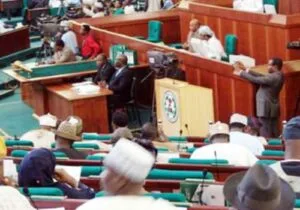
How did Richard’s Constitution come about?
- Background: Sir Bernard Bourdillon was governor of Nigeria during the Second World War (1939-45).
- Bourdillon’s work: before he retired, he had almost concluded a constitution that proposed regionalism.
- Richard’s work: his successor, Sir Arthur Richard, used those proposals to draft his own constitution.
- 6 March 1946: Richard presented it to the Legislative Council of Nigeria.
- 2 August 1946: it became a constitution.
- 1 January 1947: it came into force.
- Purpose: to promote the unity of Nigeria and give Nigerians a greater part in their own affairs.
What were the aims and objectives of Richard’s Constitution?
- To create a regional council for each of the three regions of north, west and east, that is, regionalism.
- To promote the unity of Nigeria.
- To allow greater participation of Nigerians in their affairs.
- To introduce a legislative council that would accommodate every section of the Nigerian people.
- To divide the country into three administrative units: north, east and west.
- To create constitutional and political links between the native authorities and the legislative council.
What were the features of Richard’s Constitution?
- The Executive Council: the central executive council had Richard as its president and was dominated by Europeans.
- The Legislative Council: the Governor was the president and the council sat in Lagos. It allowed wider representation of Nigerian interests. Its 44 members are shown in the table below.
- Voting qualification: only male adults who had lived in the area for 12 months and had a gross income of £50 per annum could vote.
- Regional Houses of Assembly: members were elected by the native authorities. Regional assembly members then elected members of the Central Legislative Council through electoral colleges.
- The elective principle: it was kept, with a limited franchise of 3 representatives from Lagos and 1 from Calabar.
- One legislature: it brought the North and South together under one legislature.
- Dual membership: members of the Central Legislative Council were also members of the Regional Council.
- Executive Council: Nigerians were in the minority in the Central Executive Council.
- Regionalism: the Eastern, Western and Northern provinces became regions.
Make-up of the Legislative Council under Richard’s Constitution
| Type of member | Number | How they came |
|---|---|---|
| Non-official | 9 | North |
| Non-official | 6 | West |
| Non-official | 5 | East |
| Non-official | 4 | Nominated to represent commerce, banking and mining |
| Non-official | 4 | Elected directly: 3 from Lagos and 1 from Calabar |
| Official | 16 | 13 ex-officio and 3 nominated |
| Total | 44 | 28 non-official (majority) and 16 official (minority) |
What were the merits of Richard’s Constitution?
- It brought the North and South together in one legislature, which laid the foundation for national unity.
- Nigerians formed the majority in the legislature for the first time, though in an unofficial capacity.
- It introduced a bi-cameral legislature in the North, and so introduced bi-cameralism in Nigeria.
- It introduced regionalism, which was a good achievement of the constitution.
- It laid the foundation for federalism and a federal constitution in Nigeria.
What were the demerits of Richard’s Constitution?
- The executive council was still dominated by Europeans, just as in Clifford’s Constitution.
- It divided the country into three unequal parts, as the northern region was larger than the western and eastern regions put together.
- The three regions followed the lines of the three major ethnic groups, which fanned tribalism and sectionalism.
- The £50 income requirement and the restriction to male adults disenfranchised many Nigerians.
- Regionalism entered Nigerian politics through this constitution and has remained a problem.
- The Governor’s veto power made a mockery of the non-official majority in the legislative council.
- The franchise was limited to Lagos and Calabar, while other bigger towns were left out.
- Nationalists rejected it because Nigerians were not consulted during the drafting.
- The government held power over the legislative and executive councils, which made it autocratic.
- Nationalists called the traditional chiefs who were unofficial members puppets of the colonial government, because the constitution reinforced indirect rule.
What was the Macpherson Constitution of 1951?
The Macpherson Constitution was the constitution introduced by Governor Sir John Macpherson in 1951 to correct the weaknesses of Richard’s Constitution.
Why was the Macpherson Constitution introduced?
- Weaknesses of Richard’s Constitution: it had failed to satisfy Nigerians.
- Weakened imperial powers: anti-colonial activities had weakened the colonial powers.
- De-mystification of white superiority: Nigerians no longer saw Europeans as superior.
- Macpherson’s review: he became Governor in 1948 and reviewed the 1946 Constitution to avoid its mistakes.
- Conferences: constitutional conferences held in many parts of the country led to the 1951 Constitution.
What were the features of the Macpherson Constitution?
- The central legislative council: it was renamed the House of Representatives, with the Governor as president. Its make-up is shown in the table below.
- The Central Executive Council: it became the Council of Ministers, with the Governor as president, 6 official members and 12 ministers (4 from each region).
- Ministers: they were in charge of government departments and were appointed by the Governor on the recommendation of the regional legislature.
- The regional legislatures: the Northern and Western regions each had a bi-cameral legislature, a House of Assembly and a House of Chiefs. The Eastern region had only a House of Assembly.
- Regional law-making: the regions could make laws on limited matters such as local matters, native courts and health.
- Regional Executive Council: each region had one, with the Lieutenant Governor as president, 5 official members and 9 ministers. They advised the Governor, who could accept or reject their advice.
- Lagos: the colony of Lagos became part of the Western region.
- Regions: the three provinces were renamed the Western, Eastern and Northern regions.
- Lieutenant Governors: the three chief commissioners, one for each province, were renamed Lieutenant Governors.
Make-up of the House of Representatives, 1951
| Type of member | Number | How they came |
|---|---|---|
| Ex-officio | 6 | Held office in the colonial government |
| Representative | 68 | North, through the regional house |
| Representative | 34 | West, through the regional house |
| Representative | 34 | East, through the regional house |
| Special | 6 | Nominated by the Governor |
The 68, 34 and 34 representative members make a total of 136.
What were the merits of the Macpherson Constitution?
- Nigerians took part in making the constitution through constitutional conferences.
- A new central law-making body, the House of Representatives, was introduced.
- The regions were given more powers and made autonomous.
- It played a great role in the realisation of self-government.
- The motion for self-government was moved in the House of Representatives and discussed at the 1953 London constitutional conference.
- It allowed an increase in elected majorities in both the central and regional legislatures.
- It encouraged the true spirit of federalism by dividing powers between the central government and the regions.
What were the demerits of the Macpherson Constitution?
- It did not provide for the posts of prime minister and premier.
- It gave ministers no real ministerial responsibility. They only acted as spokesmen of their ministries in the legislature.
- It vested too many powers in the Governor.
- The regions’ law-making powers were limited, as their laws had to be approved before they could operate.
- No single party had a majority in the House of Representatives, so the Council of Ministers was not sure of its policies.
- It failed to grant political independence to Nigeria, as the nationalists demanded.
What was agreed at the constitutional conference of 1953?
The 1953 conference was the London meeting that redrew Nigeria’s constitution after the Macpherson Constitution broke down.
Why was the 1953 conference held?
- Defects: the defects of the Macpherson Constitution led to its breakdown.
- Announcement: on 21 May 1953, the Secretary of State for the Colonies, Oliver Lyttelton, told the British House of Commons that the Nigerian Constitution would be redrawn.
- Aim: to provide for greater autonomy.
- Dates: the conference sat between 30 July and 22 August 1953.
What agreements were reached in 1953?
- A federal system of government should be established.
- The regional Lieutenant Governors should be called Governors, while the Governor of Nigeria should be called Governor-General.
- Legislative power should be shared between the federal government and the regions.
- Lagos should be separated from the Western region and made a neutral federal territory.
- A conference to be held in Lagos in 1954 should ratify a separate regional administration in the Cameroons, if the people of the territory expressed their desire through a referendum.
- Her Majesty’s government would grant self-government in 1956 to those regions which desired it.
What was agreed at the Lagos constitutional conference of 1954?
The 1954 Lagos conference was the meeting that settled issues left over from the 1953 conference.
- Date: it met in Lagos on 19 January 1954.
- Revenue: financial resources were to be shared between the federal and regional governments on the principle of derivation.
- Judiciary: the judiciary should be regionalised.
- Police: the police force should be regionalised.
- Southern Cameroons: autonomy should be granted to it. It would remain part of Nigeria’s federation as a quasi-federal territory, with a legislature of its own.
Evaluation
- State four aims of Richard’s Constitution of 1946.
- Give four demerits of Richard’s Constitution.
- Describe the make-up of the House of Representatives under the Macpherson Constitution.
- List four agreements reached at the 1953 constitutional conference.
- What was agreed about the judiciary and the police force at the 1954 Lagos conference?
Assignment
Answer both parts in your notebook.
- Give five merits of the Macpherson Constitution of 1951.
- Explain two reasons why the nationalists rejected Richard’s Constitution.
This term's Government topics
SS2 Second Term · 8 topics
- Pre Colonial Administration
- Colonial Administration (British Colonial Administration)
- Nationalism
- Constitutional Development in Nigeria
- Constitutional Development II
- Constitutional Development III
- Independence and Post Independence Constitution (1960 & 1963)
- Independence and Post Independence Constitution 2nd Republic
SS2 Government Lesson Notes for Other Topics
Pre colonial Administration
Read the full lesson note.
Colonial Administration (British Colonial Administration)
Read the full lesson note.

Nationalism
Read the full lesson note.

Constitutional Development In Nigeria
Read the full lesson note.
Constitutional Development III
Read the full lesson note.
Independence And Post Independence Constitution (1960 & 1963)
Read the full lesson note.
Independence And Post Independence Constitution 2nd Republic
Read the full lesson note.
Electoral Process
Read the full lesson note.

Franchise/Suffrage
Read the full lesson note.

Types Of Electoral Systems
Read the full lesson note.

Electoral Commission And Officials
Read the full lesson note.

Public Opinion
Read the full lesson note.

Public Administration
Read the full lesson note.

Local Government
Read the full lesson note.

Public Corporations
Read the full lesson note.
Lesson Notes for Other Classes

SS1 Lesson Note
The complete lesson note to guide your studies.

SS3 Lesson Note
The complete lesson note to guide your studies.
