
Nigeria’s Foreign Policy – SS3 Government Lesson Note (First Term)
Lesson note at a glance
- Class
- SS3
- Subject
- Government
- Term
- First Term
- Reading time
- 6 min
Foreign policy is the set of decisions and actions a state takes to pursue its national interest in its dealings with other countries.
Behavioural objectives
By the end of the lesson, students should be able to:
- define foreign policy and national interest;
- state the aims and objectives of Nigeria’s foreign policy;
- list the phases of Nigeria’s foreign policy since independence;
- describe the main features of Nigeria’s foreign policy under each government from 1960 to 1999;
- state the benefits and negative effects of interactions among nations.
What is foreign policy?
Foreign policy is the course of action a state adopts to achieve its national interest in the international system.
- Policymakers: the government officials who decide the country’s actions towards other states.
- Main task: to promote the national interest of the country.
- Main target: to influence the decisions and actions of other nations.
What is national interest?
National interest is the set of goals a country wants to achieve or protect in its relations with other countries.
- Security: protecting the lives of citizens and the borders of the country.
- Economic wellbeing: trade, investment and development of the economy.
- Prestige: respect and influence among other nations.
- Promotion of values: peace, justice and the welfare of citizens at home and abroad.
What are the aims and objectives of Nigeria’s foreign policy?
The aims and objectives of Nigeria’s foreign policy were first identified by the Prime Minister, Alhaji Tafawa Balewa, and enunciated by Gen. Olusegun Obasanjo. They are listed below.
- To promote the national interest of the country and its citizens.
- To promote friendship and co-operation among nations.
- To uphold the principle of non-alignment with any power bloc.
- To respect the sovereign equality of all nations.
- To defend the sovereignty, independence and territorial integrity of Nigeria.
- To defend and promote world peace.
- To assist African states in search of solutions to their problems.
What are the instruments of foreign policy?
Instruments of foreign policy are the means a state uses to carry out its foreign policy.
- Diplomacy: negotiation through ambassadors, high commissioners and embassies.
- Treaties and agreements: written pacts with other states on trade, defence or co-operation.
- International organisations: membership of bodies such as the United Nations, African Union, ECOWAS and the Commonwealth.
- Economic measures: aid, trade agreements and loans.
- Peacekeeping: sending troops to restore peace, as Nigeria did through ECOMOG.
How has Nigeria’s foreign policy developed since independence?
Nigeria’s foreign policy has changed from one government to another because each military or civilian administration differed in ideology, style and the personality of its leaders.
What are the phases of Nigeria’s foreign policy?
There are nine phases of Nigeria’s foreign policy between 1960 and 1999.
- The Balewa Era (1960-1966)
- Gowon Era (crisis and civil war period, 1966-1970)
- Gowon Era (post-war era, 1970-1975; reconciliation, reconstruction and rehabilitation)
- Murtala/Obasanjo Era (1975-1979)
- The Second Republic Era (1979-1983)
- Buhari/Idiagbon Era (1983-1985)
- Babangida’s Era (1985-1993)
- Shonekan/Abacha’s Era (1993-1998)
- Abubakar Era (1998-1999)
What were the features of the Balewa era (1960-1966)?

- Non-alignment: the government pursued a policy of non-alignment.
- Decolonisation: it was involved in the decolonisation of Africa.
- Africa-centred policy: Africa was recognised as the centrepiece of Nigeria’s foreign policy.
- Break with France: it broke diplomatic ties with France over the testing of an atomic bomb in the Sahara Desert.
- South Africa: it supported the expulsion of South Africa from the Commonwealth in 1961.
What were the features of the Gowon era (1966-1975)?
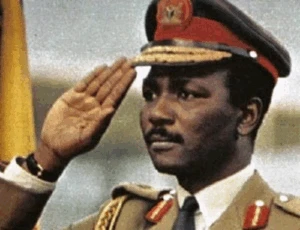
- Shift in direction: Nigeria’s foreign policy shifted from the West to the East.
- The 3Rs: the administration applied Reconciliation, Reconstruction and Rehabilitation after the Civil War.
- Non-interference: it accepted the principle of non-interference in the affairs of African states.
- ECOWAS: it played an important role in the establishment of ECOWAS.
What were the features of the Murtala/Obasanjo era (1975-1979)?

- Decolonisation: the regime favoured decolonisation and self-determination of African states.
- Anti-apartheid: it supported the struggle against apartheid in Africa.
- Angola: it recognised the MPLA government in Angola in 1975.
- Home policy: it launched a national agricultural programme, Operation Feed the Nation (O.F.N.), in 1976.
What were the features of the Shagari era (1979-1983)?

- Zimbabwe: the administration supported Zimbabwe’s independence.
- Lack of dynamism: the period saw little energy and radicalism in Nigeria’s foreign policy.
- Financial mismanagement: the regime was accused of mismanaging the country’s economic resources.
What were the features of the Buhari era (1983-1985)?

- Expulsion of aliens: the regime expelled West Africans living illegally in the country.
- Relations with Britain: relations with Britain were badly affected.
- Anti-apartheid: the administration kept a strong stand against South Africa’s apartheid.
What were the features of the Babangida era (1985-1993)?
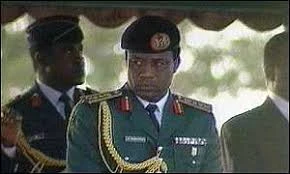
- Return to the front: the regime tried to bring Nigeria back to the forefront of international relations.
- Toxic waste: it led a campaign against the dumping of toxic and radioactive waste in Africa.
- Economic diplomacy: it introduced economic diplomacy into foreign policy.
- ECOWAS: Nigeria was committed to a functional ECOWAS.
- Peacekeeping: Nigeria became very active in conflict resolution and peacekeeping, which led to the setting up of the ECOWAS Monitoring Group (ECOMOG).
What were the features of the Shonekan/Abacha era (1993-1998)?
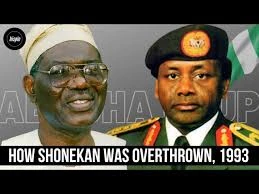
- Liberia: the administration helped to restore peace in Liberia.
- Confrontation: the regime took a confrontational posture towards the international community.
- Human rights: it was accused of abuse of human rights, so Nigeria was suspended from the Commonwealth.
What were the features of the Abubakar era (1998-1999)?

- Reconciliation: the administration adopted a policy of reconciliation.
- Release of prisoners: those imprisoned under Abacha regained their freedom.
- Transition: a transition programme to civilian rule was announced and carefully carried out.
What are the benefits of interactions among nations?
Interactions among nations are the political, economic and cultural dealings between countries, and they bring many benefits.
- Trade: countries sell what they have in excess and buy what they lack, as Nigeria sells crude oil.
- Technology transfer: countries share skills, machines and new ideas.
- Peace and security: co-operation and treaties reduce the chance of war.
- Cultural exchange: countries learn from each other’s languages, music, food and education.
- Aid: countries receive help in times of disaster, disease or hardship.
What are the negative effects of interactions among nations?
Interactions among nations can also harm a country, especially a weaker one.
- Exploitation: powerful nations may take unfair advantage of weaker ones in trade.
- Cultural erosion: foreign values can replace local languages and customs.
- Dumping: weaker nations may receive poor goods or toxic waste.
- Interference: strong states may meddle in the affairs of weaker states.
- Spread of disease and crime: free movement of people can spread diseases and international crime.
Evaluation
- State four benefits of interactions among nations.
- State three negative effects of interactions among nations.
- What is foreign policy?
- State four aims and objectives of Nigeria’s foreign policy.
- Name the Nigerian government that introduced economic diplomacy.
Assignment
Describe four features of Nigeria’s foreign policy under the Balewa administration (1960-1966).
This term's Government topics
SS3 First Term · 8 topics
SS3 Government Lesson Notes for Other Topics
Military In Nigeria
Read the full lesson note.

Conflict Resolution And Management
Read the full lesson note.

Peace Education
Read the full lesson note.

The Interdependence Of Nations And Globalisation
Read the full lesson note.
International Organisation - United Nations
Read the full lesson note.
International Organisation II - African Union
Read the full lesson note.

International Organisation III - Commonwealth of Nations:
Read the full lesson note.

International Organization - ECOWAS
Read the full lesson note.
Organization of Petroleum Exporting Countries (OPEC)
Read the full lesson note.
Millennium Development Goals (MDG) & New Economic Partnership for Economic Development(NEPAD)
Read the full lesson note.

E- Government and Leadership and Followship.
Read the full lesson note.
Lesson Notes for Other Classes

SS1 Lesson Note
The complete lesson note to guide your studies.

SS2 Lesson Note
The complete lesson note to guide your studies.
