
International Organisation III: Commonwealth of Nations: – SS3 Government Lesson Note (First Term)
Lesson note at a glance
- Class
- SS3
- Subject
- Government
- Term
- First Term
- Reading time
- 5 min
The Commonwealth of Nations is a voluntary association of independent countries, most of which were formerly British colonies.
Behavioural objectives
By the end of the lesson, students should be able to:
- define the Commonwealth of Nations;
- describe how the Commonwealth began;
- state the conditions for membership;
- list the features of Commonwealth member nations;
- state the aims and objectives of the Commonwealth.
What is the Commonwealth of Nations?
The Commonwealth of Nations is a voluntary association of independent countries made up of Britain and most of its former colonies.
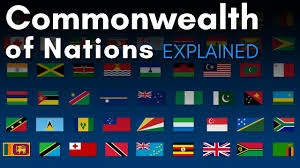
- Membership: countries join and stay by choice, and each member is fully independent.
- Head: the British monarch is the symbolic Head of the Commonwealth. Queen Elizabeth II held the position until 2022, and King Charles III is now Head.
- Headquarters: Marlborough House, London, which is also the base of the Commonwealth Secretariat.
- Size: there are now 56 member nations.
- Non-member: the United States of America was a British colony but is not a member.
Which countries are members of the Commonwealth?
Members come from Africa, Asia, the Americas, the Pacific and Europe.
| Region | Examples |
|---|---|
| Africa | Nigeria, Ghana, Sierra Leone, Kenya, Tanzania, Uganda, Zambia, South Africa |
| Asia | India, Pakistan, Bangladesh, Malaysia |
| North America and Caribbean | Canada, Jamaica, Trinidad and Tobago |
| Pacific | Australia, New Zealand |
| Europe | United Kingdom |
How did the Commonwealth begin?
The Commonwealth grew out of the British Empire, as Britain’s self-governing territories gradually became equal and independent partners.
What was the British Empire?
- British Empire: all the territories Britain acquired and ruled overseas.
- Motive: Britain wanted to extend its rule over a large part of the world.
What were the stages in the growth of the Commonwealth?
- 19th century: Canada, Australia, New Zealand and South Africa were granted responsible and representative government. They elected their own legislatures and managed their internal affairs.
- Link with Britain: these semi-independent countries were still tied to Britain. Their governors represented the British monarch, who could still make laws for them.
- 1907: the countries began regular meetings in London, known as the Imperial Conference.
- Dominions: they gained full self-government and were called “Dominions” instead of colonies.
- 1931: a law (the Statute of Westminster) gave the Dominions full legislative independence. British parliamentary laws no longer bound them.
- New name: the word “Dominions” was criticised as too close to colonialism. The name Commonwealth of Nations replaced it.
Which countries left the Commonwealth?
- Ireland: ceased to be a member in 1949.
- South Africa: left in 1961 after strong criticism of its apartheid racial policies. It rejoined in 1994.
What are the conditions for membership of the Commonwealth?
A country joins the Commonwealth by meeting four main conditions.
- Former British territory: the country must be a former territory or colony of Britain.
- Independence: the country must have gained full political independence.
- Head of the Commonwealth: the country must accept the British monarch as the symbolic Head of the Commonwealth.
- Equality: the country must accept other members as equals and refrain from racial discrimination.
- Note: a few later members, such as Rwanda and Mozambique, were never British colonies.
- Republics: countries such as Nigeria and India are republics, but they still accept the monarch as symbolic Head.
What are the features of Commonwealth member nations?
Commonwealth members share a common history, language and many institutions inherited from Britain.
- Language: English is the common language of the association and is official in many member nations.
- Head: the British monarch is the Head of the Commonwealth.
- Government: many members adopt the British style of parliamentary government.
- Education: many members modelled their education systems on the British type.
- Sports: members take part in the Commonwealth Games.
- Cooperation: members work together in international affairs, trade, finance, defence, law, medicine, agriculture and other areas.
- Law: many members use English common law.
- Defence: some members sign defence pacts with one another.
What are the aims and objectives of the Commonwealth?
The aims of the Commonwealth are to promote cooperation, friendship and development among its members.
- Solution to problems: to cooperate and solve problems facing members in education, trade, finance, medicine, agriculture, science, sports and other areas.
- Common understanding: to build understanding among the members.
- Territorial integrity: to respect and protect the territorial integrity and sovereignty of members.
- Promotion of sports: to strengthen friendship through sport. The Commonwealth Games are held every four years.
- Economic development: to help members develop through financial, material, manpower and technical aid.
- Common language and voice: to promote the use of English and speak with one voice on international affairs.
Evaluation
- What is the Commonwealth of Nations?
- Mention seven countries that are members of the Commonwealth.
- List three conditions for membership of the Commonwealth.
- Highlight four features of Commonwealth member nations.
- List four aims and objectives of the Commonwealth.
Assignment
Answer all the questions below.
Objective questions
- The Commonwealth is (a) an economic organisation (b) made up of independent ex-colonies of Britain (c) made up of independent European countries (d) made up of oil producing countries.
- The head of the Commonwealth of Nations is (a) the American president (b) Tony Blair (c) Ban Ki-moon (d) the British monarch.
- The Dominions were given full legislative independence by law in (a) 1907 (b) 1931 (c) 1949 (d) 1961.
- The following are members of the Commonwealth except (a) U.S.A. (b) Nigeria (c) Ghana (d) Sierra Leone.
- The Commonwealth is made up of _____ members (a) 51 (b) 56 (c) 50 (d) 48.
Theory questions
- Briefly describe the origin of the Commonwealth.
- What are the conditions for membership of the Commonwealth?
Reading assignment
- Comprehensive Government by J.U. Anyaele, pgs 228, 226-223
- Essential Government by C.C. Dibie, pgs 246-247.
This term's Government topics
SS3 First Term · 8 topics
SS3 Government Lesson Notes for Other Topics
Military In Nigeria
Read the full lesson note.
Conflict Resolution And Management
Read the full lesson note.
Peace Education
Read the full lesson note.
The Interdependence Of Nations And Globalisation
Read the full lesson note.
Nigeria’s Foreign Policy
Read the full lesson note.
International Organisation - United Nations
Read the full lesson note.
International Organisation II - African Union
Read the full lesson note.

International Organization - ECOWAS
Read the full lesson note.
Organization of Petroleum Exporting Countries (OPEC)
Read the full lesson note.
Millennium Development Goals (MDG) & New Economic Partnership for Economic Development(NEPAD)
Read the full lesson note.
E- Government and Leadership and Followship.
Read the full lesson note.
Lesson Notes for Other Classes

SS1 Lesson Note
The complete lesson note to guide your studies.

SS2 Lesson Note
The complete lesson note to guide your studies.
