
How Political Parties Compete for Power Through Elections – SS2 Civic Education Lesson Note (First Term)
Download this term · ₦1,000Lesson note at a glance
- Subject
- Civic Education
- Class
- SS2
- Term
- First Term
- Topic
- How Political Parties Compete for Power Through Elections
- Order
- Topic 5 of 8 this term
- Reading time
- 5 min
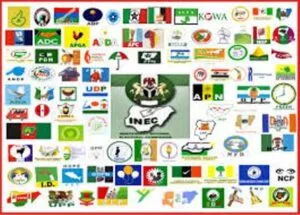
A political party is an association of people with similar political ideas who come together to contest elections, win political power and control the government.
Behavioural objectives
- Define a political party.
- State the characteristics of political parties.
- Explain what a manifesto and a primary election are.
- Describe the activities political parties carry out to compete for power through elections.
- Explain why vote buying is wrong and unlawful.
What are the key terms used in party competition?
Seven key terms explain how parties compete for power in Nigeria.
- Political party: a group of people organised to win elections and run the government.
- Flag bearer: the candidate chosen by a party to represent it at a general election.
- Manifesto: a written document stating what a party will do if voted into office.
- Primary election: an election held within a party to choose its candidate.
- General election: the election in which all registered voters choose among candidates of different parties.
- Campaign: organised activity to win the support and votes of the public.
- INEC: the Independent National Electoral Commission, which registers parties and conducts elections in Nigeria.
What are the characteristics of political parties?
There are eight main characteristics of political parties.
- Aim of winning power: their main objective is to win elections and control the government.
- Wide membership: members come from different tribes, religions, professions, classes and regions. This makes a party a popular organisation.
- Common ideas: members share broad political beliefs and goals.
- Registration: a party must be registered by INEC before it can field candidates.
- Primary elections: they choose their candidates through elections within the party.
- Candidates: they present candidates for election to public office.
- Campaigns and rallies: they seek votes through public meetings and other forms of campaign.
- Political education: they teach citizens about government, voting and public issues.
How do political parties compete for power through elections?
Political parties compete for power through eight main activities: manifesto, primary election, candidate selection, campaign, mobilisation, voter education, welfare promises and monitoring of voting.
1. Design of a manifesto
- Meaning: a document with the agenda and key programmes the party will carry out if elected.
- Purpose: it persuades voters to support the party.
- Typical contents: plans for education, health, security, jobs, roads and electricity.
2. Primary election
- Meaning: an election within the party to select its flag bearer.
- Levels: it can be held for ward, local government, state or federal positions.
- Purpose: it gives members a say in who represents the party.
3. Selection of credible candidates
- Good standing: parties look for candidates with a good name and public respect.
- Appeal: a well-known candidate with a good record can attract followers.
- Submission: the party sends its candidates’ names to INEC for the general election.
4. Campaign
- Meaning: party members gather and tell the public about the manifesto.
- Purpose: to canvass for votes.
| Campaign method | How it works |
|---|---|
| Rallies | Large public meetings where candidates address supporters. |
| Media | Radio, television, newspapers and social media carry party messages. |
| Posters and billboards | They show the candidate’s face, party name and logo. |
| Jingles and songs | They help voters remember the party and its message. |
5. Mobilisation
- Door-to-door visits: members go to homes to meet voters and ask for support.
- One-on-one talks: members persuade individuals to vote for the party.
- Voter turnout: members encourage supporters to register, collect voter cards and vote.
6. Education of voters
- Voting method: parties show supporters how to thumbprint the ballot paper correctly.
- Party logo: supporters learn which logo to look for on the ballot paper.
- Result: fewer ballot papers are spoilt or rejected.
7. Welfare promises and programmes
- Promises: parties promise better schools, hospitals, jobs and support for the poor.
- Voter belief: voters judge whether the party can keep these promises.
- Warning: giving money, food or gifts to buy votes is vote buying. It is an offence under the electoral law and weakens democracy.
8. Monitoring the voting
- Party agents: parties send agents to polling units to watch voting and counting.
- Purpose: to help ensure the process is fair and the results are correct.
What is the difference between a primary election and a general election?
A primary election is held inside one party to choose its candidate. A general election is held among all parties to choose office holders.
| Point | Primary election | General election |
|---|---|---|
| Who votes | Members or delegates of one party | All registered voters |
| Who competes | Aspirants from the same party | Candidates of different parties |
| Result | A flag bearer is chosen | A winner is declared for the office |
| Conducted by | The party | INEC |
What are the steps from party registration to winning an election?
- The party is registered by INEC.
- The party writes its manifesto.
- The party holds primary elections to choose candidates.
- The party submits its candidates’ names to INEC.
- The party campaigns and mobilises voters.
- Voters cast their votes on election day, and party agents watch the process.
- INEC counts the votes and declares the winner. The party with the winning candidates forms or controls the government.
Why is vote buying wrong and unlawful?
Vote buying is giving money, food or gifts to voters in exchange for their votes.
- Unlawful: the electoral law makes it an offence for both the giver and the receiver.
- Unfair contest: a rich candidate wins by paying, not by offering the best programmes.
- Poor leaders: voters choose the highest payer instead of the best candidate.
- Broken promises: a candidate who buys votes may feel no duty to serve the people.
- Weak democracy: the vote no longer shows the true choice of the people.
- Corruption: a candidate may try to recover the money spent by misusing public funds.
Evaluation
- Define a political party.
- State four characteristics of political parties.
- What is a manifesto, and what is a primary election?
- How do political parties educate voters before an election?
- Give two reasons why vote buying is wrong and unlawful.
Assignment
Explain any three ways in which political parties compete for power through elections.
This term's Civic Education topics
SS2 First Term · 8 topics
- Citizenship Education
- Duties and Responsibilities of Citizens
- Skills Necessary for the Preservation of Our Traditions, Beliefs and Customs in Nigeria
- Capitalist Democracy
- How Political Parties Compete for Power Through Elections
- Poverty and its Effects
- Political Apathy
- Reasons Why Leaders Fail to Protect the Interest of Their Followers
Get Civic Education as PDF and Word
Every week of SS2 Civic Education, First Term, formatted and ready to print. Ad-free, and the copy lock comes off.
Get this term Card, bank transfer, USSD or OPay
SS2 Civic Education Lesson Notes for Other Topics
Citizenship Education
Read the full lesson note.

Duties And Responsibilities Of Citizens
Read the full lesson note.
Skills Necessary For The Preservation Of Our Traditions, Beliefs And Customs In Nigeria
Read the full lesson note.
Capitalist Democracy
Read the full lesson note.
Poverty And Its Effects
Read the full lesson note.
Political Apathy
Read the full lesson note.

Reasons Why Leaders Fail To Protect The Interest Of Their Followers
Read the full lesson note.

Popular Participation
Read the full lesson note.
How Popular Organisations Are Formed
Read the full lesson note.
Human Rights
Read the full lesson note.
Emergency
Read the full lesson note.

Drugs And Drugs Abuse
Read the full lesson note.

Effects Of Drugs Abuse
Read the full lesson note.
Activities Of Drug Enforcement Agencies
Read the full lesson note.
Meticulous Study & Analysis of Chapters 2-6 of Wuthering Heights
Read the full lesson note.
Lesson Notes for Other Classes

SS1 Lesson Note
The complete lesson note to guide your studies.

SS3 Lesson Note
The complete lesson note to guide your studies.
