
Emergency – SS2 Civic Education Lesson Note (Second Term)
Download this term · ₦1,000Lesson note at a glance
- Subject
- Civic Education
- Class
- SS2
- Term
- Second Term
- Topic
- Emergency
- Order
- Topic 4 of 8 this term
- Reading time
- 5 min
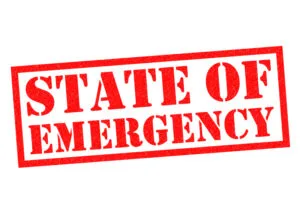
An emergency is an urgent and serious situation that threatens peace, law and order, and calls for quick action by government.
Behavioural objectives
- Define emergency.
- State the causes of an emergency.
- State what happens during an emergency period.
- List ways of reducing emergency in society.
- Explain how respect for the constitution and democratic principles reduces emergency cases.
What are the key terms in this topic?
These six terms are used throughout the note.
- Emergency: a sudden, serious situation that needs quick action by government.
- State of emergency: a period officially declared by government when normal rules are changed or suspended.
- Constitution: the supreme law of the land, which sets out how the country is governed.
- Suspension: stopping a law or an institution from working for a time.
- Rule of law: the principle that everyone, including leaders, is subject to the law.
- Human rights: the basic freedoms every citizen enjoys, such as freedom of movement and expression.
- Curfew: an order that keeps people indoors during stated hours, usually at night.
What is a state of emergency?
A state of emergency is a period officially declared by government when normal life is disturbed and special powers are used to restore order.
- Effect on government: some parts of the constitution may be suspended for a time.
- Effect on institutions: the legislature, executive and judiciary may not carry out their regular functions.
- Effect on citizens: some rights may be restricted until the emergency is lifted.
- Aim: to bring back normal life as quickly as possible.
What causes an emergency?
There are five common causes of an emergency: war, breakdown of law and order, political crisis, natural disasters and outbreak of disease.
- War or threat of invasion: an attack on the country from outside.
- Breakdown of law and order: riots, violent crime, armed insurgency or communal clashes.
- Political crisis: a serious quarrel among leaders that stops government from working.
- Natural disasters: severe flooding or other events that put many lives in danger.
- Outbreak of disease: an epidemic that spreads fast and threatens public health.
Who declares a state of emergency in Nigeria?
The President declares a state of emergency in Nigeria, under Section 305 of the 1999 Constitution.
- The President: declares it by a public proclamation.
- The National Assembly: must approve the proclamation within the time the Constitution allows.
- Purpose: to restore peace and order as quickly as possible.
- Duration: it lasts only until the danger has passed, then it is lifted.
What happens during an emergency period?
During an emergency period, normal rules are changed and some freedoms are limited for security reasons.
- The constitution is partly or temporarily suspended.
- The principles of the rule of law may be set aside.
- Movement may be restricted to certain areas or hours of the day, as in a curfew.
- Some arrests can be carried out without a warrant.
- Freedom of expression and the press may be restricted.
- Human rights may be limited in the interest of security.
- Soldiers and other security forces may be deployed to restore order.
How does normal government differ from an emergency period?
A normal period is a time when the constitution is fully in force and institutions work as usual.
An emergency period is a time when special powers are used and some rules and rights are limited.
| Feature | Normal period | Emergency period |
|---|---|---|
| Constitution | Fully in force | Partly or temporarily suspended |
| Movement | Free | May be restricted, for example by curfew |
| Arrest | Done with a warrant | Some arrests without a warrant |
| Press and speech | Free | May be restricted |
| Human rights | Protected | May be limited for security |
| Government institutions | Work regularly | May not carry out regular functions |
How can emergency be reduced?
Emergency can be reduced by six measures: respect for the constitution, promotion of human rights, good government, socio-economic development, public enlightenment and respect for democratic principles.
Respect for the constitution
- Meaning: obeying the constitution and the laws of the land.
- Effect: where people obey the law, fewer crises arise, so emergency cases reduce.
Promotion of human rights
- Meaning: respecting other people’s rights in our conduct and relationships.
- Effect: fewer quarrels and abuses lead to fewer emergencies.
Good government
- Meaning: a government that is responsive and responsible to the people.
- Effect: when citizens’ needs are met, there may be no need for an emergency.
Socio-economic development
- Meaning: providing basic infrastructure such as roads, water, schools and jobs.
- Effect: it removes many causes of unrest.
- Result: people live in harmony, which promotes peace and orderliness.
Public enlightenment
- Meaning: educating people on the need to promote the social well-being of society.
- Effect: citizens learn their civic responsibilities to the government and to society.
Respect for democratic principles
- Meaning: honouring the rule of law, popular participation and fundamental rights.
- Effect: a state that does this will have fewer emergency cases.
What should citizens do during an emergency?
Citizens should obey lawful orders, stay calm and help the authorities restore peace.
- Obey orders: keep to curfew hours and movement limits.
- Stay calm: avoid panic and do not spread rumours.
- Cooperate with security agencies: give true information that can help restore order.
- Help victims: support those who have lost homes, property or family members.
- Report: tell the police or other agencies about danger signs in the community.
Evaluation
- Define emergency.
- State four things that can happen during an emergency period.
- Explain how good government can reduce emergency.
- Mention three other ways of reducing emergency in society.
- Name two causes of an emergency.
Assignment
Explain how public enlightenment and socio-economic development can help to reduce emergency in society.
This term's Civic Education topics
SS2 Second Term · 8 topics
Get Civic Education as PDF and Word
Every week of SS2 Civic Education, Second Term, formatted and ready to print. Ad-free, and the copy lock comes off.
Get this term Card, bank transfer, USSD or OPay
SS2 Civic Education Lesson Notes for Other Topics

Popular Participation
Read the full lesson note.

How Popular Organisations Are Formed
Read the full lesson note.
Human Rights
Read the full lesson note.

Drugs And Drugs Abuse
Read the full lesson note.

Effects Of Drugs Abuse
Read the full lesson note.
Activities Of Drug Enforcement Agencies
Read the full lesson note.

Meticulous Study & Analysis of Chapters 2-6 of Wuthering Heights
Read the full lesson note.

Citizenship Education
Read the full lesson note.

Duties And Responsibilities Of Citizens
Read the full lesson note.
Skills Necessary For The Preservation Of Our Traditions, Beliefs And Customs In Nigeria
Read the full lesson note.

Capitalist Democracy
Read the full lesson note.

How Political Parties Compete For Power Through Elections
Read the full lesson note.
Poverty And Its Effects
Read the full lesson note.
Political Apathy
Read the full lesson note.

Reasons Why Leaders Fail To Protect The Interest Of Their Followers
Read the full lesson note.
Lesson Notes for Other Classes

SS1 Lesson Note
The complete lesson note to guide your studies.

SS3 Lesson Note
The complete lesson note to guide your studies.
