
THE ITSEKIRI – SS1 Nigerian History Lesson Note (Second Term)
Lesson note at a glance
- Class
- SS1
- Subject
- Nigerian History
- Term
- Second Term
- Reading time
- 9 min
The Itsekiri are an ethnic group who live mainly in the western Niger Delta, in present-day Delta State, Nigeria.
Behavioural objectives
By the end of the lesson, students should be able to:
- State where the Itsekiri live and describe their language and identity.
- Explain the traditions about the origin of the Itsekiri and the founding of their kingdom.
- Describe the roles of the Olu of Warri and the chiefs, and the structure of Itsekiri society.
- Outline the main economic activities of the Itsekiri, including trade with Europeans and the palm oil trade.
- Describe Itsekiri religion, music, dress and festivals.
- Explain the effects of colonial rule and trade conflicts on the Itsekiri, and name notable Itsekiri figures.
Who are the Itsekiri?
The Itsekiri are a distinct Niger Delta people with their own language, kingdom and traditions.
- Language: they speak Itsekiri, which is related to Yoruba but is a separate language.
- Location: they live mainly around the Benin, Escravos and Forcados Rivers.
- Homeland: their traditional homeland is in present-day Delta State.
- Other name: they are sometimes called the “Iwere” or “Iwerre” people.
- Capital: the traditional capital is Ode-Itsekiri, also called Big Warri.
- Ruler: a monarch called the Olu leads a centralised kingdom.
- Reputation: they are known for trading skills and early contact with Europeans.
- Culture: it blends Niger Delta and Yoruba influences, and also shows links with Benin.
What is the origin of the Itsekiri?
Itsekiri tradition traces the people to Prince Ginuwa (Iginuwa) and his followers, who settled in the western Niger Delta in the late 15th century.
- Prince Ginuwa: he is said to have left the Benin Kingdom with followers and moved to the creeks of the delta.
- Mixing of peoples: the newcomers mixed with the people already living there.
- Language: Itsekiri has strong Yoruba links, so some accounts also point to Yoruba ancestry.
- Different accounts: traditions vary on details, so teachers should present them as traditions.
- Location: the position between inland areas and the coast helped the Itsekiri to become traders.
- Identity: over time a separate Itsekiri identity developed.
How was the Itsekiri kingdom founded?
The Itsekiri kingdom was founded by the descendants of Prince Ginuwa, who set up a monarchy at Ode-Itsekiri.
- Dynasty: Ginuwa founded the royal line that still provides the Olu today.
- Capital: the capital was Ode-Itsekiri (Big Warri).
- Government: the Olu ruled with chiefs and advisers.
- Unity: the monarchy brought separate Itsekiri communities under one ruler.
- Court life: royal ceremonies and traditions grew around the palace.
- Trade: the kingdom built trading links with neighbouring peoples.
Who is the Olu of Warri?
The Olu of Warri is the traditional ruler and head of the Itsekiri people.
- Title: he was formerly called the Olu of Itsekiri.
- Lineage: he comes from the royal family descended from Ginuwa.
- Sacred position: he is regarded as a sacred ruler with religious authority.
- Regalia: he wears royal dress, including coral beads.
- Duties: he performs ceremonies, decides matters with his chiefs and speaks for the Itsekiri to outsiders.
- Today: the office continues as an important traditional institution.
How did the chieftaincy system work?
The chieftaincy system was a council of titled chiefs who helped the Olu to govern.
- Ojoye: the council of senior title-holding chiefs.
- Ologbotsere: the leading chief, often described as the prime minister.
- Representation: chiefs spoke for different communities and the Olu in different areas.
- Hereditary titles: some titles passed within families.
- Merit titles: others were given for achievement.
- Duties: chiefs advised the Olu, helped to collect taxes and settled disputes.
What were the social classes in Itsekiri society?
Itsekiri society had several levels, with the royal family at the top.
| Level | Who belonged |
|---|---|
| Top | The royal family |
| Upper class | Chiefs and nobles |
| Middle class | Free citizens, including skilled craftspeople |
| Bottom | Servants and slaves |
- Trade wealth: success in trade could raise a person’s position.
- Education: later it became another way to gain higher status.
- Religious leaders: priests held special positions.
- Women: their status usually came from their family connections.
What was the family structure of the Itsekiri?
The family was the basic unit of Itsekiri society, organised through the father’s line.
- Patrilineal descent: the family line is traced through fathers, and children belong to the father’s lineage.
- Extended family: related people lived near each other in family compounds.
- Polygyny: a man could have more than one wife, and each wife usually had her own house.
- Elders: they were highly respected, and family heads made important decisions.
- Marriage: it created alliances between families.
What were the main economic activities of the Itsekiri?
The main economic activities of the Itsekiri were trade, the palm oil business, fishing, farming and crafts.
Trading traditions
- Position: they lived between inland peoples and the ocean.
- River routes: they controlled water routes in the western delta.
- Middlemen: they carried goods between inland producers and coastal buyers.
- Early goods: fish, salt and crafts.
- Currency: cowrie shells were among the currencies used.
- Result: trade brought wealth and influence.
European contact and trade
- Portuguese: their ships reached Itsekiri territory in the late 15th century.
- First contact: the Itsekiri were among the first Nigerian peoples to meet Europeans.
- Early goods: cloth, metal goods and other items.
- Slave trade: trade later included the sale of enslaved people.
- Other traders: Dutch and English merchants also traded with the Itsekiri.
- Languages: some Itsekiri learned European languages for trade.
- Role of the Olu: he controlled access to European traders.
The palm oil trade
Palm oil became the main export of the Itsekiri by the mid-19th century, after the slave trade ended.
- Inland producers made palm oil.
- Itsekiri traders bought the oil from them.
- They carried it by canoe to European ships.
- They exchanged it for goods such as cloth, guns and alcohol.
- Uses abroad: Europeans used the oil for soap, machine lubricants and food.
- Effect: some Itsekiri families became very wealthy.
- Competition: the trade increased rivalry with other Delta peoples.
Fishing and agriculture
- Fishing: done in rivers, creeks and the sea, using canoes.
- Preservation: fish were smoked and dried.
- Farming: crops included yam, cassava and vegetables.
- Palm products: harvested for home use and trade.
- Livestock: mainly goats and chickens.
- Hunting and gathering: done in forests and swamps.
Crafts and skills
- Canoe building: large trading canoes were made.
- Wood carving: masks, tools and household items.
- Weaving: baskets and mats from local fibres.
- Pottery: pots for storage and cooking.
- Coral beads: jewellery and regalia.
- Traditional medicine: healers treated the sick.
- House building: homes were built to suit the delta environment.
What was Itsekiri traditional religion?
Itsekiri traditional religion is the belief in a supreme god, lesser deities, ancestors and water spirits.
- Oritse: the supreme creator god.
- Orise: lesser deities with particular functions.
- Ancestors: believed to influence daily life.
- Water spirits: important because the Itsekiri live among rivers and creeks.
- Divination: used to learn spiritual messages.
- Priests and priestesses: they acted as go-betweens for people and the spirits.
- Shrines and festivals: they brought communities together.
How did Christianity spread among the Itsekiri?
Christianity reached the Itsekiri through contact with European traders and missionaries, beginning with Catholic missionaries in the 16th century.
- Catholic missions: Portuguese missionaries came first.
- Dom Domingos: a Christian ruler of Warri in the early 1600s.
- Later churches: Anglican and other denominations arrived later.
- Mission schools: they introduced Western education.
- Mixed practice: some traditional customs continued, and others were changed or dropped.
- Today: most Itsekiri practise Christianity.
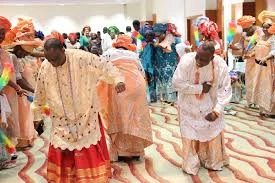
What are Itsekiri music, dance, dress and festivals like?
Itsekiri arts and festivals express the identity and values of the people.
Music and dance
- Instruments: drums and rattles.
- Songs: sung at life events, and some preserve history and values.
- Dances: performed at celebrations, ceremonies and festivals.
- Masquerades: performances with spiritual meaning.
- Royal musicians: professionals played at royal ceremonies.
Clothing and appearance
- Early cloth: locally woven materials.
- Later cloth: imported cloth for special garments.
- Everyday dress: men wore wrapped cloths and shirts, and women wore wrapped cloths and blouses.
- Coral beads: showed status and wealth.
- Royal dress: the Olu wore elaborate attire.
- Hairstyles: they showed age and status.
Festivals and celebrations
- Coronation: the ceremony for a new Olu.
- Ancestor festivals: held yearly to honour the dead.
- Fishing festivals: held to ask for good catches.
- Life events: birth, adulthood, marriage and death were marked by ceremonies.
- Feasts and dances: traditional food, music and dance accompanied each occasion.
How did British colonial rule affect the Itsekiri?
British colonial rule reduced the power of the Olu and the chiefs, who were later used in indirect rule.
- Early contact with the British was mainly commercial.
- British influence grew through the 19th century.
- The Itsekiri signed a Treaty of Protection with the British in 1884.
- Formal colonial rule followed after the Berlin Conference.
- British officials took the final say in important matters.
- The Olu and chiefs were used in indirect rule.
- Effect on authority: the kingdom continued but with less power.
- Effect on structure: traditional political structures were changed.
What were the trade conflicts involving the Itsekiri?
Trade conflicts were disputes over trade routes and control of commerce between the Itsekiri, their neighbours and the British.
- Rivals: the Itsekiri competed with the Urhobo, Ijaw and others for trade.
- Trade routes: control of routes caused disputes.
- Ebrohimi War (1894): the British attacked Chief Nana Olomu’s stronghold at Ebrohimi, and Nana was removed from power.
- European companies: they took more direct control of trade.
- Trade patterns: new routes bypassed some Itsekiri areas.
What changes have the Itsekiri faced in modern times?
In modern times the Itsekiri have gained new opportunities and faced new problems, mostly linked to oil and population growth.
- Oil and gas: they brought development and also problems.
- Environment: oil spills and pollution harmed fishing and farming.
- Tensions: disputes over land, jobs and resources continue with neighbouring groups.
- Education: it opened new opportunities.
- Migration: many Itsekiri live in cities across Nigeria.
- Culture: the language, festivals and marriage customs continue.
- The Olu: Prince Tsola Emiko became the 21st Olu of Warri in 2021.
Who are some notable Itsekiri figures?
Notable Itsekiri figures include traders, political leaders and artists.
- Chief Nana Olomu: powerful 19th century trader and leader.
- Alfred Rewane: businessman and democracy advocate.
- Sam Warri Essi: musician.
Evaluation
- Where do the Itsekiri live, and what is their traditional ruler called?
- Describe the traditions about the origin of the Itsekiri and the founding of their kingdom.
- Explain how the Itsekiri became middlemen in trade with Europeans.
- Why did palm oil become important to the Itsekiri after the slave trade ended?
- State three effects of British colonial rule on the Itsekiri.
Assignment
Write short notes on any two of the following: the Olu of Warri, the chieftaincy system, the Ebrohimi War (1894), Itsekiri traditional religion.
This term's Nigerian History topics
SS1 Second Term · 10 topics
SS1 Nigerian History Lesson Notes for Other Topics

CENTRALIZED STATES KANEM - BORNU UP TO 1800
Read the full lesson note.
THE HAUSA STATE UP TO 1800
Read the full lesson note.
NUPE UP TO 1800
Read the full lesson note.
IGALA UP TO 1800
Read the full lesson note.
THE JUKUN KINGDOM
Read the full lesson note.
OYO
Read the full lesson note.
BENIN
Read the full lesson note.
THE EFIK
Read the full lesson note.
THE IGBOS
Read the full lesson note.
Introduction To History
Read the full lesson note.
Historical Skills
Read the full lesson note.
Prospect of ICT In Historical Studies
Read the full lesson note.
Land And The People Of Nigeria
Read the full lesson note.
Traditions Of Origin Of Various Groups
Read the full lesson note.
Centers Of Ancient Civilization
Read the full lesson note.
Lesson Notes for Other Classes

SS2 Lesson Note
The complete lesson note to guide your studies.

SS3 Lesson Note
The complete lesson note to guide your studies.
