
Prospect of ICT in Historical Studies – SS1 Nigerian History Lesson Note (First Term)
Download this term · ₦1,000Lesson note at a glance
- Subject
- Nigerian History
- Class
- SS1
- Term
- First Term
- Topic
- Prospect of ICT in Historical Studies
- Order
- Topic 3 of 11 this term
- Reading time
- 3 min
ICT (information and communications technology) is a fast-growing technology that touches almost every part of daily life, including education, healthcare, business and government. In historical studies, it gives historians access to previously unavailable information and changes how research is done, through online databases, digital archives, crowdsourcing, GIS and 3D printing.
Behavioural objectives
By the end of the lesson, students should be able to:
- state the areas of society in which ICT is used;
- list five ways ICT is used in historical studies;
- explain how online databases and digital archives help historians;
- state what GIS and 3D printing are used for in historical studies;
- state the prospects of ICT in historical studies.
What is the impact of ICT on society?
Information and communications technology (ICT) is rapidly evolving and growing in importance. It has become an integral part of our daily lives, touching almost every aspect of our existence.

The impact of ICT on society is far-reaching and can be seen in many different areas, such as education, healthcare, business and government.
- Education: ICT has transformed the way we learn and has made it possible for people to access knowledge and information from anywhere in the world.
- Healthcare: ICT is being used to improve patient care and treatment, as well as to increase efficiency and reduce costs.
- Business: Businesses use ICT to improve communication, collaboration and customer service.
- Government: Government agencies use ICT to deliver better public services.
How is ICT used in historical studies?
ICT is also playing a big role in historical studies. It has made it possible for historians to access previously unavailable information and has transformed the way research is conducted. Here are five examples of how ICT is being used in historical studies:
- Online databases: Historians can now access a wealth of information online, thanks to the increasing number of historical databases that are available. These databases contain primary and secondary sources, which can be extremely useful for research purposes.
- Digital archives: Many archives around the world are now digitising their collections, making it possible for historians to access them from anywhere in the world. This is particularly useful for those who live in remote areas or who cannot travel to the archives in person.
- Crowdsourcing: Historians are using crowdsourcing techniques to gather information from a large number of people. This can be done through online platforms, such as social media.
- GIS: Geographic information systems (GIS) are being used by historians to map historical data and create visualisations.
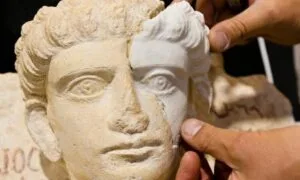
- 3D printing: Historians use 3D printers to create replicas of historical artefacts, which can be used for research or teaching purposes. This is a relatively new technology, but it shows great promise for the future of historical studies.
What are the prospects of ICT in historical studies?
- The ability to access previously unavailable information.
- The transformation of research methods.
- The use of crowdsourcing techniques.
- The mapping of historical data using GIS.
- The creation of replicas of historical artefacts using 3D printing technology.
Evaluation
- Name four areas of society in which ICT has an impact.
- List five ways ICT is used in historical studies.
- Explain how digital archives help historians who cannot travel to an archive.
- What is GIS used for in historical studies?
- State two uses of 3D-printed replicas of historical artefacts.
Assignment
Explain, in your own words, any three prospects of ICT in historical studies.
This term's Nigerian History topics
SS1 First Term · 11 topics
Get Nigerian History as PDF and Word
Every week of SS1 Nigerian History, First Term, formatted and ready to print. Ad-free, and the copy lock comes off.
Get this term Card, bank transfer, USSD or OPay
SS1 Nigerian History Lesson Notes for Other Topics
Introduction To History
Read the full lesson note.
Historical Skills
Read the full lesson note.
Land And The People Of Nigeria
Read the full lesson note.
Traditions Of Origin Of Various Groups
Read the full lesson note.
Centers Of Ancient Civilization
Read the full lesson note.
The State Formation Process
Read the full lesson note.
Genres/Branches Of Literature
Read the full lesson note.

Prose: Literary And Non-Literary
Read the full lesson note.
Poetry
Read the full lesson note.
Drama
Read the full lesson note.

CENTRALIZED STATES KANEM - BORNU UP TO 1800
Read the full lesson note.

THE HAUSA STATE UP TO 1800
Read the full lesson note.

NUPE UP TO 1800
Read the full lesson note.

IGALA UP TO 1800
Read the full lesson note.
THE JUKUN KINGDOM
Read the full lesson note.
Lesson Notes for Other Classes

SS2 Lesson Note
The complete lesson note to guide your studies.

SS3 Lesson Note
The complete lesson note to guide your studies.
