
History of Computer – SS1 Data Processing Lesson Note (First Term)
Download Lesson NoteLesson note at a glance
- Subject
- Data Processing
- Class
- SS1
- Term
- First Term
- Topic
- History of Computer
- Order
- Topic 4 of 5 this term
- Reading time
- 2 min
Computers are grouped into five generations according to the main technology used to build them. First-generation computers used vacuum tubes. Second-generation computers used transistors. Third-generation computers used integrated circuits. Fourth-generation computers used large scale and very large scale integration. Fifth-generation computers are built around artificial intelligence.
Behavioural objectives
By the end of the lesson, students should be able to:
- Name the five generations of computers.
- State the main technology used in each generation.
- List the features of first-, second- and third-generation computers.
- Describe fourth- and fifth-generation computers.
What are the generations of computers?
First generation
Electronic machines which were distinct from mechanical computers evolved about 1945. UNIVAC is a good example of this generation of computers.
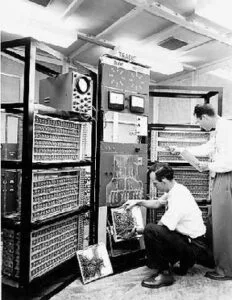
Computers of this generation were characterised by the following:
- They used vacuum tubes.
- They were very large and expensive.
- They were very bulky.
- They had a low retentive memory.
- They generated a lot of heat.
Second generation
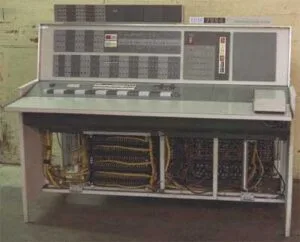
Second-generation computers replaced vacuum tubes with discrete transistors. They had limited capability but were more advanced than the first-generation computers.
Features include:
- They were more reliable than the first generation.
- They could perform calculations.
- They had a more efficient storage facility.
- They generated less heat than first-generation computers.
Third generation
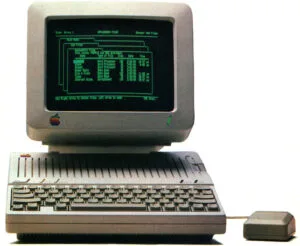
Third-generation computers used Integrated Circuit (IC) technology and Small Scale Integration (SSI). They had more sophisticated software capabilities, such as multi-programming, multi-processing and operating systems as resource managers.
The following can be noted in third-generation computers:
- Faster input and output.
- Increased storage capability.
- Increased processing capability.
- Ability to display pictures and musical sound.
Fourth generation
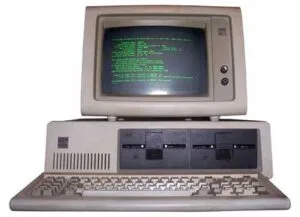
Fourth-generation computers appeared in about 1975. The technologies that characterised these machines were Large Scale Integration (LSI) and Very Large Scale Integration (VLSI). The computers produced during this period had higher speed and storage capacity, and better performance, than those of the third generation.
Fifth generation
This generation of computers makes use of Artificial Intelligence (AI). Computers of this category were built around the following aims:
- To build supercomputers, that is, computers which could operate in the range of 10 billion instructions per second.
- To give computers capacities like sight and hearing, and the capability to simulate human thought, for example robots.
Evaluation
- Name one example of a first-generation computer.
- State three characteristics of first-generation computers.
- Which technology marked the third generation of computers?
- Which generation of computers makes use of artificial intelligence?
Assignment
- The first generation used …… as its circuitry.
- List four features of second-generation computers.
- State two features of third-generation computers.
- VLSI means ……….
This term's Data Processing topics
SS1 First Term · 5 topics
First Term Data Processing Lesson Notes for Other Topics

Database Management System II - How to Create Database
Read the full lesson note.
Database Management System I
Read the full lesson note.
Data Model
Read the full lesson note.
Data Modeling
Read the full lesson note.
Data Modeling II - Standard Data Model & Examples
Read the full lesson note.
Normalization
Read the full lesson note.
Data Model II - Types of Data Modelling
Read the full lesson note.

Entity-Relationship Models
Read the full lesson note.
Classification Of Computers
Read the full lesson note.
Data And Information
Read the full lesson note.
Digitalization Of Data
Read the full lesson note.
History Of Computing
Read the full lesson note.
Introduction to Computer Networking
Read the full lesson note.
Internet I - Electronic Mail/ E-Mail Accounts
Read the full lesson note.
Internet II - Internet & Search Engines
Read the full lesson note.
Lesson Notes for Other Classes

Basic 1 Lesson Note
The complete lesson note to guide your studies.

Basic 2 Lesson Note
The complete lesson note to guide your studies.

Basic 3 Lesson Note
The complete lesson note to guide your studies.

Basic 4 Lesson Note
The complete lesson note to guide your studies.

Basic 5 Lesson Note
The complete lesson note to guide your studies.

Basic 6 Lesson Note
The complete lesson note to guide your studies.


