
Computer Maintenance and Safety SS1 Digital Technologies Lesson Note
Download Lesson NoteTopic: Computer Maintenance and Safety
Subject: Digital Technologies
Class: SS1
Why Do We Maintain Computers?
Think of a computer like a car or even a pair of shoes. If you never wash your shoes or fix the laces, they will eventually fall apart. A computer is the same. Dust, heat, and “digital junk” can slow it down or even kill it.
Computer Maintenance is the act of keeping your computer in good condition so that it works perfectly and lasts a long time.
The Two Types of Maintenance:
- Hardware Maintenance: Cleaning the physical parts (keyboard, screen, internal fans).
- Software Maintenance: Cleaning the “inside” (deleting old files, updating apps, and running scans).
Preventive Care (Keeping Trouble Away)
“Prevention is better than cure.” Instead of waiting for the computer to break, we do small things to make sure it never breaks.
Physical Care (The Outside)
- Keep it Dust-Free: Use a soft, dry cloth or a can of compressed air to blow dust out of the ports. Dust acts like a blanket that makes the computer overheat.
- Keep Liquids Away: One spill of water or soda can fry the motherboard instantly.
- Proper Ventilation: Never block the “holes” (vents) on the side of a laptop or system unit. The computer needs to “breathe” to stay cool.
Power Care
- Use a UPS or Surge Protector: Electricity in many places can be “unstable.” A sudden spike in power can burn the computer’s power supply.
Digital Maintenance (The Software Side)
A computer can look clean on the outside but be “dirty” and slow on the inside.
- Update Regularly: Software updates aren’t just for new features; they often fix “bugs” or holes that hackers use.
- Uninstall Unused Apps: If you haven’t used a game or app in six months, delete it. It’s taking up “thinking space” (storage).
- Run Antivirus Scans: Just like you wash your hands to stay healthy, you should scan your computer once a week to catch any “digital germs” (viruses).
- Empty the Bin: Deleting a file isn’t enough; you have to empty the “Recycle Bin” or “Trash” to actually get your space back.
Health and Safety (Taking Care of YOU)
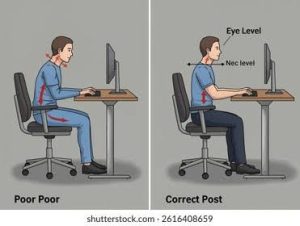
Computers don’t have feelings, but you do! Using a computer for a long time can actually hurt your body if you aren’t careful. This is called Ergonomics.
- Protect Your Eyes
- The 20-20-20 Rule: Every 20 minutes, look at something 20 feet away for 20 seconds. This stops “Eye Strain.”
- Adjust Brightness: Your screen shouldn’t be brighter than the room you are in.
- Protect Your Back and Neck
- Sit Straight: Your back should be flat against the chair.
- Screen Level: Your eyes should be level with the top of the monitor so you aren’t looking down (which causes “Tech Neck”).
- Feet Flat: Keep your feet on the ground, not dangling.
Safety Measures in the Computer Lab
If you are working in a school lab or an office, safety is everyone’s job.
- Cable Management: Don’t leave wires trailing across the floor. Someone will trip, and the computer will come crashing down.
- No Overloading Sockets: Plugging 10 things into one extension box is a fire hazard.
- No Eating or Drinking: Crumbs get stuck in keys, and spills cause short circuits.
- Proper Shutdown: Never just pull the plug! Always use the “Shut Down” button so the OS can save its work.
Class Discussion & Review
- Scenario: You notice your laptop is getting very hot and making a loud noise. What is likely the problem, and how would you fix it?
- Self-Check: Adjust your chair right now. Are you sitting in a way that protects your spine?
Review Questions:
- What is “Preventive Maintenance”?
- Mention three ways to protect a computer from power surges.
- Explain the “20-20-20 rule” and why it matters.
- Why is dust dangerous for a computer?
First Term Digital Technologies Lesson Notes for Other Topics

Data Protection and Backup System
Explore lesson notes covering all topics.

Internet of Things (IoT) Application
Explore lesson notes covering all topics.

Cloud and Virtualization
Explore lesson notes covering all topics.

Networking II
Explore lesson notes covering all topics.

Software Development Lifecycle
Explore lesson notes covering all topics.

Advanced Programming II
Explore lesson notes covering all topics.

Advanced Programming I
Explore lesson notes covering all topics.

Web Design II
Explore lesson notes covering all topics.

Web Publishing and Hosting
Explore lesson notes covering all topics.

Advanced Word Processing Tools
Explore lesson notes covering all topics.

Advanced Spreadsheet I
Explore lesson notes covering all topics.

Advanced Spreadsheet II
Explore lesson notes covering all topics.

Advanced Presentation Tools
Explore lesson notes covering all topics.

Web Design I
Explore lesson notes covering all topics.

History and Evolution of Digital Technologies
Explore lesson notes covering all topics.


Lesson Notes for Other Classes
Basic 1 Lesson Note
The complete lesson note to guide your studies.

Basic 2 Lesson Note
The complete lesson note to guide your studies.

Basic 3 Lesson Note
The complete lesson note to guide your studies.

Basic 4 Lesson Note
The complete lesson note to guide your studies.

Basic 5 Lesson Note
The complete lesson note to guide your studies.

Basic 6 Lesson Note
The complete lesson note to guide your studies.