Key Personalities and Their Roles in the Amalgamation of Nigerian Territories – JSS3 Nigerian History Lesson Note (Third Term)
Download Lesson NoteLesson note at a glance
- Subject
- Nigerian History
- Class
- JSS3
- Term
- Third Term
- Topic
- Key Personalities and Their Roles in the Amalgamation of Nigerian Territories
- Order
- Topic 3 of 10 this term
- Reading time
- 9 min
The amalgamation of Nigerian territories in 1914 was a significant event that laid the foundation for what would become modern Nigeria. This process did not happen by accident but was planned and implemented by several key individuals. These people played important roles in bringing together the Northern and Southern Protectorates to create a single entity called Nigeria. Understanding who these people were and what they did helps us better appreciate how Nigeria was formed and why it was structured the way it was. This lesson explores the main personalities involved in the amalgamation process and their specific contributions.
Sir Frederick John Dealtry Lugard (1858-1945)
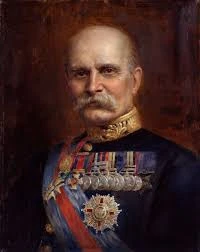
Sir Frederick Lugard was undoubtedly the most important figure in the amalgamation of Nigeria. His decisions and policies shaped not only the process of unification but also the early development of colonial Nigeria.
Background and Early Career
- Frederick Lugard was born in India to missionary parents and educated in England.
- He joined the British Army and served in various parts of Africa, including East Africa and Uganda.
- In 1894, he began working for the Royal Niger Company, a British company that controlled much of what would become Nigeria.
- From 1900 to 1906, he served as High Commissioner of the Northern Nigeria Protectorate.
Role in Northern Nigeria
- Lugard led the military conquest of Northern Nigeria, defeating the Sokoto Caliphate in 1903.
- He developed and implemented the system of Indirect Rule, governing through existing traditional rulers, particularly the emirs.
- He established a colonial administration in the North while preserving many aspects of traditional governance structures.
- Lugard restricted Christian missionary activities in Muslim areas of the North to avoid religious conflicts.
Architect of Amalgamation
- In 1912, Lugard was appointed Governor of both the Northern and Southern Protectorates to prepare for amalgamation.
- He developed the plan for how the two protectorates would be joined together administratively.
- Lugard designed a system that maintained significant regional autonomy while creating a unified colony.
- He became the first Governor-General of the unified Nigeria from 1914 to 1919.
Policies and Approach
- Lugard extended the Indirect Rule system from the North to the South, though with varying degrees of success.
- He maintained separate administrative structures for the Northern and Southern provinces.
- Lugard introduced a unified customs service, military, railway, and postal service.
- He established a single currency and central treasury for the unified Nigeria.
- Lugard created a civil service that brought together officials from both protectorates.
Legacy
- Lugard wrote “The Dual Mandate in British Tropical Africa” (1922), which explained his views on colonial governance.
- His approach to colonial administration influenced British policy throughout Africa.
- The regional administrative divisions he established influenced Nigeria’s later federal structure.
- Lugard’s wife, Flora Shaw, is credited with suggesting the name “Nigeria” (from the Niger River) for the territory.
Lord Lewis Vernon Harcourt (1863-1922)

While Lugard was the man on the ground implementing the amalgamation, Lord Harcourt provided crucial support and approval from London.
Position and Background
- Lewis Harcourt was the British Colonial Secretary (Secretary of State for the Colonies) from 1910 to 1915.
- As Colonial Secretary, he was responsible for Britain’s colonial policies and had authority over colonial governors.
- Harcourt came from a prominent British political family and had a long career in government.
Role in Amalgamation
- Harcourt officially approved Lugard’s plans for the amalgamation of Nigeria.
- He provided political support in London for the amalgamation project.
- Harcourt was particularly concerned with making Nigeria financially self-sufficient.
- He presented the amalgamation proposal to the British government and secured its approval.
- Harcourt worked with Lugard to determine the administrative structure of the amalgamated Nigeria.
Economic Vision
- Harcourt was motivated by the financial benefits of unifying the administrations of the two protectorates.
- He was concerned about the Northern Protectorate’s financial deficit and saw amalgamation as a way to resolve this issue.
- Harcourt supported the development of railways and other infrastructure to enhance economic exploitation of Nigeria’s resources.
Recognition
- The city of Port Harcourt in Nigeria was named after Lewis Harcourt in 1913.
- Port Harcourt was developed as a port to export coal from the Enugu mines and became an important economic center.
Sir Walter Egerton (1858-1947)

Walter Egerton played an important role in preparing the Southern Protectorate for amalgamation and implementing early development projects.
Background and Position
- Walter Egerton served as High Commissioner of the Southern Nigeria Protectorate from 1904 to 1906.
- After the Lagos Colony and Southern Protectorate were merged in 1906, he became Governor of the Colony and Protectorate of Southern Nigeria until 1912.
- Egerton had previous colonial experience in British Malaya.
Contributions to Southern Nigeria
- Egerton significantly expanded infrastructure in Southern Nigeria, building roads, bridges, and railways.
- He developed Lagos harbor and improved port facilities.
- Egerton established a more structured colonial administration in the Southern Protectorate.
- He promoted agricultural development, particularly palm oil production.
Role in Pre-Amalgamation Period
- Egerton helped prepare the Southern Protectorate administratively for the eventual amalgamation.
- He sometimes disagreed with Lugard’s approaches, particularly regarding how to govern Southern Nigeria.
- Egerton favored more direct British administration rather than Lugard’s Indirect Rule system.
- His development projects laid important groundwork for the economic integration of North and South.
Departure and Influence
- Egerton was replaced by Frederick Lugard in 1912 as part of the preparation for amalgamation.
- The administrative systems and infrastructure he developed in Southern Nigeria continued to influence the region after amalgamation.
Sir William Wallace (1860-1940)
William Wallace played a significant supporting role in the Northern Protectorate and helped implement Lugard’s policies.
Career and Position
- Wallace served as a political officer in Northern Nigeria.
- He was Acting High Commissioner of Northern Nigeria during periods when Lugard was absent.
- Wallace had extensive experience in the Northern Protectorate and understood local conditions well.
Role in Northern Administration
- Wallace helped implement Lugard’s Indirect Rule system in Northern Nigeria.
- He worked closely with traditional rulers, particularly the emirs of the former Sokoto Caliphate.
- Wallace assisted in the transition from military conquest to civil administration in the North.
Contribution to Amalgamation
- Wallace helped prepare the Northern Protectorate for amalgamation.
- He provided continuity in the Northern administration during the transition period.
- Wallace worked with Lugard to integrate Northern systems into the amalgamated Nigeria.
- After amalgamation, he continued to serve in the colonial administration of Northern Nigeria.
Sir Ralph Denham Rayment Moor (1860-1909)
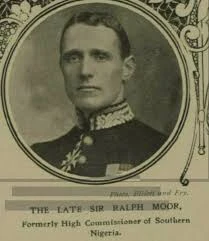
Although Ralph Moor died before the 1914 amalgamation, his earlier work in Southern Nigeria laid important foundations for the process.
Role in Southern Nigeria
- Moor served as High Commissioner of the Niger Coast Protectorate (later Southern Nigeria) from 1896 to 1903.
- He established early colonial administrative structures in the Niger Delta region.
- Moor led expeditions that brought more territories under British control, including the conquest of Benin in 1897.
Administrative Contributions
- Moor created a system of native courts and councils in Southern Nigeria.
- He established a more structured colonial administration that preceded later developments.
- Moor’s administrative divisions and approaches influenced later colonial governance in the South.
Economic Policies
- He promoted trade in palm oil and other products as alternatives to the slave trade.
- Moor developed early infrastructure to facilitate export of goods from Southern Nigeria.
- His economic policies helped establish patterns of trade that continued after amalgamation.
Sir Percy Girouard (1867-1932)

Percy Girouard served as Governor of Northern Nigeria after Lugard’s first term and before the amalgamation.
Background and Expertise
- Girouard was a Canadian-born railway engineer and colonial administrator.
- He had previously built railways in Sudan and South Africa.
- Girouard had significant expertise in transportation infrastructure.
Role in Northern Nigeria
- He served as Governor of Northern Nigeria from 1907 to 1909.
- Girouard continued implementing Lugard’s Indirect Rule system.
- He focused particularly on developing transportation infrastructure.
Railway Development
- Girouard oversaw the extension of the railway from Lagos to Kano.
- He recognized the importance of railways for both administrative control and economic development.
- The railway connections he developed later facilitated the economic integration of North and South after amalgamation.
Sir Charles Lindsay Temple (1871-1929)
Charles Temple was an important colonial administrator who contributed to the development of Northern Nigeria.
Administrative Career
- Temple served in various administrative positions in Northern Nigeria.
- He was Lieutenant-Governor of Northern Nigeria under Lugard after amalgamation.
- Temple had a deep interest in anthropology and local cultures.
Contributions to Northern Administration
- Temple systematized and documented the Indirect Rule system.
- He wrote “Native Races and Their Rulers” (1918), which explained colonial administrative approaches.
- Temple helped train colonial officers in understanding local customs and governance systems.
Role in Amalgamation
- As Lieutenant-Governor of Northern Nigeria after amalgamation, Temple helped implement the new administrative structure.
- He worked to maintain the distinct administrative character of Northern Nigeria within the amalgamated colony.
- Temple helped ensure continuity in Northern administration during the transition.
Indigenous Leaders and Their Responses
While British officials designed and implemented the amalgamation, Nigerian traditional rulers also played roles in how it unfolded, though they had little say in the decision itself.
Northern Emirs
- Sultan of Sokoto: The Sultan, as the most important traditional ruler in the North, maintained a complex relationship with the British after conquest.
- Emir of Kano: The emirs of Kano, particularly Aliyu dan Abdullah (1894-1903) and Abbas (1903-1919), had to navigate the changing political landscape.
- Other Emirs: Various emirs throughout Northern Nigeria had to adapt to British rule while maintaining their traditional authority.
Southern Traditional Rulers
- Oba of Lagos: The traditional rulers of Lagos, having lost political power earlier, had already adapted to some degree to colonial rule.
- Yoruba Obas: Traditional Yoruba rulers had varying relationships with British colonial authorities.
- Warrant Chiefs: In areas without centralized traditional authorities, the British appointed “warrant chiefs” who became part of the colonial system.
Response to Amalgamation
- Most traditional rulers had no choice but to accept amalgamation.
- Some used the new administrative structure to protect or enhance their positions.
- Others found their authority undermined by the new colonial arrangements.
- None were meaningfully consulted about the amalgamation decision itself.
Early Nigerian Educated Elite
A small but growing group of Western-educated Nigerians also responded to amalgamation, though they had little direct influence on the process.
Emerging Elite Figures
- Herbert Macaulay: A prominent Lagos intellectual and early nationalist who was critical of many colonial policies.
- Kitoyi Ajasa: Founder of the Nigerian Pioneer newspaper, which generally supported British colonial policies.
- Other Educated Elites: A small group of Western-educated professionals, especially in Lagos and other coastal areas.
Reactions to Amalgamation
- Some educated Nigerians saw potential benefits in the creation of a larger Nigerian entity.
- Others were concerned about the impact of Indirect Rule on traditional governance systems.
- Many were critical of the lack of Nigerian input into the decision-making process.
- The amalgamation eventually became a reference point for early nationalist thinking about Nigerian unity and identity.
Coordination and Implementation of Amalgamation
The amalgamation required coordination among various officials and departments:
Administrative Integration Team
- Colonial Secretaries: The chief administrative officers in both protectorates helped coordinate the administrative transition.
- Financial Officials: Treasury officials worked to integrate the financial systems of the two protectorates.
- Departmental Heads: Leaders of various government departments had to merge their operations.
Military Leadership
- Military Officers: British officers led the Nigeria Regiment, which combined forces from both protectorates.
- Police Commanders: Police forces were gradually integrated under a unified command structure.
Technical Experts
- Railway Engineers: Experts who worked on connecting the railway systems of North and South.
- Postal Officials: Officials who integrated the postal and telegraph systems.
- Customs Officers: Officials who created a unified customs service for the new Nigeria.
This term's Nigerian History topics
JSS3 Third Term · 10 topics
- The Amalgamation of Nigeria
- The Amalgamation Process
- Key Personalities and Their Roles in the Amalgamation of Nigerian Territories
- The Independence Movement
- Factors That Led to the Independence Movement
- The Nature of Nigerian Nationalism: The Struggle for Independence
- The Attainment of Independence
- The Berlin Treaty (Continuation of the Evolution of the Nigerian State)
- The Role of the Royal Niger Company in the Evolution of the Nigerian State
- People Involved in the Struggle for Nigerian Independence
Third Term Nigerian History Lesson Notes for Other Topics

History Of Lagos State III - Division of Lagos State
Read the full lesson note.

History Of Lagos State IV - Governors of Lagos State Since Creation
Read the full lesson note.

Major Title -Holders In The State: Idejo Chief, White Cap Chief
Read the full lesson note.

History Of Lagos State II
Read the full lesson note.

History Of Lagos State
Read the full lesson note.

Adjective And Adverb Puzzles
Read the full lesson note.

Nigerian Independence Republic And Federation
Read the full lesson note.

Christianity In Nigeria
Read the full lesson note.
Traditional Occupations In The Locality-Lagos State
Read the full lesson note.
Traditional Occupations Of Nigerian People Northern Nigeria
Read the full lesson note.

Traditional Religion In Nigeria
Read the full lesson note.
Islam In Nigeria
Read the full lesson note.
Traditional Occupations Of Nigerian People Southern Nigeria
Read the full lesson note.

Nigerian Independence
Read the full lesson note.

Heroes in Nigeria Environment
Read the full lesson note.
Lesson Notes for Other Classes

Basic 1 Lesson Note
The complete lesson note to guide your studies.

Basic 2 Lesson Note
The complete lesson note to guide your studies.

Basic 3 Lesson Note
The complete lesson note to guide your studies.

Basic 4 Lesson Note
The complete lesson note to guide your studies.

Basic 5 Lesson Note
The complete lesson note to guide your studies.

Basic 6 Lesson Note
The complete lesson note to guide your studies.