
Organization and Strategies Employed for the Progress of the Trans-Saharan Trade – JSS3 Nigerian History Lesson Note (First Term)
Download Lesson NoteLesson note at a glance
- Subject
- Nigerian History
- Class
- JSS3
- Term
- First Term
- Topic
- Organization and Strategies Employed for the Progress of the Trans-Saharan Trade
- Order
- Topic 2 of 9 this term
- Reading time
- 2 min
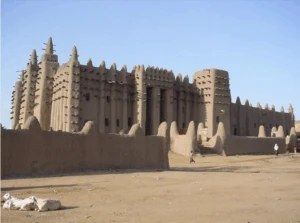
Imagine a vast desert, stretching for miles and miles, with scorching sun and limited water. Yet, across this seemingly impassable terrain, a bustling trade network flourished, connecting different cultures and economies. That’s the trans-Saharan trade!
The trans-Saharan trade wasn’t something that sprang up overnight. It developed gradually over centuries, starting as small-scale exchanges between communities living on the edges of the Sahara. As these communities grew and developed, so did the trade networks.
The Berber People

The Berber people, who lived in North Africa, played a crucial role in the early development of the trans-Saharan trade. They were skilled navigators of the desert, using camels to transport goods across the vast distances. Camels, with their ability to store water and withstand harsh conditions, were perfectly suited for desert travel. They became known as the “ships of the desert.”
The trade routes crossed the Sahara in several directions, connecting trading centers in West-Africa with cities in North Africa, like Sijilmasa, and even reaching as far as Europe and the Middle East. These routes weren’t fixed; they shifted over time depending on political condition and the availability of resources.
The organization of the trans-Saharan trade was complex. It involved merchants, traders, guide and various intermediaries. Trade caravans, sometimes consisting of hundreds or even thousand of camels, would travel across the desert, carrying goods like gold, salt, kola nuts, textiles, and slaves.
Gold was a major commodity traded from West Africa. The region had rich gold deposits, and this gold was highly valued in North Africa, Europe, and the Middle East. Salt, mined in the Sahara, was equally important, as it was essential for preserving food in the hot climate of West-Africa. These two commodities were the backbone of the trans-Saharan trade.
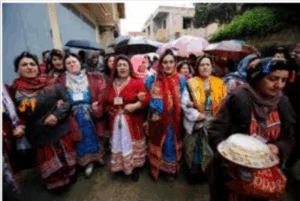
Other important goods included kola nuts, used as a stimulant, and textiles, which were often traded for gold. Unfortunately, the trans-Saharan trade also involved the trade in enslaved people.
The trade was organized in stages. Merchants from North Africa would travel south across the Sahara, meeting with traders from West Africa at trading centers located on the edge of the desert, like Timbuktu and Gao.10 These trading centers became important hubs of commerce and cultural exchange.
The trans-Saharan trade was more than just an exchange of goods. It also facilitated the exchange of ideas, knowledge, and culture. Islam, for example, spread to West Africa through the trans-Saharan trade, significantly influencing the region’s culture and politics.
The trans-Saharan trade flourished for centuries, contributing to the growth and prosperity of empires like Ghana, Mali, and Songhai. However, with the arrival of European traders by sea, trans-Saharan trade gradually declined in importance.
Evaluation
Now, let’s test your understanding.
- Can you describe the origin of the trans-Saharan trade and explain how it was organize
- What were some of the key goods traded across the Sahara?
This term's Nigerian History topics
JSS3 First Term · 9 topics
- Origin of the Trans-Saharan Trade and its Nature
- Organization and Strategies Employed for the Progress of the Trans-Saharan Trade
- Effects of the Trans-Saharan Trade on West Africa and Nigeria
- The Spread of Islam in West Africa and Nigeria
- Main Reasons for the Fast Spread of Islam in West Africa and Nigeria
- Early European Contact with Africa
- Early European Contact with Nigeria
- The Trans-Atlantic Slave Trade (The Illegitimate and Legitimate Trade)
- Advent of Christianity in Nigeria: Impacts of the Christian Missionaries in Nigeria
First Term Nigerian History Lesson Notes for Other Topics

Civil Rule in Nigeria - Third Republic (1992-1993)
Read the full lesson note.
Civil Rule in Nigeria (Cont'd) - Forth Republic (1999-Present)
Read the full lesson note.

Other Pre-Colonial Settlers In Lagos
Read the full lesson note.

Nigerian People - North West And North East
Read the full lesson note.
Nigerian People: South East And North Central
Read the full lesson note.

Nigerian People: South West And South-South
Read the full lesson note.
Indigenous Occupation And Mode Of Transportation In Lagos
Read the full lesson note.
Tradition And Origin People Of Awori, Ijebu, e.t.c
Read the full lesson note.

Location Of The Indigenous People Of Lagos State
Read the full lesson note.
Indigenous People Of Lagos State - Awori, Egun, Ijebu Etc.
Read the full lesson note.

British Rule In Nigeria, Traditional Nationalism, And Resistances
Read the full lesson note.

Detailed Study Of Major Constitutions
Read the full lesson note.
Meaning Of A Constitution
Read the full lesson note.

British Rule In Nigeria 3
Read the full lesson note.
British Rule In Nigeria
Read the full lesson note.
Lesson Notes for Other Classes

Basic 1 Lesson Note
The complete lesson note to guide your studies.

Basic 2 Lesson Note
The complete lesson note to guide your studies.

Basic 3 Lesson Note
The complete lesson note to guide your studies.

Basic 4 Lesson Note
The complete lesson note to guide your studies.

Basic 5 Lesson Note
The complete lesson note to guide your studies.

Basic 6 Lesson Note
The complete lesson note to guide your studies.

