
Labour and Trade Unions – Basic 6 Igbo Lesson Note (First Term)
Download this term · ₦1,000Lesson note at a glance
- Subject
- Igbo
- Class
- Basic 6
- Term
- First Term
- Topic
- Labour and Trade Unions
- Order
- Topic 10 of 10 this term
- Reading time
- 5 min
Labour is the work people do, using body or mind, usually to earn wages or a salary. A trade union is an organised group of workers who protect their rights and interests.
Behavioural objectives
- Define labour and trade union.
- State the types of labour with examples.
- Explain collective bargaining and strike.
- List the importance of trade unions to workers.
- Name ten trade unions in Nigeria and the workers they represent.
- State the challenges facing trade unions.
What is labour?
Labour is work done by people, especially physical or mental work done for wages.
- Employer: a person or organisation that pays workers to do a job.
- Employee (worker): a person who does a job and is paid by an employer.
- Wage: money paid to a worker for the work done.
What are the types of labour?
There are three types of labour: skilled, unskilled and professional.
Skilled labour
- Meaning: work that needs training or practice in a trade.
- Examples: carpenters, tailors and mechanics.
Unskilled labour
- Meaning: work that needs little or no special training.
- Examples: cleaners and general labourers.
Professional labour
- Meaning: work that needs long study and formal qualifications.
- Examples: doctors, teachers and lawyers.
What is a trade union?
A trade union is an organised group of workers who come together to protect their rights, improve working conditions and negotiate better wages.
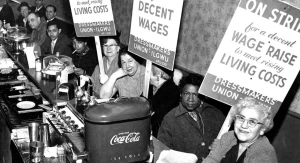
- Members: workers in the same job, trade or industry.
- Leaders: officials chosen by members to speak for them.
- Dues: small regular payments by members to run the union.
What are the purposes of a trade union?
A trade union exists to look after the interests of its members.
- Protect workers’ rights: make sure workers are treated fairly.
- Negotiate better pay: ask employers for fair wages and salaries.
- Improve working conditions: push for safe and healthy workplaces.
- Provide legal support: help members who face unfair treatment.
- Fight exploitation: stop employers from overworking or underpaying workers.
How do trade unions work?
Trade unions work mainly through collective bargaining and, as a last resort, strike action.
What is collective bargaining?
Collective bargaining is the talks between a union and an employer to agree on pay and working conditions.
- Representation: the union speaks for all its workers.
- Negotiation: union leaders meet employers and discuss the workers’ demands.
- Strength in numbers: workers are stronger together than one by one.
What is a strike?
A strike is when workers together refuse to work to press their demands.
- Reason: to protest poor conditions or low pay.
- Aim: to force the employer to negotiate.
- Last resort: unions use it when talks have failed.
Why are trade unions important?
Trade unions are important because they protect workers and give them a united voice.
- Better wages:
- They negotiate salary increases.
- They fight for a minimum wage, the lowest pay an employer may give.
- They seek fair pay for work done.
- Safe working conditions:
- They demand safety equipment.
- They ask for a proper work environment.
- They protect workers’ health.
- Job security:
- They protect workers against unfair dismissal.
- They defend workers’ rights.
- They provide legal representation.
- Benefits:
- Medical insurance.
- Pension.
- Leave allowances.
- Training opportunities.
- Voice for workers:
- They represent workers’ concerns.
- They communicate with management.
- They support a fair, democratic workplace.
What are examples of trade unions in Nigeria?
Nigeria has many trade unions, each serving workers in a particular sector.
| Union | Full name | Who it represents |
|---|---|---|
| NLC | Nigeria Labour Congress | Central body for many trade unions |
| TUC | Trade Union Congress | Another major labour centre, mainly senior staff |
| ASUU | Academic Staff Union of Universities | University lecturers |
| NUT | Nigeria Union of Teachers | Primary and secondary school teachers |
| NUPENG | National Union of Petroleum and Natural Gas Workers | Oil and gas workers, including tanker drivers |
| PENGASSAN | Petroleum and Natural Gas Senior Staff Association | Senior staff in the oil sector |
| MHWU | Medical and Health Workers Union | Health workers |
| NUJ | Nigeria Union of Journalists | Journalists and media workers |
| NURTW | National Union of Road Transport Workers | Drivers and transport workers |
| NULGE | Nigeria Union of Local Government Employees | Local government workers |
Nigeria Labour Congress (NLC)
- Role: umbrella body for many trade unions.
- Work: speaks for workers nationwide.
- Focus: negotiates for a national minimum wage.
Trade Union Congress (TUC)
- Role: another major labour centre.
- Members: mainly senior staff unions.
- Work: often works with the NLC.
Academic Staff Union of Universities (ASUU)
- Members: university lecturers.
- Focus: education funding and better conditions in universities.
- Action: has gone on strike several times.
Nigeria Union of Teachers (NUT)
- Members: primary and secondary school teachers.
- Focus: teachers’ welfare.
NUPENG and PENGASSAN
- NUPENG: oil and gas workers and tanker drivers.
- PENGASSAN: senior staff in the oil sector.
- Link: the two unions often act together.
MHWU, NUJ, NURTW and NULGE
- MHWU: works for health workers and better healthcare.
- NUJ: protects press freedom and the welfare of journalists.
- NURTW: serves commercial drivers and transport workers.
- NULGE: serves local government workers.
What challenges do trade unions face?
Trade unions face problems from outside and from within.
- Government interference: government may try to control union decisions.
- Employer resistance: some employers refuse to negotiate.
- Internal conflicts: quarrels among members and leaders weaken the union.
- Poor funding: low dues limit what the union can do.
- Disruption by strikes: long strikes can harm the economy and the public.
- Corruption in leadership: dishonest leaders lose members’ trust.
- Weak labour laws: poor laws make it hard to protect workers.
Practice questions
- A trade union is ________
- a) A shop
- b) Workers organised to protect rights
- c) A school
- d) A market
- NLC stands for ________
- a) Nigeria Local Congress
- b) Nigeria Labour Congress
- c) National Labour Committee
- d) None
- ASUU represents ________
- a) Doctors
- b) University lecturers
- c) Drivers
- d) Farmers
- Workers go on strike to ________
- a) Rest
- b) Protest and demand better conditions
- c) Celebrate
- d) Travel
- Trade unions help workers get ________
- a) Nothing
- b) Better wages and conditions
- c) Less pay
- d) More work
Answers: 1. b, 2. b, 3. b, 4. b, 5. b
Evaluation
- What is a trade union?
- Why are trade unions important?
- Name three trade unions in Nigeria.
- What is collective bargaining?
- What is a strike?
Assignment
Define labour and trade union. Then list five trade unions in Nigeria, stating the workers each one represents and one thing it does for them.
This term's Igbo topics
Basic 6 First Term · 10 topics
Get Igbo as PDF and Word
Every week of Basic 6 Igbo, First Term, formatted and ready to print. Ad-free, and the copy lock comes off.
Get this term Card, bank transfer, USSD or OPay
Basic 6 Igbo Lesson Notes for Other Topics
Mmeghari Ihe Ule Tam Gara Aga
Read the full lesson note.
Ije nkenke ekukondia hoputarakuie aghobazaa
Read the full lesson note.
Omenala (Oru Obere na onu umuaka)
Read the full lesson note.

Onuogugu (1 - 300)
Read the full lesson note.
Nkejiausu (Ngwaa)
Read the full lesson note.
Oji(omenala)
Read the full lesson note.
Nnwale Etiti Izuuka
Read the full lesson note.
Ilu di mfe
Read the full lesson note.
Nzikorita ozi nke odinala na nke ugbua.
Read the full lesson note.

Mmeghari ihe elere n'ule tam
Read the full lesson note.
Ekwumekwu: Ibi n'udo
Read the full lesson note.

Nkejia susu (njiko)
Read the full lesson note.
Ejije
Read the full lesson note.

Izu inu ogwu aghara aghara
Read the full lesson note.
Nkpolu na ubara
Read the full lesson note.
Lesson Notes for Other Classes

Basic 1 Lesson Note
The complete lesson note to guide your studies.

Basic 2 Lesson Note
The complete lesson note to guide your studies.

Basic 3 Lesson Note
The complete lesson note to guide your studies.

Basic 4 Lesson Note
The complete lesson note to guide your studies.

Basic 5 Lesson Note
The complete lesson note to guide your studies.
