
Concept of Social Injustice – Basic 5 Civic Education Lesson Note (Third Term)
Download this term · ₦1,000Lesson note at a glance
- Subject
- Civic Education
- Class
- Basic 5
- Term
- Third Term
- Topic
- Concept of Social Injustice
- Order
- Topic 4 of 6 this term
- Reading time
- 7 min
Learning Objectives
By the end of this lesson, students will be able to:
- Define social injustice and understand its meaning
- Identify various examples of social injustice in society
- Understand the factors that contribute to and work against social injustice
- Suggest practical ways to address and combat social injustice
Essential Vocabulary
- Social Injustice: Unfair treatment of people based on characteristics like race, gender, religion, or social status
- Discrimination: Treating people differently and unfairly because of their identity or background
- Inequality: The condition where people do not have equal opportunities or resources
- Prejudice: Preconceived negative opinions about people based on their group membership
Required Resources
- Lagos State Civic Education Curriculum Guidelines (Primary 5 Revision)
- Ministry of Education approved textbooks
- Interactive whiteboard or traditional blackboard
- Chart paper and colored markers
- Student notebooks and worksheets
- Audiovisual materials depicting examples of social injustice
- Case study materials for group activities
Building on Previous Knowledge
This lesson connects to earlier learning by:
- Reviewing concepts of fairness, justice, and proper conduct from previous lessons
- Discussing times when students may have experienced or witnessed unfair treatment
- Building on understanding of equality and connecting it to the broader concept of social justice
- Exploring how individual actions can impact societal fairness
Key Skills Development
Students will develop:
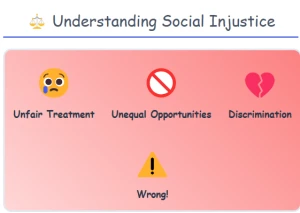
1. Educational Discrimination
When children are denied access to quality education because of their family’s economic situation, location, or social background. This includes situations where some children cannot attend school due to poverty or where certain groups receive inferior educational resources.
2. Bullying and Social Exclusion
When individuals are treated poorly, excluded from activities, or harassed because of their appearance, beliefs, abilities, or background. This type of injustice can occur in schools, communities, and workplaces.
3. Unequal Access to Basic Services
When people cannot access essential services like healthcare, clean water, or adequate housing because of where they live, their economic status, or their social identity.
4. Employment Discrimination
When qualified individuals are denied job opportunities or receive unequal treatment at work because of factors unrelated to their abilities or performance.
Effects of Social Injustice
On Individuals
-
Reduced self-esteem and confidence
-
Limited opportunities for personal growth and development
-
Feelings of anger, frustration, and hopelessness
-
Decreased access to resources and services needed for well-being
On Society
-
Increased social tension and conflict
-
Reduced overall productivity and progress
-
Loss of potential contributions from marginalized groups
-
Weakened social cohesion and community bonds
Why Speaking Out Matters

It is crucial to speak out against social injustice because:
-
Promotes Fairness: Speaking up helps ensure that everyone is treated fairly and with dignity
-
Creates Awareness: Bringing attention to injustice helps others understand and recognize problems
-
Encourages Change: Speaking out can lead to positive changes in policies, attitudes, and behaviors
-
Protects Others: Standing up for what’s right helps protect vulnerable individuals and groups
How Social Injustice Affects Everyone
Social injustice impacts not only those who are directly targeted but also society as a whole:
-
Community Impact: When some people are treated unfairly, it weakens the entire community
-
Missed Opportunities: Society loses the potential contributions of those who are marginalized
-
Social Unrest: Injustice can lead to conflict and instability that affects everyone
-
Moral Responsibility: All citizens have a responsibility to work toward a fair and just society
What We Can Do to Address Social Injustice
Individual Actions
-
Show Kindness and Respect: Treat everyone with dignity regardless of their background
-
Stand Up for Others: Speak out when witnessing unfair treatment
-
Educate Ourselves: Learn about different cultures, experiences, and perspectives
-
Practice Inclusion: Include others in activities and conversations
-
Report Injustice: Tell trusted adults when witnessing serious cases of unfair treatment
Community Solutions
-
Equal Opportunities: Ensure all children have access to quality education and resources
-
Fair Policies: Advocate for laws and rules that protect everyone’s rights
-
Community Programs: Support initiatives that help disadvantaged groups
-
Awareness Campaigns: Educate others about the importance of fairness and equality
The Role of Different Institutions
Schools
-
Provide equal opportunities for all students regardless of background
-
Implement anti-bullying policies and programs
-
Promote inclusive education that celebrates diversity
-
Ensure fair treatment in all school activities and decisions
Government
-
Create and enforce laws that protect against discrimination
-
Ensure equal access to public services and resources
-
Promote policies that reduce inequality
-
Protect the rights of all citizens
Media
-
Raise awareness about social injustice issues
-
Provide accurate information about marginalized communities
-
Promote positive representations of diverse groups
-
Hold institutions accountable for fair treatment
Individuals
-
Treat everyone with kindness and respect
-
Stand up against unfair treatment when witnessed
-
Support organizations working for social justice
-
Vote for leaders who promote equality and fairness
Case Study Discussion Questions
-
Definition Understanding: What is social injustice, and how does it differ from individual conflicts?
-
Real-World Examples: Can you identify examples of social injustice that exist in Nigerian society today?
-
Personal Experiences: Have you ever witnessed or experienced unfair treatment? How did it make you feel?
-
Impact Analysis: How does social injustice affect both individuals and society as a whole?
-
Action Planning: What specific actions can young people take to address social injustice in their communities?
-
Institutional Roles: How can schools, government, and media work together to combat social injustice?
-
Future Vision: What would a just and fair society look like, and how can we work toward that goal?
Assessment Questions
Multiple Choice Questions
-
Social injustice refers to unfair treatment of people based on factors such as:
a) Their effort and hard work
b) Their character and personality
c) Race, gender, or social status
d) Their talents and abilities
-
An example of social injustice includes unequal access to:
a) Entertainment and games
b) Quality education and healthcare
c) Personal hobbies
d) Luxury items
-
Why is it important to speak out against social injustice?
a) It only benefits the person speaking up
b) It promotes fairness and equality for everyone
c) It doesn’t make any difference
d) It makes situations worse
-
What can individuals do to address social injustice?
a) Ignore the problem and hope it goes away
b) Treat everyone with kindness and respect
c) Only focus on their own needs
d) Avoid people who are different
-
Social injustice affects:
a) Only the people directly targeted
b) Everyone in society
c) Only wealthy people
d) Only government officials
Discussion Questions
-
How can schools create a more inclusive environment for all students?
-
What role should young people play in addressing social injustice?
-
How can communities work together to promote equality and fairness?
-
What are some ways that media can help combat social injustice?
-
How can individuals contribute to creating a more equitable society?
Lesson Implementation
Teacher Activities
-
Facilitate meaningful discussions and interactive activities
-
Ask thought-provoking questions to encourage critical thinking
-
Monitor student participation and understanding
-
Encourage active engagement and respectful dialogue
-
Provide guidance and support for group activities
Student Activities
-
Listen attentively to presentations and discussions
-
Participate actively in class conversations
-
Complete individual and group worksheets
-
Engage in role-playing and case study activities
-
Share personal experiences and observations (when appropriate)
Assessment Methods
-
Class Participation: Evaluate student engagement in discussions and activities
-
Written Assessments: Use quizzes and worksheets to test understanding
-
Group Projects: Assess collaborative work on addressing social injustice
-
Case Study Analysis: Evaluate students’ ability to identify and analyze examples
-
Reflection Activities: Have students write about their learning and commitments to action
Learning Outcomes
Upon completion of this lesson, students will:
-
Demonstrate a clear understanding of social injustice and its various forms
-
Identify specific examples of social injustice in their communities and society
-
Explain the negative impacts of social injustice on individuals and communities
-
Propose practical solutions for addressing social injustice at personal and community levels
-
Commit to treating others fairly and standing up against injustice when they encounter it
Extension Activities
-
Research projects on historical examples of social justice movements
-
Community service projects that address local inequalities
-
Creative presentations (art, drama, music) about social justice themes
-
Interviews with community leaders about efforts to promote equality
-
Development of class action plans for promoting fairness in school
- Critical thinking: Analyzing examples of social injustice and their causes
- Communication skills: Effectively discussing and explaining social injustice issues
- Collaboration: Working together to understand and address social problems
- Self-awareness: Recognizing the impact of social injustice on individuals and communities
Core Content
Understanding Social Injustice
Social injustice refers to the unfair treatment of individuals or groups based on characteristics such as their race, gender, religion, economic status, or other personal attributes. It occurs when people are denied equal opportunities, rights, or resources simply because of who they are, rather than their actions or merit.
Common Examples of Social Injustice
This term's Civic Education topics
Basic 5 Third Term · 6 topics
Get Civic Education as PDF and Word
Every week of Basic 5 Civic Education, Third Term, formatted and ready to print. Ad-free, and the copy lock comes off.
Get this term Card, bank transfer, USSD or OPay
Basic 5 Civic Education Lesson Notes for Other Topics
Advantages and Disadvantages of Pressure Group
Read the full lesson note.
Meaning and Definition of Values
Read the full lesson note.
Values that Promotes Peace
Read the full lesson note.
Types Of Social Injustice
Read the full lesson note.
How To Communicate Social Injustice
Read the full lesson note.

Meaning Of Loyalty And Evidence Of Loyalty
Read the full lesson note.
Loyalty In Relationships And Its examples
Read the full lesson note.
Importance Of Loyalty Consequences Of Disloyalty
Read the full lesson note.
National Service That Shows Loyalty
Read the full lesson note.
Meaning Of Leadership Types Of Leadership
Read the full lesson note.
Qualities Of A Good Leader
Read the full lesson note.
Leadership Functions
Read the full lesson note.
Leadership Styles
Read the full lesson note.
Characteristics Of A Bad Leader
Read the full lesson note.
Definition And Meaning Of Government
Read the full lesson note.
Lesson Notes for Other Classes

Basic 1 Lesson Note
The complete lesson note to guide your studies.
Basic 2 Lesson Note
The complete lesson note to guide your studies.

Basic 3 Lesson Note
The complete lesson note to guide your studies.
Basic 4 Lesson Note
The complete lesson note to guide your studies.
Basic 6 Lesson Note
The complete lesson note to guide your studies.
