
Qualities Of A Good Leader Basic 5 Civic Education Lesson Note
Download Lesson NoteTopic: Qualities Of A Good Leader
PERFORMANCE OBJECTIVES
By the end of this lesson, pupils should be able to:
- Identify qualities of a good leader
- Explain why each quality is important for leadership
- Give examples of leaders who demonstrate good qualities
- Assess leadership qualities in themselves and others
- Develop personal leadership skills
KEYWORDS
- Qualities
- Character
- Integrity
- Responsibility
- Courage
- Wisdom
SET INDUCTION
Ask pupils to think of someone they consider a good leader (parent, teacher, community leader, etc.). Have them share what makes this person a good leader. Write their responses on the board and group them into leadership qualities.
ENTRY BEHAVIOR
Pupils can:
- Define leadership and identify different types of leaders
- Recognize leaders at various levels (family, school, community, national)
- Understand the importance of leadership in society
INSTRUCTIONAL MATERIALS
- Pictures of respected leaders (local and international)
- Charts showing leadership qualities with illustrations
- Story cards featuring examples of good leadership
- Role-play scenarios for demonstrating qualities
- Self-assessment checklists for leadership qualities
LESSON CONTENT
MEANING OF LEADERSHIP QUALITIES
Leadership qualities are the positive characteristics, traits, and behaviors that make someone an effective and respected leader. These qualities help leaders gain the trust and cooperation of others while achieving common goals.
ESSENTIAL QUALITIES OF A GOOD LEADER
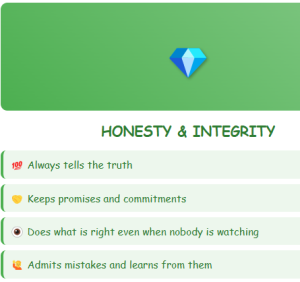
- HONESTY AND INTEGRITY
- Always tells the truth
- Keeps promises and commitments
- Does what is right even when nobody is watching
- Admits mistakes and learns from them
Example: A class prefect who reports truthfully about class behavior to the teacher
- RESPONSIBILITY AND ACCOUNTABILITY
- Takes ownership of decisions and actions
- Accepts blame when things go wrong
- Ensures tasks are completed properly
- Takes care of people under their leadership
Example: A team captain who takes responsibility when the team loses a match
- COURAGE AND BRAVERY
- Stands up for what is right
- Makes difficult decisions when necessary
- Faces challenges without fear
- Protects others from harm or injustice
Example: A student who defends a classmate being bullied
- WISDOM AND GOOD JUDGMENT
- Makes smart decisions based on experience and knowledge
- Thinks carefully before acting
- Seeks advice from others when needed
- Learns from past experiences
Example: A head teacher who consults with teachers before making school policy changes
- COMPASSION AND EMPATHY
- Cares about the feelings and needs of others
- Shows kindness and understanding
- Helps those in need
- Listens to others’ problems and concerns
Example: A parent who comforts a child who is afraid or upset
- HUMILITY AND MODESTY
- Does not boast or show off
- Treats everyone with respect regardless of their position
- Admits when they don’t know something
- Gives credit to others for their contributions
Example: A successful leader who thanks their team for achievements
- PATIENCE AND SELF-CONTROL
- Remains calm under pressure
- Does not get angry easily
- Takes time to understand situations fully
- Controls emotions when making decisions
Example: A teacher who remains patient when students are slow to understand
- COMMUNICATION SKILLS
- Speaks clearly and confidently
- Listens carefully to others
- Explains ideas in ways others can understand
- Encourages open discussion and feedback
Example: A group leader who explains tasks clearly to team members
- FAIRNESS AND JUSTICE
- Treats everyone equally
- Makes decisions based on facts, not favorites
- Gives everyone a chance to be heard
- Ensures rules apply to everyone the same way
Example: A referee who makes fair decisions regardless of which team they support
- VISION AND FORWARD-THINKING
- Has clear goals for the future
- Helps others see and work toward common objectives
- Plans ahead and prepares for challenges
- Inspires others to achieve great things
Example: A community leader who develops long-term plans for community development
HOW TO DEVELOP LEADERSHIP QUALITIES
Personal Development:
- Practice honesty in daily interactions
- Take responsibility for your actions
- Help others whenever possible
- Listen more than you speak
- Learn from your mistakes
At School:
- Volunteer for leadership roles (class prefect, group leader)
- Help classmates with their studies
- Participate actively in group projects
- Respect teachers and follow school rules
- Stand up against bullying and unfair treatment
At Home:
- Help with household chores without being asked
- Take care of younger siblings
- Be honest with parents about your activities
- Show respect to elders and visitors
- Help resolve family conflicts peacefully
In the Community:
- Participate in community service activities
- Show respect to community leaders
- Help maintain cleanliness in the neighborhood
- Be kind to neighbors and strangers
- Promote peace and unity among friends
EXAMPLES OF LEADERS WITH GOOD QUALITIES
Historical Leaders:
- Nelson Mandela (forgiveness and reconciliation)
- Mahatma Gandhi (peaceful resistance and honesty)
- Mother Teresa (compassion and service to others)
Nigerian Leaders:
- Chinua Achebe (wisdom and literary excellence)
- Wole Soyinka (courage and intellectual honesty)
- Ngozi Okonjo-Iweala (competence and integrity)
Everyday Leaders:
- Parents who sacrifice for their children
- Teachers who care about student success
- Community volunteers who help others
- Religious leaders who guide with wisdom
PRESENTATION
Step 1: Review previous lesson on types of leadership and introduce leadership qualities
Step 2: Explain each quality with definitions, examples, and importance
Step 3: Discuss how pupils can develop these qualities in their daily lives
Step 4: Practice identifying qualities through stories and role-play activities
CLASS ACTIVITIES
- Quality Identification: Match leadership qualities with real-life examples
- Story Analysis: Read stories about leaders and identify their qualities
- Role Play: Act out scenarios demonstrating different leadership qualities
- Self-Assessment: Complete checklist of personal leadership qualities
- Future Leader Visioning: Describe the type of leader they want to become
EVALUATION QUESTIONS
- What are leadership qualities?
- Mention five important qualities of a good leader
- Why is honesty important for a leader?
- Give an example of how a leader can show courage
- How can you develop leadership qualities at school?
- What does it mean for a leader to be fair and just?
- Name a leader you admire and explain one quality they have
- How can patience help someone be a better leader?
ASSIGNMENT
- Interview a leader in your community and write about their best leadership quality
- Create a poster showing five leadership qualities with illustrations
- Write about a time when you showed leadership qualities
- Make a personal plan for developing three leadership qualities you want to improve
CONCLUSION
Good leaders possess many important qualities including honesty, responsibility, courage, wisdom, compassion, humility, patience, communication skills, fairness, and vision. These qualities help leaders earn respect, make good decisions, and inspire others to achieve great things. We can all develop these qualities through practice and commitment to becoming better people and future leaders.
First Term Civic Education Lesson Notes for Other Topics
National Honors Award
Explore lesson notes covering all topics.
National Heroes and Heroines
Explore lesson notes covering all topics.

Reasons for National Honors Award
Explore lesson notes covering all topics.
Concept of Valuing Nigeria Goods
Explore lesson notes covering all topics.
Reasons for Valuing Nigeria Goods and Examples
Explore lesson notes covering all topics.
Benefits of Patronizing Nigerian Goods
Explore lesson notes covering all topics.
Challenges Facing Nigerian Goods
Explore lesson notes covering all topics.
Problems in Developing Positive Attitudes
Explore lesson notes covering all topics.
Encouraging Nigerian Goods
Explore lesson notes covering all topics.
Community Values
Explore lesson notes covering all topics.
Components of Civic Education II
Explore lesson notes covering all topics.

Benefits of Democracy
Explore lesson notes covering all topics.
Democratic Practices
Explore lesson notes covering all topics.
Rights and Duties
Explore lesson notes covering all topics.
Components of Civic Education
Explore lesson notes covering all topics.
Lesson Notes for Other Classes
Basic 1 Lesson Note
The complete lesson note to guide your studies.

Basic 2 Lesson Note
The complete lesson note to guide your studies.

Basic 3 Lesson Note
The complete lesson note to guide your studies.

Basic 4 Lesson Note
The complete lesson note to guide your studies.

Basic 6 Lesson Note
The complete lesson note to guide your studies.

JSS1 Lesson Note
The complete lesson note to guide your studies.