
Rearing Of Chicken, Rabbit, Or Snail Basic 5 Agricultural Science Lesson Note
Download Lesson NoteTopic: Rearing Of Chicken, Rabbit, Or Snail
LEARNING OBJECTIVES
By the end of the lesson, pupils should be able to:
- Identify tools/materials used for rearing farm animals
- Construct a medium size cage, hutch or pen for animals
- Raise chicken, rabbit and snail at the school farm and at home
CONTENT
REARING CHICKENS

Tools and Materials for Chicken Rearing
Housing Materials
- Wood planks – for building the chicken coop frame
- Wire mesh – for making windows and doors
- Roofing sheets – zinc or aluminum for protection from rain
- Nails and screws – for joining materials together
- Hinges – for making doors that can open and close
- Cement and sand – for making the floor
- Paint or wood preservative – to protect wood from insects
Equipment and Tools
- Feeders – containers for serving chicken feed
- Waterers – containers for providing clean drinking water
- Perches – wooden bars where chickens rest at night
- Nesting boxes – where hens lay their eggs
- Heat source – for keeping young chicks warm
- Cleaning tools – brooms, rakes, and disinfectants
Constructing a Chicken Pen/Coop
Materials Needed:
- Wood planks (2×4 inches)
- Wire mesh (1-inch holes)
- Roofing sheets
- Nails, screws, and hinges
- Cement for foundation
Construction Steps:
- Choose location – dry, elevated area with good drainage
- Mark the area – for a medium coop: 8 feet x 6 feet x 6 feet high
- Prepare foundation – level the ground and lay cement if possible
- Build frame – construct rectangular frame using wood planks
- Install walls – use wood planks for back and sides, wire mesh for front
- Add roof – install slanted roof using roofing sheets
- Make door – create entrance door with hinges
- Add ventilation – install wire mesh windows near the roof
- Build nesting boxes – 12x12x12 inches boxes along one wall
- Install perches – place wooden bars 2 feet above ground
- Add feeders and waterers – secure feeding equipment inside
Chicken Management Practices
Daily Care:
- Feed chickens twice daily (morning and evening)
- Provide fresh water at all times
- Collect eggs regularly to prevent breaking
- Clean the coop weekly or when needed
- Check for sick birds and isolate if necessary
Feeding:
- Chick starter – for birds 0-8 weeks old
- Grower feed – for birds 8-18 weeks old
- Layer feed – for egg-laying hens
- Kitchen scraps – vegetables, rice, bread (in small amounts)
- Clean water – should always be available
REARING RABBITS

Tools and Materials for Rabbit Rearing
Housing Materials
- Wood planks – for building hutch frame and walls
- Wire mesh – for cage sides and doors
- Roofing materials – to protect from rain and sun
- Nails and wire – for joining materials
- Hinges and locks – for doors and feeding compartments
Equipment
- Feed hoppers – automatic feeding containers
- Water bottles – for providing clean water
- Hay racks – for serving hay and grass
- Nest boxes – for breeding rabbits
- Cleaning tools – for maintaining hygiene
Constructing a Rabbit Hutch
Materials Needed:
- Wood planks and wire mesh
- Roofing sheets
- Nails, screws, and hinges
- Water bottles and feed hoppers
Construction Steps:
- Design the hutch – medium size: 4 feet x 2 feet x 2 feet high
- Build frame – construct rectangular wooden frame
- Add floor – use wood with wire mesh for drainage
- Install walls – back and sides with wood, front with wire mesh
- Add roof – slanted roof to drain rainwater
- Create door – hinged front door for easy access
- Install feed hopper – attach to side of hutch
- Add water system – mount water bottle on outside
- Build nest box – separate compartment for breeding
- Raise hutch – elevate 2-3 feet above ground on legs
Rabbit Management Practices
Daily Care:
- Feed rabbits morning and evening
- Check water bottles and refill when needed
- Clean hutch remove droppings and uneaten food
- Observe rabbits for signs of illness
- Provide fresh grass or hay daily
Feeding:
- Pellets – commercial rabbit feed
- Fresh vegetables – carrots, cabbage, lettuce
- Hay and grass – for fiber and chewing
- Clean water – in bottles or bowls
- Avoid – chocolate, onions, and poisonous plants
REARING SNAILS
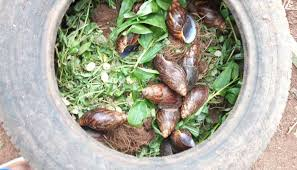
Tools and Materials for Snail Rearing
Housing Materials
- Wooden boxes or plastic containers
- Wire mesh or net – for covering containers
- Soil – loamy soil for the snail habitat
- Leaves – for natural environment
- Water spray bottle – for maintaining moisture
Equipment
- Feeding plates – shallow dishes for food
- pH testing kit – to check soil acidity
- Thermometer – to monitor temperature
- Measuring tools – for proper spacing
Constructing a Snail Pen
Materials Needed:
- Wooden box or plastic container
- Wire mesh or fine net
- Loamy soil
- Organic matter (leaves, grass)
Construction Steps:
- Prepare container – use box 3 feet x 2 feet x 1 foot deep
- Make drainage holes – small holes at the bottom
- Add soil – 6-8 inches of loamy soil
- Mix organic matter – add decomposed leaves to soil
- Create shelter – add pieces of wood or stones for hiding
- Install covering – wire mesh or net to prevent escape
- Add water source – shallow water dish
- Plant vegetation – small plants for natural environment
Snail Management Practices
Daily Care:
- Spray water to keep environment moist
- Provide fresh food – fruits and vegetables
- Remove uneaten food to prevent spoilage
- Check moisture level – soil should be damp, not wet
- Observe snails for growth and health
Feeding:
- Fruits – pawpaw, banana, watermelon
- Vegetables – lettuce, cabbage, cucumber
- Calcium sources – eggshells, bone meal
- Water – spray regularly to maintain humidity
- Avoid – salty, spicy, or processed foods
COMPARISON OF THE THREE ANIMALS
| Aspect | Chicken | Rabbit | Snail |
| Space needed | Medium | Small | Very small |
| Initial cost | Moderate | Low | Very low |
| Growth rate | Fast (4-6 months) | Fast (3-4 months) | Slow (6-12 months) |
| Products | Meat, eggs | Meat, fur | Meat |
| Care level | Moderate | Moderate | Easy |
| Feed cost | High | Moderate | Low |
EVALUATION QUESTIONS
- List five materials needed to build a chicken coop.
- What is the recommended size for a medium rabbit hutch?
- Name four tools needed for snail rearing.
- How often should chickens be fed daily?
- What type of soil is best for snail rearing?
- Why should rabbit hutches be raised above the ground?
- List three types of chicken feed.
- What should you avoid feeding to rabbits?
- How do you maintain proper moisture for snails?
- Compare the space requirements for chickens, rabbits, and snails.
PRACTICAL ACTIVITY
School Farm Project:
- Choose one animal (chicken, rabbit, or snail) to rear as a class
- Gather materials needed for construction
- Build the housing following the steps learned
- Set up feeding and watering systems
- Acquire healthy animals to start the project
- Create care schedule with different students taking turns
- Keep daily records of feeding, cleaning, and observations
Home Project:
- Select an animal suitable for your home environment
- Plan the housing with your parents/guardians
- Gather necessary materials within your budget
- Construct the housing with adult supervision
- Start with few animals (2-3) to gain experience
ASSIGNMENT
- Draw and label a chicken coop showing all important parts.
- Make a feeding schedule for rabbits showing what to feed and when.
- List the advantages and disadvantages of rearing each of the three animals.
- Calculate the cost of building a rabbit hutch using local prices.
CONCLUSION
Rearing chickens, rabbits, and snails can be profitable and provide protein-rich food for families. Each animal has different housing, feeding, and care requirements. Success depends on proper construction of housing, regular feeding, good hygiene, and careful observation of the animals. Starting small and learning from experience is the best approach for young farmers.
Third Term Agricultural Science Lesson Notes for Other Topics

Farm Records and Types
Explore lesson notes covering all topics.

Marketing Channels for Farm Produce; Co-operative Societies and Marketing Boards
Explore lesson notes covering all topics.

Marketing Channels - Middlemen and Retailers
Explore lesson notes covering all topics.

Marketing Channels for Farm farm Produce; Producers of Farm Produce
Explore lesson notes covering all topics.

Marketing Channels for Farm Produce
Explore lesson notes covering all topics.

Common Pests And Parasites Of Farm Animals
Explore lesson notes covering all topics.
Systems Of Rearing Farm Animals
Explore lesson notes covering all topics.
Management Of Farm Animals
Explore lesson notes covering all topics.

Common Disease Of Farm Animals 2
Explore lesson notes covering all topics.

Common Disease Of Farm Animals
Explore lesson notes covering all topics.

Procedures For Rearing Farm Animals
Explore lesson notes covering all topics.
Rearing Of Farm Animals
Explore lesson notes covering all topics.

Common Farm Tools
Explore lesson notes covering all topics.

Description and Uses of Farm Tools
Explore lesson notes covering all topics.

Agricultural Tillage Tools
Explore lesson notes covering all topics.
Lesson Notes for Other Classes

Basic 1 Lesson Note
The complete lesson note to guide your studies.

Basic 2 Lesson Note
The complete lesson note to guide your studies.

Basic 3 Lesson Note
The complete lesson note to guide your studies.

Basic 4 Lesson Note
The complete lesson note to guide your studies.

Basic 6 Lesson Note
The complete lesson note to guide your studies.

JSS1 Lesson Note
The complete lesson note to guide your studies.