Money – Basic 4 Mathematics Lesson Note (Second Term)
Download Lesson NoteLesson note at a glance
- Subject
- Mathematics
- Class
- Basic 4
- Term
- Second Term
- Topic
- Money
- Order
- Topic 6 of 7 this term
- Reading time
- 4 min
LEARNING AREA
- Addition of Money
- Subtraction of Money
- Everyday Business Transactions
PERFORMANCE OBJECTIVES By the end of the lesson, the pupils should have attained the following objectives (cognitive, affective and psychomotor) and should be able to –
- solve problems in addition to money.
- solve quantitative aptitude problems on additions of money.
- solve the problem of subtraction of money.
- solve quantitative aptitude problems involving subtraction of money.
ENTRY BEHAVIOUR
INSTRUCTIONAL MATERIALS The teacher will teach the lesson with the aid of:
- Simple examples of real, Dollars, bonds, super oils.
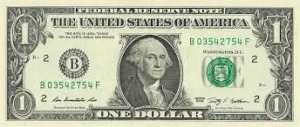
- Basic addition flash card money.
- Bold and model money.
METHOD OF TEACHING – Choose a suitable and appropriate methods for the lessons.
Note – Irrespective of choosing methods of teaching, always introduce an activities that will arouse pupil’s interest or lead them to the lessons.
REFERENCE MATERIALS
- Scheme of Work
- 9 – Years Basic Education Curriculum
- Course Book
- All Relevant Material
- Online Information
CONTENT OF THE LESSON
LESSON ONE – INTRODUCTION TO MONEY
Teacher’s/Pupil’s Activities 1 – Identification and Uses of Money
₦1.00, ₦0.50, ₦5.00, ₦10.00, ₦20.00, ₦50.00, ₦100, ₦200.00, etc.
Uses of Money – As stated by the pupils.
- It is used for buying and selling.
- It is used for buying food items.
- It is used saving banks items.
- It is used for paying transport fares, etc.
Teacher’s/Pupil’s Activities 2 – Uses of Money (Nagaras and other Quantities)
Let’s the money that is spend is a particular quantity. For example, in Nigeria, we used Naira (₦). In America, it is called dollar ($). In China, it is Yuan. ₦ etc.
Connected, for example:
₦1 = 100k
Change for ₦ 2,000k
₦2 = 200k
₦5 = 500k + 200k
= ₦12 = 500k + 200k
₦6 = 1200k + 200k = 1400k
₦7 = 500k + 500k + 500k = 700k
₦9 = 100k + 100k + 500k
₦10 = 1000k
₦20 = 2000k
₦50 = 5000k
Teacher’s/Pupil’s Activities 3 – Years and Kelas
Change Examples:
Change ₦6.50 to kobo:
₦6.7 = 670k
= 200k + 470k
= 670k
Change 130k to Naira:
130k = ₦1.30
₦1 = 100
₦1.30
Pupil’s Activities 4 – Class Extension Data Views
Change the following to kobo:
- ₦0.75
- ₦7.45
- ₦1.50
Change the following to Naira:
- 250k
- ₦60.35
- 175k
LESSON TWO – REPEAT THE CONVERSION OF NAIRA TO KOBO AND VICE VERSA
LESSON THREE – ADDITION AND SUBTRACTION OF NAIRA
Pupil’s Activities 1 – Addition of Numbers (Like Decimals)
7.1 + 1.9
= 9.0 = N9
35 – 15 + 17
= 67
N1 + N2
= N3
Teacher’s/Pupil’s Activities 2 – Addition of Money
Working Examples:
Add N1.25 and N3.50 = 33
Solution N1.25 and N1.50
Solution:
Add:
N1.25
- N1.50 (?)
= N2.75
Subtract:
N5.00
- N1.50 = ?
= N3.50 (??)
Take note of two mixed examples with them.
Pupil’s Activities 3 – Class Extension Data Views
Add the following numbers together:
- N0.75 and N0.15
- N1.75 and N4.50
Subtract the following numbers together:
- N5.50 (?) – N2.75
- N7.00 – N1.50
LESSON FOUR – PROFIT AND LOSS
Teacher’s/Pupil’s Activities 1 – Complete Business Transaction
Working Examples:
- Omotola bought carton of sweets for N65.15, a carton for N50.75 and our answer for N8.95; how much did he spend?
N65.15
N50.75
- N8.95 (?)
= N124.85
Therefore, Omotola spent N124.85 our carton food and sweets.
- A man went to his market with N80.50. If he spent N54.75 on a Stock; how much balance did he receive?
N80.50
- N54.75
= N25.75
Therefore, the man has a balance of N25.75.
Pupil’s Activities 2 – Class Extension Data Views
- Michael bought packets of biscuit for N71.50, a parrot for N65.75 and a cake for N6.50; how much did he spend?
- A girl went to market with N150.00. She bought yam for N45.75; how much balance did she collect?
LESSON FIVE – QUANTITATIVE REASONING
As stated in the quantitative book or textbook.
PRESENTATION
To deliver the lesson, the teacher adopts the following steps:
- To introduce the lesson, the teacher revises the previous lesson. Based on this, he/she asks the pupils some questions.
- Guides pupils to solve problems on addition of money e.g
N2.50 + N5.70 = N8.20
- N5.50 + N5.70 = N11.70
Pupil’s Activities – Solve various problems on addition of money.
- Guides pupils to solve quantitative aptitude problems involving addition of money.
Pupil’s Activities – Solve quantitative aptitude problems involving addition of money.
- Guides pupils to solve correctly addition of money in business transaction as a contextual or other of pupils and community.
Pupil’s Activities – Solve on correct addition of money in business transaction as a contextual or other of pupils and community.
- Prepare the pupils to engage in more buying and selling which will involve the collection of change.
Pupil’s Activities – Solve to problems addition and subtraction involving business transaction.
- Teacher explains the collection of change.
Pupil’s Activities – Find the collection of money e.g. N8.75 – N6.75 = N2.00
Pupil’s Activities – Solve problems on the subtraction of money.
- Guide pupils to solve the importance of correct subtraction of money in business transaction.
Pupil’s Activities – Study correctly the importance of correct subtraction of money in business transaction.
- Guides quantitative aptitude problems involving subtraction of money.
Pupil’s Activities – Study various quantitative aptitude problems intended to money subtraction.
CONCLUSION
To conclude the lesson for the week, the teacher revises the entire lesson and links it to the following week’s lesson.
LESSON EVALUATION
Pupils to:
- solve given problems on addition of money.
- solve quantitative reasoning problems involving money.
- solve given problems on subtraction of money related in business transaction.
- solve quantitative aptitude problems involving the subtraction of money.
This term's Mathematics topics
Basic 4 Second Term · 7 topics
Second Term Mathematics Lesson Notes for Other Topics

Whole Numbers 121-130 & Number Skills
Read the full lesson note.
Numbers 110-120 & Subtraction Facts
Read the full lesson note.

Numbers 101-110 & Addition Facts
Read the full lesson note.
Identification & Counting Numbers 1-100
Read the full lesson note.
Subtraction & Numbers 81-100
Read the full lesson note.
Math Facts & Numbers 71-80
Read the full lesson note.

Numbers 1-250
Read the full lesson note.

Data Collection
Read the full lesson note.
Numbers 241-250
Read the full lesson note.

Numbers 231-240
Read the full lesson note.
3D Shapes
Read the full lesson note.
Capacity
Read the full lesson note.
Revision of First Term’s Work
Read the full lesson note.
Length and Pythagoras Rule
Read the full lesson note.
Revision of First Term's Topic
Read the full lesson note.
Lesson Notes for Other Classes
Basic 1 Lesson Note
The complete lesson note to guide your studies.

Basic 2 Lesson Note
The complete lesson note to guide your studies.

Basic 3 Lesson Note
The complete lesson note to guide your studies.

Basic 5 Lesson Note
The complete lesson note to guide your studies.
Basic 6 Lesson Note
The complete lesson note to guide your studies.

JSS1 Lesson Note
The complete lesson note to guide your studies.