
Data Collection – Basic 1 Mathematics Lesson Note (Second Term)
Download Lesson NoteLesson note at a glance
- Subject
- Mathematics
- Class
- Basic 1
- Term
- Second Term
- Topic
- Data Collection
- Order
- Topic 12 of 13 this term
- Reading time
- 2 min
Data collection
What is Data? Data is information we collect about things or people.
Ways to Collect Data:
- Counting
- Asking questions
- Measuring
- Observing
Exercise 11: Let’s collect data about our class:
- How many boys are in our class? ___
- How many girls are in our class? ___
- How many pupils have black hair? ___
- How many pupils wear glasses? ___
Exercise 12: Collect data about favorite fruits: Ask 5 friends: “What is your favorite fruit?”
- Apple: ___
- Orange: ___
- Banana: ___
- Mango: ___
5. PICTOGRAPHS
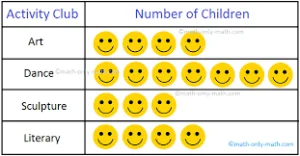
What is a Pictograph? A pictograph uses pictures to show information.
Reading a Pictograph: Favorite Pets
Dogs: 🐕🐕🐕🐕🐕
Cats: 🐱🐱🐱
Birds: 🐦🐦🐦🐦
Exercise 13: Answer from the pictograph above:
- How many children like dogs? ___
- How many children like cats? ___
- How many children like birds? ___
- Which pet is most popular? ___
Exercise 14: Create your own pictograph: Favorite Colors in Our Class (Ask 10 classmates their favorite color)
Red: (draw circles for each person) Blue: Green: Yellow:
Exercise 15: Make a pictograph about shoes: Count different types of shoes in your class: Sneakers: (draw shoe symbols) Sandals: School shoes:
6. Retrieve and interpret data
Reading Data:
Exercise 16: Look at this data table: Number of Books Read
- Tom: 8 books
- Mary: 12 books
- John: 6 books
- Sarah: 10 books
Answer these questions:
- Who read the most books? ___
- Who read the least books? ___
- How many books did Tom and John read together? ___
- How many more books did Mary read than John? ___
Exercise 17: Interpret this pictograph: Fruits Sold Today Apples: 🍎🍎🍎🍎🍎🍎 Oranges: 🍊🍊🍊🍊 Bananas: 🍌🍌🍌🍌🍌
- Which fruit sold the most? ___
- How many oranges were sold? ___
- How many fruits were sold in total? ___
7. Collate age group with heights
Measuring and Comparing Heights:
Exercise 18: Collect height data from 5 classmates: (Measure using hand spans or use tall/medium/short)
Name: _____ Height: _____ (tall/medium/short) Name: _____ Height: _____ (tall/medium/short) Name: _____ Height: _____ (tall/medium/short) Name: _____ Height: _____ (tall/medium/short) Name: _____ Height: _____ (tall/medium/short)
Exercise 19: Make a pictograph of heights: Heights in Our Class Tall children: (draw stick figures) Medium height children: Short children:
Exercise 20: Answer about heights:
- How many children are tall? ___
- How many children are short? ___
- Are there more tall or short children? ___
Exercise 21: Compare ages and heights: (Ask 3 friends their age and height)
Friend 1: Age ___ Height _____ (tall/medium/short) Friend 2: Age ___ Height _____ (tall/medium/short) Friend 3: Age ___ Height _____ (tall/medium/short)
Questions:
- Is the oldest child the tallest? ___
- Are children of the same age the same height? ___
This term's Mathematics topics
Basic 1 Second Term · 13 topics
- Subtraction & Numbers 81-100
- Identification & Counting Numbers 1-100
- Numbers 101-110 & Addition Facts
- Numbers 110-120 & Subtraction Facts
- Whole Numbers 121-130 & Number Skills
- Numbers 231-240
- Capacity
- 3D Shapes
- Numbers 241-250
- Data Collection
- Numbers 1-250
Second Term Mathematics Lesson Notes for Other Topics

Whole Numbers 121-130 & Number Skills
Read the full lesson note.
Numbers 110-120 & Subtraction Facts
Read the full lesson note.

Numbers 101-110 & Addition Facts
Read the full lesson note.
Identification & Counting Numbers 1-100
Read the full lesson note.
Subtraction & Numbers 81-100
Read the full lesson note.
Math Facts & Numbers 71-80
Read the full lesson note.

Numbers 1-250
Read the full lesson note.
Numbers 241-250
Read the full lesson note.

Numbers 231-240
Read the full lesson note.
3D Shapes
Read the full lesson note.
Capacity
Read the full lesson note.
Revision of First Term’s Work
Read the full lesson note.
Length and Pythagoras Rule
Read the full lesson note.
Revision of First Term's Topic
Read the full lesson note.
Ratio and Proportion
Read the full lesson note.
Lesson Notes for Other Classes

Basic 2 Lesson Note
The complete lesson note to guide your studies.

Basic 3 Lesson Note
The complete lesson note to guide your studies.

Basic 4 Lesson Note
The complete lesson note to guide your studies.

Basic 5 Lesson Note
The complete lesson note to guide your studies.
Basic 6 Lesson Note
The complete lesson note to guide your studies.
JSS1 Lesson Note
The complete lesson note to guide your studies.

