
Stitches and Types of Stitches – Basic 4 Home Economics Lesson Note (Second Term)
Download this term · ₦1,000Lesson note at a glance
- Subject
- Home Economics
- Class
- Basic 4
- Term
- Second Term
- Topic
- Stitches and Types of Stitches
- Order
- Topic 9 of 9 this term
- Reading time
- 6 min
What are Stitches?
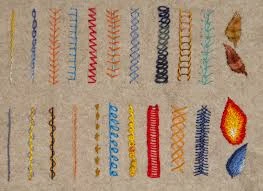
Stitches are loops of thread made with a needle to join pieces of fabric together or to decorate fabric.
Why Do We Use Stitches?
- Join fabric pieces together to make clothes
- Repair tears and holes in clothing
- Decorate fabric to make it beautiful
- Strengthen fabric edges to prevent fraying
Three Main Types of Stitches
- Temporary Stitches
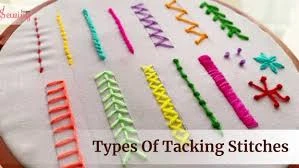
Stitches that are removed after their purpose is served
What They Do:
- Hold fabric pieces together while sewing
- Mark lines on fabric for cutting or sewing
- Test fit of clothing before final sewing
- Keep fabric in place during construction
Characteristics:
- Easy to remove when no longer needed
- Large stitches that show clearly
- Loose tension for easy removal
- Different colored thread to see easily
Common Temporary Stitches:
Basting Stitch:
- Long, loose stitches about 1/4 to 1/2 inch long
- Used for: Holding layers together temporarily
- How to make: In and out with long spaces between
- Easy to pull out when finished
Tacking Stitch:
- Very loose, large stitches for quick holding
- Used for: Quick temporary joining
- How to make: Large running stitches
- Pulled out easily after use
Marking Stitch:
- Contrasting thread to show lines or points
- Used for: Marking where to sew or cut
- How to make: Small stitches at important points
- Removed after cutting or sewing
When to Use Temporary Stitches:
- Before fitting clothes on person
- Holding pleats in place while pressing
- Keeping fabric layers aligned
- Marking button and buttonhole positions
- Permanent Stitches
Stitches that stay in the finished item
What They Do:
- Join fabric pieces permanently
- Create strong seams that won’t come apart
- Attach buttons, zippers, and other fasteners
- Finish fabric edges to prevent fraying
Characteristics:
- Strong and secure won’t come apart easily
- Small, neat stitches for good appearance
- Matching thread color to fabric
- Tight tension for durability
Common Permanent Stitches:
Running Stitch:
- Basic in-and-out stitch in straight line
- Used for: Simple seams, gathering fabric
- How to make: Even stitches about 1/8 inch long
- Foundation for most sewing
Back Stitch:
- Strongest hand stitch for permanent seams
- Used for: Strong seams, repairs, outlines
- How to make: Go back to fill gaps between stitches
- Creates solid line of stitches
Overcast Stitch:
- Diagonal stitches over fabric edge
- Used for: Preventing fraying, finishing edges
- How to make: Stitch over edge at angle
- Protects fabric from unraveling
Hemming Stitch:
- Nearly invisible stitches for hems
- Used for: Finishing bottom edges of clothes
- How to make: Tiny stitches catching few threads
- Creates neat finished edge
Buttonhole Stitch:
- Dense, close stitches around buttonhole opening
- Used for: Creating strong buttonholes
- How to make: Close stitches with loop formation
- Prevents tearing around buttons
When to Use Permanent Stitches:
- Final construction of clothing items
- Attaching buttons and other fasteners
- Creating strong seams for daily wear
- Finishing edges that will be seen
- Decorative Stitches
Stitches used to make fabric beautiful and ornamental
What They Do:
- Add beauty and visual interest to fabric
- Create patterns and designs
- Show creativity and personal style
- Enhance plain fabric with decoration
Characteristics:
- Attractive appearance is most important
- Often colorful thread for contrast
- Can be complex patterns and designs
- May combine different stitch types
Common Decorative Stitches:
Chain Stitch:
- Creates chain-like line of connected loops
- Used for: Outlines, borders, flower stems
- How to make: Loop thread through previous loop
- Creates continuous decorative line
Cross Stitch:
- X-shaped stitches forming patterns
- Used for: Samplers, pictures, borders
- How to make: Two diagonal stitches crossing
- Popular for traditional embroidery
French Knot:
- Small raised dots on fabric surface
- Used for: Flower centers, texture, dots
- How to make: Wrap thread around needle before pulling through
- Creates dimensional texture
Blanket Stitch:
- Decorative edge finish with loops
- Used for: Decorating edges, appliqué
- How to make: L-shaped stitches with thread loop
- Both functional and decorative
Satin Stitch:
- Solid fill of parallel stitches
- Used for: Filling shapes, monograms, leaves
- How to make: Close parallel stitches covering area
- Creates smooth, shiny surface
When to Use Decorative Stitches:
- Embellishing plain clothing or household items
- Creating artistic embroidery projects
- Adding personal touches to handmade items
- Learning traditional needlework skills
Choosing the Right Stitch
Consider the Purpose:
- Temporary holding: Use basting or tacking
- Permanent joining: Use back stitch or running stitch
- Edge finishing: Use overcast or hemming stitch
- Decoration: Use embroidery stitches
Consider the Fabric:
- Delicate fabrics: Use fine needles and thread
- Heavy fabrics: Use stronger threads and needles
- Stretchy fabrics: Use stitches that can stretch
- Loose weaves: Use stitches that secure edges
Consider Your Skill Level:
- Beginners: Start with running stitch and basting
- Intermediate: Try back stitch and simple decorative stitches
- Advanced: Attempt complex embroidery and buttonholes
- Practice first on scrap fabric
Basic Stitching Tips
Getting Started:
- Cut thread about 18 inches long (arm’s length)
- Tie small knot at end of thread
- Start from back of fabric when possible
- Keep stitches even in size and spacing
Good Techniques:
- Hold fabric taut but don’t stretch
- Pull thread gently don’t yank
- Keep consistent stitch size and tension
- End securely with small knots or backstitches
Common Problems:
- Thread tangling: Use shorter lengths, don’t twist
- Uneven stitches: Practice maintaining consistent rhythm
- Puckering fabric: Don’t pull thread too tight
- Thread breaking: Check needle size and thread quality
Safety Reminders
Needle Safety:
- Always use thimble to protect finger
- Point needles away from body
- Count needles before and after sewing
- Store safely in needle book or pin cushion
Adult Supervision:
- Get help when learning new stitches
- Ask for guidance with difficult techniques
- Have adult check your work for safety
- Use appropriate tools for your age and skill
EXERCISES
Exercise 1: Fill in the Blanks
- Stitches are loops of ________ made with a needle
- ________ stitches are removed after their purpose is served
- ________ stitches stay in the finished item
- ________ stitches are used to make fabric beautiful
Exercise 2: True or False
- All stitches are permanent ____
- Temporary stitches are easy to remove ____
- Decorative stitches are only for beauty ____
- Back stitch is stronger than running stitch ____
Exercise 3: Match Stitch Type with Purpose
Draw lines to connect each stitch type with its main purpose:
- Temporary stitches → Make fabric beautiful
- Permanent stitches → Hold fabric while sewing
- Decorative stitches → Join fabric pieces permanently
Exercise 4: Stitch Classification
Write “T” for Temporary, “P” for Permanent, or “D” for Decorative:
- Basting stitch ____
- Cross stitch ____
- Back stitch ____
- French knot ____
- Tacking stitch ____
Exercise 5: Choose the Right Answer
Circle the correct answer:
- Temporary stitches use: Long loose stitches / Short tight stitches
- Permanent stitches should be: Easy to remove / Strong and secure
- Decorative stitches focus on: Strength / Beautiful appearance
- Basting stitch is used for: Final seams / Temporary holding
Exercise 6: Stitch Characteristics
Match each stitch type with its characteristics:
- Temporary stitches → Small, neat, matching thread
- Permanent stitches → Attractive, often colorful
- Decorative stitches → Large, loose, contrasting thread
This term's Home Economics topics
Basic 4 Second Term · 9 topics
- Classes of Food, Nutrient and Nutrition
- Method of Cooking: Boiling Method
- Method of Cooking: Roasting Method
- Personal Grooming and Use of Basic Cosmetics
- Personal Clothing-Types and Care of Personal Clothing
- Reasons for Wearing Clothes
- How to Prepare Liquid Soap
- Uses and Care for Simple Tools
- Stitches and Types of Stitches
Get Home Economics as PDF and Word
Every week of Basic 4 Home Economics, Second Term, formatted and ready to print. Ad-free, and the copy lock comes off.
Get this term Card, bank transfer, USSD or OPay
Basic 4 Home Economics Lesson Notes for Other Topics

Classes of Food, Nutrient and Nutrition
Read the full lesson note.
Method of Cooking - Boiling Method
Read the full lesson note.
Method of Cooking - Roasting Method
Read the full lesson note.

Personal Grooming and Use of Basic Cosmetics
Read the full lesson note.
Personal Clothing-Types and Care of Personal Clothing
Read the full lesson note.
Reasons for Wearing Clothes
Read the full lesson note.

How to Prepare Liquid Soap
Read the full lesson note.
Uses and Care for Simple Tools
Read the full lesson note.

Introduction to Home Economics
Read the full lesson note.
Meaning, Scope and Importance of Home Economics
Read the full lesson note.
The Human Body - Parts and Functions
Read the full lesson note.
Food and Nutrition - Nutrient and Nutrition
Read the full lesson note.
Classification of Food - Food and Their Source
Read the full lesson note.
Kitchen Equipment and Utensils
Read the full lesson note.

Needle Craft
Read the full lesson note.
Lesson Notes for Other Classes

Basic 1 Lesson Note
The complete lesson note to guide your studies.

Basic 2 Lesson Note
The complete lesson note to guide your studies.

Basic 3 Lesson Note
The complete lesson note to guide your studies.

Basic 5 Lesson Note
The complete lesson note to guide your studies.
Basic 6 Lesson Note
The complete lesson note to guide your studies.
