
Arms of Governments – Basic 4 Civic Education Lesson Note (First Term)
Download Lesson NoteLesson note at a glance
- Subject
- Civic Education
- Class
- Basic 4
- Term
- First Term
- Topic
- Arms of Governments
- Order
- Topic 6 of 10 this term
- Reading time
- 2 min
What are Arms of Government?
The three main parts of government that work together to run a country. Each arm has different work to do, like parts of your body!
The Three Arms
- LEGISLATIVE ARM 📜

Nickname: The Law Makers
Who They Are:
- Senate
- House of Representatives
- State House of Assembly
What They Do:
- Make new laws
- Change old laws
- Approve budget
- Represent the people
Simple Example: Like your school’s rule-making committee
- EXECUTIVE ARM 💼
Nickname: The Law Implementers
Who They Are:
- President
- Governors
- Ministers
- Police
What They Do:
- Carry out the laws
- Run daily government
- Provide services
- Keep peace
Simple Example: Like your principal running the school
- JUDICIARY ARM ⚖️
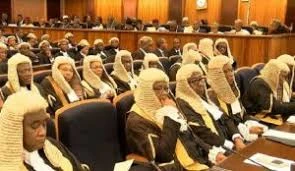
Nickname: The Law Interpreters
Who They Are:
- Judges
- Courts
- Magistrates
What They Do:
- Explain laws
- Settle disputes
- Punish lawbreakers
- Protect rights
Simple Example: Like teachers settling class disputes
How They Work Together
Legislative → Makes laws
↓
Executive → Carries out laws
↓
Judiciary → Judges those who break laws
Easy Way to Remember
- Legislative = Law makers
- Executive = Enforces laws
- Judiciary = Judges cases
In Your School
- Legislative: Student council makes rules
- Executive: Principal enforces rules
- Judiciary: Disciplinary committee judges cases
Why Three Arms?
- No one gets too powerful
- They check each other
- Better decisions
- Protects citizens
Remember!
The three arms are like a three-legged stool – remove one leg and everything falls!
EXERCISES
A. Fill in the blanks:
- There are _______ arms of government.
- The _______ arm makes laws.
- The _______ arm carries out laws.
- The _______ arm judges cases.
- The President belongs to the _______ arm.
B. True or False:
- Legislative arm enforces laws. _______
- Judges work in the Judiciary. _______
- Executive arm makes laws. _______
- There are four arms of government. _______
- The arms work together. _______
C. Match arm to function:

D. Circle the correct arm:
Who makes laws?
- Executive
- Legislative
- Judiciary
Who arrests criminals?
- Executive
- Legislative
- Judiciary
Who settles disputes?
- Executive
- Legislative
- Judiciary
E. Who belongs where?
Write L (Legislative), E (Executive), or J (Judiciary):
- Judge _____
- President _____
- Senator _____
- Police _____
- Governor _____
F. Answer:
- Name the three arms of government.
- What does the Legislative arm do?
- Which arm does the Governor belong to?
G. Complete:
- Legislative = Makes _______
- Executive = _______ laws
- Judiciary = _______ cases
This term's Civic Education topics
Basic 4 First Term · 10 topics
- Definition of Governance
- Types of Governance
- What Is Governance Structure
- Characteristics of Good Governance
- Definition of Government and Types of Government
- Arms of Governments
- Forms of Government
- Difference Between the Various Types of Governments
- Problems Facing Government
- Solution to Problem Facing Government
First Term Civic Education Lesson Notes for Other Topics
Ways Through Which Civic Education Can Be Important at Home
Read the full lesson note.
Meaning of Civic Education
Read the full lesson note.
Ways Through Which Civic Education can be Important at School
Read the full lesson note.
Ways Through Which Civic Education can be Important - The Media
Read the full lesson note.

Ways Through Which Civic Education Can be Important to the Society
Read the full lesson note.

Good Virtues
Read the full lesson note.
Values that Show Good Morals in Our Society
Read the full lesson note.
Public Health Enlightenment
Read the full lesson note.
Values that Show Bad Morals in Our Society
Read the full lesson note.
National Honors Award
Read the full lesson note.
National Heroes and Heroines
Read the full lesson note.
Reasons for National Honors Award
Read the full lesson note.
Concept of Valuing Nigeria Goods
Read the full lesson note.

Reasons for Valuing Nigeria Goods and Examples
Read the full lesson note.
Benefits of Patronizing Nigerian Goods
Read the full lesson note.
Lesson Notes for Other Classes

Basic 1 Lesson Note
The complete lesson note to guide your studies.

Basic 2 Lesson Note
The complete lesson note to guide your studies.

Basic 3 Lesson Note
The complete lesson note to guide your studies.

Basic 5 Lesson Note
The complete lesson note to guide your studies.

Basic 6 Lesson Note
The complete lesson note to guide your studies.

JSS1 Lesson Note
The complete lesson note to guide your studies.

