
Singing: Ear Training Using Tonic Sol-Fa – Basic 1 Cultural & Creative Arts Lesson Note (Third Term)
Download this term · ₦1,000Lesson note at a glance
- Subject
- Cultural & Creative Arts
- Class
- Basic 1
- Term
- Third Term
- Topic
- Singing: Ear Training Using Tonic Sol-Fa
- Order
- Topic 3 of 9 this term
- Reading time
- 2 min
Ear training means learning to hear music correctly. In this lesson, students listen carefully to sounds, tell whether a note is high or low, and practise singing the right notes with tonic sol-fa. They sing two songs, “Hot Cross Buns” and “Mary Had a Little Lamb”, and review the sol-fa hand signs.
Behavioural objectives
By the end of the lesson, students should be able to:
- name the seven sol-fa notes
- explain what ear training means
- sing “Hot Cross Buns” and “Mary Had a Little Lamb” with sol-fa notes and with words
- show the hand sign for each sol-fa note
- use good posture and breathing when singing
What is tonic sol-fa?
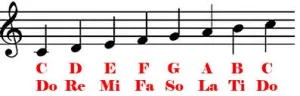
Remember the sol-fa notes:
- d (doh)
- r (ray)
- m (me)
- f (fah)
- s (soh)
- l (lah)
- t (te)
What is ear training?
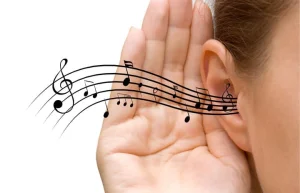
- Ear training means learning to hear music correctly.
- We listen carefully to sounds.
- We can tell if a note is high or low.
- We practise singing the right notes.
Singing with sol-fa
Song 1: “Hot Cross Buns”
m r d | m r d
Hot cross buns, hot cross buns
d d d d r r r r | m r d
One a pen-ny, two a pen-ny, hot cross buns
Song 2: “Mary Had a Little Lamb”
m r d r | m m m
Ma-ry had a lit-tle lamb
r r r | m s s
Lit-tle lamb, lit-tle lamb
m r d r | m m m m
Ma-ry had a lit-tle lamb its
r r m r | d – –
fleece was white as snow
How do we practise a song?
- Listen: the teacher sings first.
- Echo: you repeat what the teacher sang.
- Sol-fa: sing with sol-fa notes.
- Words: add the words.
- Together: sing as a class.
Difficult words
- Fleece (fleece): the wool on a lamb.
- Penny (pen-ny): a coin, money.
Hand signs review
- Doh: hand at waist
- Ray: hand at stomach
- Me: hand at chest
- Fah: hand at shoulder
- Soh: hand at mouth
- Lah: hand at forehead
- Te: hand above head
Singing tips
- Stand or sit straight.
- Open your mouth.
- Breathe properly.
- Listen to the tune.
- Sing clearly.
- Enjoy the music!
Evaluation
- Ear training helps us _____ music correctly.
- a) ignore
- b) hear
- c) destroy
- The third sol-fa note is _____.
- a) doh
- b) ray
- c) me
- “Hot Cross Buns” starts with the note _____.
- a) me
- b) doh
- c) soh
- When singing, we should stand _____.
- a) crooked
- b) straight
- c) upside down
- Hand signs help us _____ sol-fa.
- a) forget
- b) remember
- c) destroy
Assignment
- Practise “Hot Cross Buns” with sol-fa.
- Sing the sol-fa scale: d, r, m, f, s, l, t, d.
- Practise the hand signs.
- Sing one song you learned to your parents.
This term's Cultural & Creative Arts topics
Basic 1 Third Term · 9 topics
Get Cultural & Creative Arts (CCA) as PDF and Word
Every week of Basic 1 Cultural & Creative Arts (CCA), Third Term, formatted and ready to print. Ad-free, and the copy lock comes off.
Get this term Card, bank transfer, USSD or OPay
Third Term Cultural & Creative Arts (CCA) Lesson Notes for Other Topics
Music as a Tool for Recording
Read the full lesson note.

Types of Dance
Read the full lesson note.
Body Make-up Materials
Read the full lesson note.
Colours: Primary and National Colours
Read the full lesson note.
Body Make-up (Continued)
Read the full lesson note.

Body Make-up: Parts and Materials
Read the full lesson note.
Drawing of Different Weaving Items
Read the full lesson note.
Ceremonies
Read the full lesson note.

Creating a Drama Sketch from a Story
Read the full lesson note.
Types of Lines and Uses of Lines
Read the full lesson note.
Musical Notes
Read the full lesson note.
Musical Notes - Values and Rest Signs
Read the full lesson note.
Drawing
Read the full lesson note.
Methods of Moulding Objects
Read the full lesson note.
Introduction to Recorder Playing
Read the full lesson note.
Lesson Notes for Other Classes

Basic 2 Lesson Note
The complete lesson note to guide your studies.
Basic 3 Lesson Note
The complete lesson note to guide your studies.

Basic 4 Lesson Note
The complete lesson note to guide your studies.

Basic 5 Lesson Note
The complete lesson note to guide your studies.

Basic 6 Lesson Note
The complete lesson note to guide your studies.
JSS1 Lesson Note
The complete lesson note to guide your studies.


