
Drawing Basic 3 Cultural & Creative Arts (CCA) Lesson Note
Download Lesson NoteTopic: Drawing
Class: Primary 3
Subject: Cultural and Creative Art
Topic: Drawing
Duration: 30 minutes
Learning Objectives
By the end of this lesson, pupils will be able to use basic drawing techniques and create simple drawings using different materials and methods.
Introduction
Drawing is one of the most important skills in art. It is the foundation of all artwork and helps us express our ideas and feelings on paper. When we draw, we use lines, shapes, and shading to create pictures of things we see, remember, or imagine. Today we will learn the basic skills that will help us become better at drawing.
Main Content
What Is Drawing?
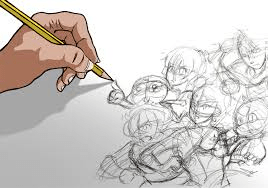
Drawing is the art of making pictures using pencils, crayons, markers, or other tools on paper. When we draw, we observe objects carefully and try to show what we see by making marks on paper. Drawing helps us notice details about the world around us and gives us a way to share our ideas with others. Everyone can learn to draw better with practice and patience.
Basic Drawing Skills
Good drawing starts with learning to control our drawing tools. We need to learn how to hold our pencil properly and make different types of lines. We can make light lines by pressing gently and dark lines by pressing harder. Drawing basic shapes like circles, squares, and triangles helps us build more complex pictures. We also need to learn how to look carefully at objects and break them down into simple shapes.
Drawing Techniques
There are several techniques that make our drawings look better. Shading helps make our drawings look more real by showing light and shadow. We can shade by making areas darker where shadows would be. Outlining means drawing the edges of objects to make them stand out clearly. We can also use different textures by changing how we make our lines, such as making them smooth, rough, or bumpy to show different surfaces.
Class Exercises
Exercise 1: Pencil control practice. Draw different types of lines across your paper: straight lines, curved lines, thick lines, and thin lines. Practice making each line smooth and controlled.
Exercise 2: Basic shapes drawing. Draw several circles, squares, triangles, and rectangles. Make some large and some small, trying to make each shape as neat as possible.
Exercise 3: Simple object drawing. Choose a simple object like an apple, cup, or book from the classroom. Look at it carefully and draw what you see, starting with its basic shape.
Exercise 4: Shading practice exercise. Draw a circle and practice shading one side to make it look like a ball. Make one side light and the other side darker.
Exercise 5: Observation drawing. Look out the window or around the classroom and draw something you see. Focus on the basic shapes and main details of what you observe.
Evaluation
Pupils will demonstrate basic drawing skills by creating neat shapes and simple drawings. The teacher will observe their pencil control, observation skills, and ability to apply basic drawing techniques.
Assignment
Practice drawing at home by choosing three different objects and drawing each one. Start with the basic shape of each object, then add details. Spend at least five minutes carefully looking at each object before you draw it. Bring your drawings to share in the next class.
Third Term Cultural & Creative Arts (CCA) Lesson Notes for Other Topics
Creating a Drama Sketch from a Story
Explore lesson notes covering all topics.

Types of Lines and Uses of Lines
Explore lesson notes covering all topics.

Musical Notes
Explore lesson notes covering all topics.
Musical Notes - Values and Rest Signs
Explore lesson notes covering all topics.

Methods of Moulding Objects
Explore lesson notes covering all topics.
Introduction to Recorder Playing
Explore lesson notes covering all topics.

Fashion Accessories - Singing Songs About Wearing Clothes
Explore lesson notes covering all topics.
Definition of Music
Explore lesson notes covering all topics.

Mode of Greeting
Explore lesson notes covering all topics.

Element of Design
Explore lesson notes covering all topics.

Definition of Drama and Theatre
Explore lesson notes covering all topics.

Definition of Dance
Explore lesson notes covering all topics.

Impersonation
Explore lesson notes covering all topics.

Melodic Patterns Of Traditional Song
Explore lesson notes covering all topics.

The Bass Staff
Explore lesson notes covering all topics.
Lesson Notes for Other Classes
Basic 1 Lesson Note
The complete lesson note to guide your studies.

Basic 2 Lesson Note
The complete lesson note to guide your studies.

Basic 4 Lesson Note
The complete lesson note to guide your studies.
Basic 5 Lesson Note
The complete lesson note to guide your studies.
Basic 6 Lesson Note
The complete lesson note to guide your studies.
JSS1 Lesson Note
The complete lesson note to guide your studies.