
Farm Machinery and Implements – SS1 Agricultural Science Lesson Note (Second Term)
Download this term · ₦1,000Lesson note at a glance
- Subject
- Agricultural Science
- Class
- SS1
- Term
- Second Term
- Topic
- Farm Machinery and Implements
- Order
- Topic 6 of 7 this term
- Reading time
- 7 min
Farm machinery is the group of machines and implements used on the farm to prepare land, plant, spray, harvest and process crops and animal products.
Behavioural objectives
By the end of the lesson, students should be able to:
- Name common farm machines and implements.
- State the important parts and functions of a tractor.
- Describe the daily and periodic maintenance of a tractor.
- State the uses and disadvantages of bulldozers and the advantages of tree pullers over bulldozers.
- Describe the main tractor-coupled implements and their types.
What is farm machinery?
Farm machinery means the machines and implements that do farm work faster and with less labour than hand tools.
- Machines: tractors, bulldozers, tree pullers, shellers, dryers, incubators and milking machines.
- Tractor-coupled implements: ploughs, harrows, cultivators, ridgers, planters, harvesters and sprayers.
| Farm job | Machine or implement |
|---|---|
| Clearing land | Bulldozer, tree puller |
| Tilling the soil | Plough, harrow, spring tine cultivator, ridger |
| Planting | Planter |
| Crop protection | Sprayer |
| Harvesting | Mower, forage harvester, combine harvester |
| Processing | Sheller, dryer |
| Animal products | Incubator, milking machine |
What is a tractor?
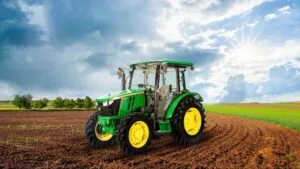
A tractor is a powerful and expensive multipurpose motor vehicle used for lifting or pulling farm implements.
What are the important parts of a tractor?
- Power take-off (P.T.O) shaft: passes engine power to implements such as the plough and harrow.
- Hydraulic control system: lifts and lowers mounted implements under control.
- Internal combustion engine: usually a diesel engine, which burns fuel without a spark plug.
- Four-wheel rubber tyres: carry the tractor and grip the soil.
What are the functions of a tractor?
- Transport: carries farm inputs and produce when a trailer is attached.
- Pumping: operates water pumps for irrigation or other farm purposes.
- Lifting: raises coupled implements with the hydraulic system.
- Pulling: draws attached farm implements.
- Tilling: prepares the soil when the right implements are attached.
- Planting: sows seeds when coupled with a planter.
- Spraying: sprays crops when coupled with a sprayer.
- Power supply: drives a generator to provide electric power.
- Harvesting: harvests crops when coupled with harvesters.
- Mowing: cuts lawns and grass when coupled with mowers.
What is the daily maintenance of a tractor?
Daily maintenance is the set of simple checks done before or after each day’s work.
- Cleaning: remove trash and mud after every operation.
- Water level: check the radiator water and top up if necessary.
- Tyre pressure: check it before every operation.
- Battery: check the electrolyte every day and top up when necessary.
- Manual: follow the manufacturer’s instructions strictly.
What is the periodic maintenance of a tractor?
Periodic maintenance is the servicing done at fixed intervals of use or time.
- Servicing: service the tractor at regular intervals.
- Worn parts: replace worn-out parts.
- Nuts and screws: check them regularly and tighten them.
- Engine oil: change it routinely and regularly.
- Air filter: clean it when necessary.
- Oil filter: change it during each service.
- Manual: follow it strictly.
What is a bulldozer?
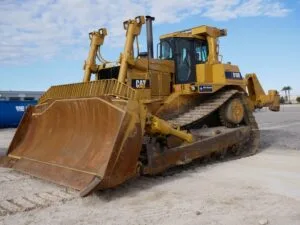
A bulldozer is a powerful and expensive tractor with a broad steel blade at the front.
- Movement: it moves on metal chain tracks.
- Engine: an internal combustion engine that uses diesel or petrol.
What are the uses of a bulldozer?
- Bush clearing: removes bush from new farmland.
- Felling: pushes down trees and stumps.
- Levelling: makes the ground flat.
- Road making: constructs roads in rural areas.
- Earth moving: moves and collects earth.
What are the disadvantages of using a bulldozer for land preparation?
- Soil structure: it destroys the structure of the soil.
- Fertility: it reduces soil fertility.
- Compaction: its heavy weight packs the soil tightly.
- Pollution: it causes air pollution.
- Cost: it is costly to buy, run and repair.
What is a tree puller?
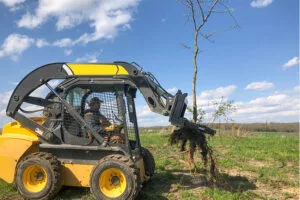
A tree puller is a machine, usually fitted to or drawn by a tractor, that uproots trees with their roots.
- Use: it is normally used to remove trees instead of a bulldozer.
What are the advantages of tree pullers over bulldozers?
- No compaction: it does not compress the soil.
- Topsoil kept: it does not remove the fertile topsoil.
- Less erosion: the land is less prone to erosion.
- Organic matter kept: the organic matter content of the soil is retained.
- Structure kept: it does not destroy the soil structure.
- Little disturbance: it uproots the tree with less disturbance to the soil and its minerals.
What other machines are used on the farm?
Four other common farm machines are shellers, dryers, incubators and milking machines.
- Sheller: separates seeds from the husk or cob and removes the hard outer covering of nuts and grains. It may be electric, mechanical or manual.
- Dryer: reduces the moisture content of crop and animal products.
- Incubator: hatches fertilised eggs artificially.
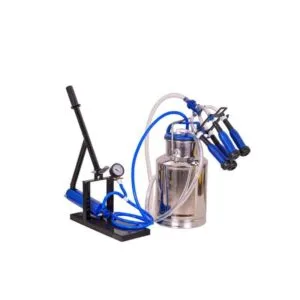
- Milking machine: extracts fresh milk mechanically from the udder of cattle and other milk-producing animals such as sheep and goats.
What are tractor-coupled implements?
Tractor-coupled implements are implements attached to a tractor so that they can do their work.
- Other name: intermediate farm machinery.
- Examples: ploughs, harrows, ridgers, planters, cultivators, harvesters, sprayers, mowers, balers and fertiliser applicators.
What is a plough?
The plough is a primary tillage implement attached to a tractor, and it is the first implement used in land preparation.

There are two types of plough: the disc plough and the mould-board plough.
- Disc plough: uses large round steel discs to cut and turn the soil.
- Mould-board plough: uses a curved steel plate to cut and turn over the soil.
What is a harrow?
A harrow is a secondary tillage implement used to break up the clods of soil formed after ploughing.
- Examples: the disc harrow and the spring tine cultivator.
What is a spring tine cultivator?
The spring tine cultivator is a type of harrow and a secondary tillage implement used for land preparation.
- Breaking clods: it breaks down soil clods or lumps after ploughing.
- Weeding: it removes weeds from the soil surface.
- Clearing: it helps to drag roots and stones out of the soil.
- Stirring: it stirs the soil without turning it over.
What is a ridger?
A ridger is a secondary tillage implement that forms ridges in the soil.
- Order of use: after the harrow and before the planter.
- Furrow ridger: one of the two types of ridger.
- Mould ridger: the other type of ridger.
What is a planter?
A planter is a machine or implement designed mainly to plant seeds of crops such as cowpeas, peas, cotton and cereals.
There are four types of planter:
- Broadcast crop planter: scatters seeds over the soil surface.
- Row crop planter: sows seeds in rows.
- Precision planter: places single seeds at set spacing.
- Grain drill planter: sows grain crops in narrow rows.
What is a harvester?
A harvester is a machine implement designed mainly to make the harvesting of various crops easier.
There are three types of harvester:
- Mower: cuts grass and similar crops.
- Forage harvester: cuts green fodder for livestock feed.
- Combine harvester: harvests grain crops in one operation.
What is a sprayer?
A sprayer is equipment designed to spray chemicals in various farm operations.
There are three types of sprayer:
- Knapsack (pneumatic) sprayer: carried on the operator’s back.
- Tractor-mounted sprayer: fixed to a tractor for large fields.
- Helicopter-mounted sprayer: sprays from the air.
Functions of sprayers:
- Weed control: controls the growth of weeds.
- Pest control: controls the effects of pests.
- Disinfecting: sprays disinfectant.
- Irrigation: gives light irrigation.
- Feeding crops: sprays liquid fertiliser.

What is the difference between a plough and a harrow?
A plough is the primary tillage implement that first cuts and turns the soil.
A harrow is the secondary tillage implement that breaks the clods left by the plough.
| Point | Plough | Harrow |
|---|---|---|
| Type of tillage | Primary | Secondary |
| Order of use | First | After ploughing |
| Main work | Cuts and turns the soil | Breaks clods into fine soil |
| Types | Disc, mould-board | Disc harrow, spring tine cultivator |
Evaluation
- What is farm machinery?
- List four functions of a tractor.
- State three disadvantages of using a bulldozer for land preparation.
- State two advantages of tree pullers over bulldozers.
- Distinguish between a plough and a harrow.
Assignment
Make a table of the tractor-coupled implements in this note. For each one, give its type (primary tillage, secondary tillage, planting, harvesting or spraying) and one use.
This term's Agricultural Science topics
SS1 Second Term · 7 topics
Get Agricultural Science as PDF and Word
Every week of SS1 Agricultural Science, Second Term, formatted and ready to print. Ad-free, and the copy lock comes off.
Get this term Card, bank transfer, USSD or OPay
SS1 Agricultural Science Lesson Notes for Other Topics
Environmental Factors Affecting Agricultural Production
Read the full lesson note.
Soil And Soil Formation
Read the full lesson note.
Soil Formation And Profile Development
Read the full lesson note.
Types, Properties And Composition of Soil
Read the full lesson note.
Simple Farm Tools
Read the full lesson note.
Apiculture/beekeeping
Read the full lesson note.

Meaning And Importance Of Agriculture
Read the full lesson note.
Problems Of Agricultural Development And Possible Solutions
Read the full lesson note.
Meaning And Differences Between Subsistence And Commercial Agriculture
Read the full lesson note.
Role Of Government In Agricultural Development
Read the full lesson note.
Role Of Non-Governmental Organizations In Agricultural Development
Read the full lesson note.
Agricultural Laws And Reforms
Read the full lesson note.
Meaning And Importance Of Agricultural Ecology
Read the full lesson note.
Land And It's Uses
Read the full lesson note.
Factors Affecting Availability For Agricultural Purposes
Read the full lesson note.
Lesson Notes for Other Classes

SS2 Lesson Note
The complete lesson note to guide your studies.

SS3 Lesson Note
The complete lesson note to guide your studies.
