
Introduction to Play Production – Basic 6 Cultural & Creative Arts Lesson Note (Second Term)
Lesson note at a glance
- Class
- Basic 6
- Subject
- Cultural & Creative Arts
- Term
- Second Term
- Reading time
- 5 min
Play production is the process of turning a written play into a live performance on stage for an audience.
Behavioural objectives
By the end of the lesson, pupils should be able to:
- Define a play and name its main elements.
- State the three stages of play production and the work done in each.
- Name the key people in a production and state what each one does.
- Describe the features and types of Nigerian plays.
- Write short facts about one Nigerian actor, Olu Jacobs.
What is a play?
A play is a story written to be acted on stage by actors in front of an audience.
- Script: the written text of the play, with dialogue and stage directions.
- Characters: the people or figures in the story, played by actors.
- Plot: the order of events in the story.
- Setting: the place and time where the story happens.
- Dialogue: the words the characters speak to one another.
- Stage directions: notes telling actors how to move, speak or enter and exit.
What are the stages of play production?
There are three stages of play production: pre-production, production and performance.
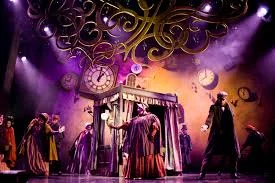
1. Pre-production
Pre-production is the planning stage before practice begins.
- Script selection: choosing the play to perform.
- Casting: selecting actors for the roles.
- Planning: budgeting, scheduling and designing.
- Rehearsal planning: organising practice sessions.
2. Production
Production is the stage where the play is practised and all the materials are prepared.
- Rehearsals: actors practise their roles and learn their lines.
- Set construction: building stage scenery.
- Costume creation: making or gathering clothing for each character.
- Technical setup: arranging lights, sound and effects.
3. Performance
Performance is the stage where the play is shown to the public.
- Dress rehearsals: final practice with costumes, lights, sound and set.
- Opening night: first public performance.
- Performance run: all the scheduled shows.
- Closing night: final performance.
Who are the key people in play production?
The key people in play production are the producer, director, actors, stage manager and technical crew.
- Producer: organises and funds the production.
- Director: guides the actors and the overall vision of the play.
- Actors: perform the characters on stage.
- Stage manager: coordinates all aspects of the show backstage.
- Technical crew: handles lights, sound and scenery.
What does the technical crew do?
- Lighting crew: controls stage lights to show time of day and mood.
- Sound crew: controls music, microphones and sound effects.
- Set crew: builds and moves scenery and props.
- Costume and make-up team: dresses the actors and prepares their faces.
What is the difference between a producer and a director?
- Producer: looks after money, people and materials so the play can happen.
- Director: decides how the play looks and sounds, and trains the actors.
| Point | Producer | Director |
|---|---|---|
| Main concern | Funds and organisation | Acting and artistic vision |
| Works mostly with | Sponsors, crew and managers | Actors and designers |
| Typical task | Prepares the budget | Leads rehearsals |
What are the common stage terms?
Stage terms are words used to describe positions on the stage from the actor’s point of view.
| Term | Meaning |
|---|---|
| Upstage | The part of the stage farthest from the audience |
| Downstage | The part of the stage closest to the audience |
| Stage left | The actor’s left side when facing the audience |
| Stage right | The actor’s right side when facing the audience |
| Backstage | The area behind the stage, hidden from the audience |
| Props | Small objects actors use on stage |
What is Nigerian play production like?
Nigerian play production is theatre that tells Nigerian stories using local culture, language, music and dance.
What are the characteristics of Nigerian plays?
- Music and dance: often include traditional music and dance.
- Language: use local languages alongside English.
- Themes: address social and cultural issues.
- Storytelling: combines modern and traditional methods.
- Costumes: colourful costumes and lively performances.
What are some Nigerian theatre companies and venues?
- National Theatre, Lagos: a national venue where plays and shows are staged.
- Kakaki Theatre Company: a Nigerian theatre group.
- Crown Troupe of Africa: a Lagos-based performing arts group.
What are the types of Nigerian plays?
There are four common types of Nigerian plays: traditional folk plays, contemporary social drama, comedy and musical theatre.
- Traditional folk plays: based on local stories and folktales.
- Contemporary social drama: about modern issues such as family life and honesty.
- Comedy: humorous entertainment that makes the audience laugh.
- Musical theatre: combines singing, dancing and acting.
Who is Olu Jacobs?
Olu Jacobs is a notable Nigerian actor.
What is his background?
- Born in 1942 in Abeokuta, Ogun State.
- Trained in drama in London.
- One of Nigeria’s most respected actors.
What are his career achievements?
- Starred in many Nollywood films.
- Performed in international productions.
- Mentored young Nigerian actors.
- Received awards for excellence in acting.
What is his acting style?
- Known for powerful dramatic performances.
- Speaks English and Yoruba very well.
- Plays both comic and serious roles.
- Has a strong stage presence and clear voice projection.
What is his contribution to Nigerian theatre?
- Promoted Nigerian stories to audiences abroad.
- Helped train the next generation of actors.
- Linked traditional and modern theatre.
Activities
- Plan a simple class play production.
- Assign production roles to different pupils.
- Research other Nigerian actors and actresses.
- Create a production timeline for a school play.
- Practise basic acting and directing exercises.
Evaluation
- The person who guides the actors and the overall vision is the:
a) Producer
b) Director
c) Stage manager
d) Actor - Pre-production includes all of these EXCEPT:
a) Script selection
b) Casting
c) Opening night
d) Planning - Olu Jacobs is a well-known Nigerian:
a) Painter
b) Actor
c) Sculptor
d) Footballer - Nigerian plays often include:
a) Only the English language
b) Traditional music and dance
c) Foreign stories only
d) Modern technology only - The final practice with costumes and effects is called:
a) Casting
b) Dress rehearsal
c) Opening night
d) Script reading
Assignment
Research one other famous Nigerian actor or actress (such as Genevieve Nnaji, Pete Edochie or Joke Silva). Write a short paragraph on their background, famous roles and contribution to Nigerian entertainment.
This term's Cultural & Creative Arts topics
Basic 6 Second Term · 9 topics
Get Cultural & Creative Arts (CCA) as PDF and Word
Every week of Basic 6 Cultural & Creative Arts (CCA), Second Term, formatted and ready to print. Ad-free, and the copy lock comes off.
Get this term Card, bank transfer, USSD or OPay
Instant PDF and Word download · Secure Paystack payment · Questions? WhatsApp us
Basic 6 Cultural & Creative Arts (CCA) Lesson Notes for Other Topics
Mosaic
Read the full lesson note.
Choral Singing
Read the full lesson note.
Forms of Dance
Read the full lesson note.
Care of Tools and Equipment used in Performing Arts and Entertainment
Read the full lesson note.
Play
Read the full lesson note.

Recycling
Read the full lesson note.
Introduction to Still Life Drawing
Read the full lesson note.
Definition of Music
Read the full lesson note.

Introduction to Life Drawing
Read the full lesson note.
Rhythmic Pattern 2
Read the full lesson note.
Theatrical Elements and Personnel
Read the full lesson note.
Forms of Dance
Read the full lesson note.
Imaginative and Creative Drawing
Read the full lesson note.

Choral Singing
Read the full lesson note.
Casting and Rehearsal
Read the full lesson note.
Lesson Notes for Other Classes

Basic 1 Lesson Note
The complete lesson note to guide your studies.

Basic 2 Lesson Note
The complete lesson note to guide your studies.

Basic 3 Lesson Note
The complete lesson note to guide your studies.

Basic 4 Lesson Note
The complete lesson note to guide your studies.

Basic 5 Lesson Note
The complete lesson note to guide your studies.
