
Third Military Regime in Nigeria 1975-1979: General Murtala Muhammed & General Olusegun – SS2 Nigerian History Lesson Note (Second Term)
Lesson note at a glance
- Class
- SS2
- Subject
- Nigerian History
- Term
- Second Term
- Reading time
- 7 min
The Third Military Regime was the government that ruled Nigeria from 29 July 1975 to 1 October 1979, led first by General Murtala Muhammed and then by General Olusegun Obasanjo.
Behavioural objectives
- Explain how the Third Military Regime began in 1975.
- State the main actions of Murtala Muhammed’s government.
- Describe how Murtala Muhammed died and who took over.
- List the main policies and projects of the Obasanjo government.
- Outline the steps taken to return Nigeria to civilian rule in 1979.
- Discuss the achievements, challenges, criticisms and legacy of the regime.
What were the key dates of the Third Military Regime?
The regime lasted four years and two months, under two Heads of State.
| Date | Event |
|---|---|
| 29 July 1975 | Murtala Muhammed takes power from General Yakubu Gowon. |
| 13 February 1976 | Murtala Muhammed is killed in a failed coup. Obasanjo becomes Head of State. |
| 1976 | Operation Feed the Nation and Universal Primary Education begin. |
| 1977 | FESTAC is held in Nigeria. |
| 1978 | The Land Use Act is passed. The ban on political activity is lifted in September. |
| 1 October 1979 | Obasanjo hands power to Alhaji Shehu Shagari, the elected civilian president. |
How did the Third Military Regime begin?
The regime began on 29 July 1975, when General Murtala Muhammed took power from General Yakubu Gowon.
Why were Nigerians unhappy with Gowon?
- Long rule: Gowon had led Nigeria since 1966 and through the Civil War.
- Broken promise: he did not keep his promise to return the country to civilian rule.
- Corruption: there were many complaints about corruption in his government.
Who were the new leaders?
- Murtala Muhammed: a popular officer who had fought in the Nigerian Civil War. He became Head of State.
- Olusegun Obasanjo: made deputy (second-in-command) to Murtala Muhammed.
- Promise: the new government promised to fight corruption and return Nigeria to civilian rule quickly.
What did Murtala Muhammed do between July 1975 and February 1976?
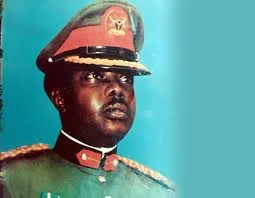
Murtala Muhammed made quick changes in government, fought corruption, set a date for civilian rule and strengthened Nigeria’s foreign policy.
What government changes did he make?
- Dismissals: he removed many government workers seen as corrupt or inefficient.
- Governors: he removed the state governors who had served under Gowon.
- Committee: he set up a committee to look into corrupt practices.
- New states: he created seven new states, making the total 19.
- New capital: he announced a plan to move the capital from Lagos to Abuja, a more central location.
How did he fight corruption?
- Investigations: he began enquiries into the wealth of former government officials.
- Recovery: he took back government property wrongly given to private people.
- Asset declaration: officials had to declare their assets (state what they owned).
- Purge: over 10,000 public servants were dismissed for corruption, laziness or being too old.
What was the plan for return to civilian rule?
The plan was a set of steps leading to the handover of power to civilians by 1 October 1979.
- Create more states (done in 1976).
- Set up a committee to draft a new constitution.
- Hold local government elections.
- Hold state elections.
- Hold national elections.
- Hand over power to civilians by 1 October 1979.
What was his foreign policy?
- Apartheid: he spoke strongly against apartheid (racial separation) in South Africa.
- Angola: he supported freedom fighters in Angola.
- Leadership: he made Nigeria a leading voice in African affairs.
How did Murtala Muhammed die?
Murtala Muhammed was killed on 13 February 1976 in a failed coup attempt.
- Attack: his car was attacked in traffic in Lagos.
- Coup leader: Lieutenant Colonel Bukar Suka Dimka led the coup.
- Failure: the coup failed because most of the military stayed loyal to the government.
- Successor: his deputy, General Olusegun Obasanjo, became Head of State.
What did the Obasanjo government do between February 1976 and October 1979?
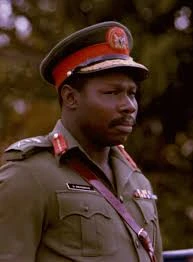
The Obasanjo government continued Murtala’s policies, launched economic and education programmes, and completed the return to civilian rule.
How did Obasanjo continue Murtala’s policies?
- Promise: he promised to continue the policies started by Murtala Muhammed.
- Team: he kept the same team of officers.
- Transition plan: he kept the plan to return to civilian rule.
- Name: he often called the government the “Murtala/Obasanjo administration” to honour the late leader.
What economic reforms were introduced?
- Operation Feed the Nation: a programme to increase food production.
- Land Use Act (1978): it changed how land ownership worked in Nigeria.
- Oil refineries: new refineries were built to process Nigeria’s oil at home.
- NNPC: the Nigerian National Petroleum Corporation was created.
- NYSC: the National Youth Service Corps, started by Gowon’s government in 1973, continued to promote unity among young Nigerians.
What changes were made in education and culture?
- Universal Primary Education (UPE): it gave all children free primary education.
- New universities: more universities were set up across the country.
- FESTAC 1977: the Festival of Arts and Culture brought artists from Africa and the black diaspora to Nigeria.
What infrastructure projects were carried out?
- Roads: new roads, bridges and highways were built.
- Abuja: plans for the new capital city moved forward.
- Airports: airports in major cities were upgraded.
- Seaports: new seaports were developed.
How did Nigeria return to civilian rule in 1979?
- A Constitutional Drafting Committee wrote a new constitution.
- A Constituent Assembly debated the draft constitution.
- The ban on political activities was lifted in September 1978.
- Five political parties were allowed to register.
- Elections were held at local, state and federal levels.
- On 1 October 1979, Obasanjo handed power to the elected civilian president, Alhaji Shehu Shagari.
What were the achievements of the Third Military Regime?
The regime’s achievements were political, economic and social.
Political achievements
- Civilian rule: Nigeria was returned to civilian rule on schedule.
- More states: new states gave more groups a share in government.
- Abuja: the move of the capital from Lagos to Abuja was started.
- Less corruption: the government became less corrupt.
- Foreign standing: Nigeria’s position in African and world affairs grew stronger.
Economic achievements
- Oil money: it paid for many development projects.
- Industry: new refineries and factories were built.
- Infrastructure: roads and other facilities were expanded.
- Food: programmes were started to increase food production.
- NNPC: the corporation was created to manage the oil industry.
Social achievements
- Education: UPE improved access to primary school.
- Unity: the NYSC continued to bring young people together.
- Culture: FESTAC celebrated Nigerian and African culture.
- Jobs: new development projects created employment.
- Public service: corruption in the civil service was reduced.
What challenges and criticisms did the regime face?
The regime faced challenges in running the country and criticisms of how it governed.
Challenges faced
- Loss of a leader: the sudden death of Murtala Muhammed was a big setback.
- Oil prices: unstable prices affected government income.
- Tensions: tribal and regional tensions remained.
- The military: officers had to accept a return to the barracks.
- New system: democracy needed time to develop.
Criticisms
- Not democratic: some felt military rule, even when reformed, was still not democratic.
- Hardship: the quick dismissal of many civil servants caused hardship for their families.
- Debt: some economic policies increased Nigeria’s debt.
- Rushed handover: some felt the transition to democracy was too hurried.
- Military habits: they still influenced the new civilian government.
What was the legacy of the Third Military Regime?
The regime is often seen as one of the better periods of military rule in Nigeria.
- Handover: it showed that the military could give up power willingly.
- Anti-corruption: it set up systems to fight corruption.
- Foreign policy: it strengthened Nigeria’s voice in international affairs.
- Oil wealth: it used oil income for development projects.
- Path to democracy: it created a plan for civilian rule and carried it through.
- Murtala’s memory: many Nigerians remember him as a hero who might have done much more had he lived.
- Obasanjo later: he returned as civilian president from 1999 to 2007, after later periods of military rule.
Evaluation
- Why were many Nigerians unhappy with General Yakubu Gowon in 1975?
- State four actions taken by Murtala Muhammed to fight corruption.
- List the steps in the plan to return Nigeria to civilian rule.
- Who led the coup in which Murtala Muhammed was killed, and why did it fail?
- Name four policies or projects of the Obasanjo government.
Assignment
Explain three achievements of the Third Military Regime and describe two criticisms of it.
This term's Nigerian History topics
SS2 Second Term · 8 topics
- Nigeria Civil War 1967-1970
- Third Military Regime in Nigeria 1975-1979: General Murtala Muhammed & General Olusegun
- Second Civilian Democratic Government in Nigeria 1979-1983: Alhaji Shagari’s Regime
- 4th Military Regime in Nigeria: Major General Muhammed Buhari & Brigadier Tunde Idiagbon 1983-1985
- 5th Military Regime in Nigeria: General Ibrahim Babangida 1985-1993
- Military Regime in Nigeria: General Ibrahim Babangida 1985-1993
- 7th Military Regime: Abdul Salam Abubakar (1998-1999)
- The 4th Nigerian Civilian Republic: Olusegun Obasanjo (1999-2007)
SS2 Nigerian History Lesson Notes for Other Topics
Nigeria Civil War 1967-1970
Read the full lesson note.
Second Civilian Democratic Government In Nigeria 1979-1983 - Alhaji Shagari's Regime
Read the full lesson note.
4th Military Regime In Nigeria: Major General Muhammed Buhari & Brigadier Tunde Idiagbon 1983-1985
Read the full lesson note.

5th Military Regime In Nigeria: General Ibrahim Babangida 1985-1993
Read the full lesson note.
Military Regime In Nigeria: General Ibrahim Babangida 1985-1993
Read the full lesson note.

7th Military Regime - Abdul Salam Abubakar (1998-1999)
Read the full lesson note.
The 4th Nigerian Civilian Republic: Olusegun Obasanjo (1999-2007)
Read the full lesson note.

Amalgamation Of Nigeria And Impact
Read the full lesson note.
British Colonial Political Administration In Nigeria: Indirect Rule System
Read the full lesson note.

British Colonial Economy Social Development & Inter Group Relations In Nigeria
Read the full lesson note.
Nationalism And National Movement In Nigeria
Read the full lesson note.

Constitutional Development In Nigeria: Road To Independence
Read the full lesson note.
First Democratic Civilian Government In Nigeria 1960-1966
Read the full lesson note.
Military Intervention In Nigerian Politics: First Coup D'Etat January 15, 1966
Read the full lesson note.
First Military Regime In Nigeria : Major General J.T.U Aguyi Ironsi 1966.
Read the full lesson note.
Lesson Notes for Other Classes

SS1 Lesson Note
The complete lesson note to guide your studies.

SS3 Lesson Note
The complete lesson note to guide your studies.
