
Amalgamation of Nigeria and Impact – SS2 Nigerian History Lesson Note (First Term)
Download this term · ₦1,000Lesson note at a glance
- Subject
- Nigerian History
- Class
- SS2
- Term
- First Term
- Topic
- Amalgamation of Nigeria and Impact
- Order
- Topic 1 of 9 this term
- Reading time
- 8 min
Amalgamation means joining different parts together to make one whole thing. In Nigeria’s history, amalgamation refers to when the British joined different territories to create what we now call Nigeria. This happened on 1 January 1914, and it was a very important event that shaped Nigeria’s future. The man who led this process was Lord Frederick Lugard.
Behavioural objectives
By the end of the lesson, students should be able to:
- Explain what amalgamation means and state when it happened.
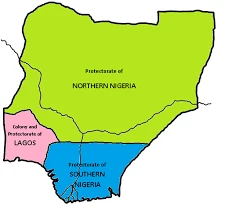
- Name the territories that were joined in 1914.
- State the economic, administrative and strategic reasons for amalgamation.
- Describe the role of Lord Lugard and the steps that led to amalgamation.
- Explain the immediate and long-term effects of amalgamation on Nigeria.
What was Nigeria like before amalgamation?
The different territories
Before 1914, the area we now call Nigeria was divided into different parts:
- The Colony of Lagos
- This was the first part Britain took over directly (in 1861)
- It was a small area around Lagos Island and nearby mainland
- It was important for trade and had many educated Africans
- The Protectorate of Southern Nigeria
- Created in 1900
- Covered the eastern and western parts of southern Nigeria
- Included many different peoples like the Yoruba, Igbo, Ijaw, and others
- Rich in palm oil, which was important for European trade
- The Protectorate of Northern Nigeria
- Also created in 1900
- Covered the vast northern part of what is now Nigeria
- Included the Sokoto Caliphate and other Islamic states
- Had different cultures and religions from the South
- Main products were cotton, groundnuts, and leather
Different ways of rule
The British ruled these territories differently:
- Lagos Colony had direct British rule with British officials making all decisions
- Northern Nigeria was ruled indirectly through the Emirs (traditional rulers)
- Southern Nigeria had a mix of direct and indirect rule depending on the area
Why did amalgamation happen?
Economic reasons
Money matters were very important:
- Northern Nigeria was losing money: it cost more to run than it earned
- Southern Nigeria was making money from taxes and trade
- By joining them, the British could use Southern money to pay for Northern costs
- It would be cheaper to have one government instead of three
- Trade between the regions would be easier with one set of rules
Administrative reasons
Running the territories would be simpler:
- One central government instead of three separate ones
- Fewer officials needed, saving money
- Easier to make plans for the whole area
- The same laws and rules could apply everywhere
- Taxes could be collected in the same way
Strategic reasons
Britain wanted to strengthen its control:
- Other European countries (France and Germany) had colonies nearby
- A larger, united colony would be stronger
- It would be easier to build railways and roads across the whole territory
- The Niger River flowed through both North and South, so one government made sense
- It would be easier to move troops and officials where needed
How did amalgamation take place?
Lord Lugard’s role
Frederick Lugard was the main person behind amalgamation:
- He had been the High Commissioner of Northern Nigeria (1900 to 1906)
- He returned to Nigeria in 1912 to prepare for amalgamation
- He wrote detailed plans for how to join the territories
- He became the first Governor-General of the new Nigeria
- He brought his experience from both Northern and Southern Nigeria
Steps to amalgamation
- 1906: Lagos Colony and Southern Nigeria Protectorate were joined together
- 1912: Lugard began preparing detailed plans
- 1913: The British government approved the plans
- 1 January 1914: Official amalgamation happened
- A new flag was raised, and the Colony and Protectorate of Nigeria was born
What was the structure of Nigeria after amalgamation?
Central government
At the top level:
- Governor-General (Lord Lugard) had the highest power
- Executive Council of senior British officials advised the Governor-General
- Legislative Council made laws for Lagos Colony but not for the protectorates
- No Nigerians were in these top positions
Regional government
Nigeria was still divided in many ways:
- Northern Provinces (the old Northern Nigeria)
- Southern Provinces (the old Southern Nigeria)
- Each had a Lieutenant-Governor under the Governor-General
- The North kept its separate identity and systems
- Different tax systems continued in different areas
- Traditional rulers kept much of their power, especially in the North
Lugard’s indirect rule
Lugard expanded his system of indirect rule:
- Traditional rulers were used to control the people
- British officials gave orders to the rulers, who gave orders to the people
- This system was already working in the North
- Lugard tried to use it in the South too, but it did not always work well
- In areas without strong rulers, the British appointed “warrant chiefs”
What were the immediate effects of amalgamation?
Administrative changes
- One central government for all of Nigeria
- Unified postal service, railways, and military
- One currency for the whole territory
- One customs service at the borders and ports
- British officials could be moved between North and South
Economic changes
- Taxes from the South helped pay for the North
- Building of railways linking North and South began
- Trade between regions became easier
- Banks and businesses could work across all of Nigeria
- Development focused on areas useful for British trade
Political changes
- The idea of “Nigeria” as one unit began
- Traditional boundaries between kingdoms were less important
- New administrative boundaries were created
- Power shifted from traditional rulers to British officials
- Seeds of national politics were planted
What were the long-term impacts of amalgamation?
Political impact
- Creation of modern Nigeria’s boundaries
- The borders of Nigeria today are largely the same as after amalgamation
- Many different ethnic groups were brought together
- Some ethnic groups were split between Nigeria and neighbouring countries
- It created one of Africa’s largest and most diverse countries
- Federal system
- Nigeria became a federation at independence in 1960
- This was partly because amalgamation had joined very different regions
- Power was shared between federal and regional governments
- The three-region structure (North, East, West) came from colonial divisions
- Regional tensions
- Differences between North and South continued
- Political parties formed along regional lines
- Regions competed for power and resources
- These tensions sometimes led to conflicts after independence
Economic impact
- Economic inequality
- Different regions developed at different speeds
- The South had more schools, businesses, and infrastructure
- The North remained more traditional and agricultural
- These differences created lasting economic gaps
- Resource distribution
- Oil was later found in the Niger Delta (South)
- This created questions about how to share wealth
- Northern agricultural products became less important
- Debates about resource control continue today
- Transportation networks
- Railways and roads were built to link North and South
- They were designed mainly to move goods to ports for export
- They created patterns of movement that still exist
- They shaped which cities grew and which did not
Social and cultural impact
- Religious patterns
- Amalgamation joined the mostly Muslim North with the mostly Christian South
- It created a country almost equally divided between major religions
- Religious differences became part of political divisions
- Both religions grew across regional lines over time
- Education differences
- Western education spread faster in the South
- Islamic education was stronger in the North
- This created differences in literacy and job opportunities
- The South produced more professionals and civil servants initially
- Language policy
- English became the official language
- Local languages continued to be important
- No single Nigerian language could be chosen without creating tension
- English provided a neutral way for different groups to communicate
- Nigerian identity
- People slowly began to see themselves as Nigerians
- Ethnic and regional identities remained strong
- National symbols (flag, anthem, sports teams) helped build unity
- Creating a truly united nation remained a challenge
What are the criticisms of amalgamation?
Nigerian perspectives
- No Nigerian input
- Nigerians were not consulted about amalgamation
- It was a decision made by Britain for British interests
- Many Nigerians felt it was forced on them
- Some call it “the mistake of 1914”
- Artificial creation
- It brought together peoples with different histories and cultures
- Some had been enemies or had never interacted before
- It created a country without a shared history or identity
- It set the stage for future conflicts
- Uneven development
- Some areas were developed more than others
- Resources were focused on places with things Britain wanted
- It created lasting inequalities between regions
- Some areas still feel neglected today
British criticisms
- Administrative convenience
- Amalgamation was mainly for British convenience
- Little thought was given to what would work for Nigerians
- The focus was on saving money, not building a nation
- Short-term thinking created long-term problems
- Incomplete integration
- North and South remained separate in many ways
- Different legal systems continued
- There was no real attempt to build national unity
- It set the stage for regional divisions
What were the positive legacies of amalgamation?
Size and diversity
- Created one of Africa’s largest countries
- Brought together many talented peoples
- Great diversity of cultures and ideas
- Potential for a rich nation
Economic potential
- Combined resources of different regions
- Large internal market for goods
- Variety of agricultural and mineral resources
- Potential to be an economic powerhouse
International standing
- Nigeria’s size gave it importance in Africa
- Became one of Africa’s most influential countries
- Important voice in regional and global affairs
- Leadership role in African politics
What challenges did amalgamation create?
National unity
- Building unity among different groups
- Balancing regional interests
- Creating a shared Nigerian identity
- Preventing ethnic and religious conflicts
Power sharing
- Finding fair ways to share political power
- Representing all groups in government
- Balancing a strong central government with regional needs
- Creating a system all Nigerians feel is fair
Resource distribution
- Sharing wealth from oil and other resources
- Developing all parts of the country
- Addressing historical inequalities
- Creating development that benefits all Nigerians
Evaluation
- What does amalgamation mean, and on what date did it take place in Nigeria?
- Name the three territories that existed in Nigeria before 1914.
- State three reasons why the British amalgamated Northern and Southern Nigeria.
- Describe the role of Lord Lugard in the amalgamation.
- Give two long-term effects of amalgamation on Nigeria.
Assignment
- Explain the economic reasons for the amalgamation of 1914.
- Describe how Nigeria was governed after amalgamation, including the roles of the Governor-General and the Lieutenant-Governors.
- Discuss two criticisms of amalgamation and two of its positive legacies.
This term's Nigerian History topics
SS2 First Term · 9 topics
- Amalgamation of Nigeria and Impact
- British Colonial Political Administration in Nigeria: Indirect Rule System
- British Colonial Economy Social Development & Inter Group Relations in Nigeria
- Nationalism and National Movement in Nigeria
- Constitutional Development in Nigeria: Road to Independence
- First Democratic Civilian Government in Nigeria 1960-1966
- Military Intervention in Nigerian Politics: First Coup D’Etat January 15, 1966
- First Military Regime in Nigeria: Major General J.T.U Aguyi Ironsi 1966.
- Military Counter Coup July 1966 Second Military Regime: The Emergence of Yakubu Gowon
Get Nigerian History as PDF and Word
Every week of SS2 Nigerian History, First Term, formatted and ready to print. Ad-free, and the copy lock comes off.
Get this term Card, bank transfer, USSD or OPay
SS2 Nigerian History Lesson Notes for Other Topics
British Colonial Political Administration In Nigeria: Indirect Rule System
Read the full lesson note.
British Colonial Economy Social Development & Inter Group Relations In Nigeria
Read the full lesson note.
Nationalism And National Movement In Nigeria
Read the full lesson note.

Constitutional Development In Nigeria: Road To Independence
Read the full lesson note.
First Democratic Civilian Government In Nigeria 1960-1966
Read the full lesson note.
Military Intervention In Nigerian Politics: First Coup D'Etat January 15, 1966
Read the full lesson note.
First Military Regime In Nigeria : Major General J.T.U Aguyi Ironsi 1966.
Read the full lesson note.
Military Counter Coup July 1966 Second Military Regime: The Emergence Of Yakubu Gowon
Read the full lesson note.
Nigeria Civil War 1967-1970
Read the full lesson note.

Third Military Regime In Nigeria 1975-1979 : General Murtala Muhammed & General Olusegun
Read the full lesson note.
Second Civilian Democratic Government In Nigeria 1979-1983 - Alhaji Shagari's Regime
Read the full lesson note.
4th Military Regime In Nigeria: Major General Muhammed Buhari & Brigadier Tunde Idiagbon 1983-1985
Read the full lesson note.

5th Military Regime In Nigeria: General Ibrahim Babangida 1985-1993
Read the full lesson note.
Military Regime In Nigeria: General Ibrahim Babangida 1985-1993
Read the full lesson note.

7th Military Regime - Abdul Salam Abubakar (1998-1999)
Read the full lesson note.
Lesson Notes for Other Classes

SS1 Lesson Note
The complete lesson note to guide your studies.

SS3 Lesson Note
The complete lesson note to guide your studies.
