
5th Military Regime in Nigeria: General Ibrahim Babangida 1985-1993 – SS2 Nigerian History Lesson Note (Second Term)
Download this term · ₦1,000Lesson note at a glance
- Subject
- Nigerian History
- Class
- SS2
- Term
- Second Term
- Topic
- 5th Military Regime in Nigeria: General Ibrahim Babangida 1985-1993
- Order
- Topic 5 of 8 this term
- Reading time
- 9 min
General Ibrahim Babangida ruled Nigeria as military President from 27 August 1985 to 26 August 1993. He took power in a bloodless coup against Major General Muhammadu Buhari. His rule is remembered for the Structural Adjustment Programme, a long transition to civilian rule, and the annulment of the 12 June 1993 election.
Behavioural objectives
By the end of the lesson, students should be able to:
- state how and when General Babangida came to power;
- give the reasons Babangida gave for overthrowing the Buhari government;
- describe the stages of the transition programme and the annulment of the June 12 election;
- list the main features of the Structural Adjustment Programme (SAP) and its effects;
- outline the achievements, failures and legacy of the Babangida regime.
Who was General Ibrahim Babangida?
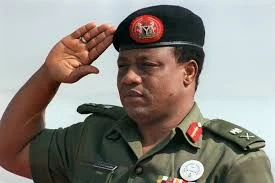
On 27 August 1985, Major General Ibrahim Badamasi Babangida (often called IBB) took power in Nigeria through a bloodless coup. He overthrew the military government of Major General Muhammadu Buhari. Babangida called his takeover a “palace coup” because it was carried out by military officers who were already part of the government.
Babangida was from Niger State in the northern part of Nigeria. He was a professional soldier who had risen through the ranks of the military. When he took power, he gave himself the title of “President” instead of “Head of State”, which earlier military rulers had used. He also promoted himself to the rank of General.
Why did Babangida overthrow the Buhari government?
Babangida gave several reasons for overthrowing the Buhari government:
- Human rights violations: He said the Buhari regime had detained many people without trial and restricted freedom of speech.
- Harsh economic policies: The Buhari government’s strict economic measures had caused hardship for many Nigerians.
- Military exclusion: Some senior military officers felt left out of decision-making under Buhari.
- No transition plan: Buhari had not set a timetable for returning Nigeria to civilian rule.
- Leadership style: Babangida claimed Buhari’s leadership was too rigid and unwilling to listen to advice.
How was the Babangida government structured?
Babangida set up his government with these key structures:
- Armed Forces Ruling Council (AFRC): This replaced the Supreme Military Council and was the highest decision-making body.
- Council of Ministers: Made up of both military officers and civilians who ran government ministries.
- State governors: Military officers were appointed as governors of the states.
- Local governments: Civilians were allowed to run local governments through elections.
What was the transition programme?
One of Babangida’s first promises was to return Nigeria to civilian rule. He set up a long transition programme:
- Political Bureau: In 1986, he created a group to recommend how Nigeria should return to democracy.
- Constitution review: A committee was set up to create a new constitution.
- Two-party system: In 1989, Babangida created two political parties:
- Social Democratic Party (SDP), described as “a little to the left”
- National Republican Convention (NRC), described as “a little to the right”
The government wrote the constitutions of both parties, built their offices, and gave them money.
- New states creation: Babangida created more states, bringing the total to 30 by the end of his rule.
- Local government elections: In 1987 and 1989, elections were held for local governments.
- State elections: In 1991, governors and state assemblies were elected.
- National Assembly elections: In 1992, senators and representatives were elected.
- Presidential election: On 12 June 1993, a presidential election was held between Chief M.K.O. Abiola (SDP) and Alhaji Bashir Tofa (NRC).
The annulment of the June 12 election
Just as the transition was about to be completed, Babangida annulled (cancelled) the June 12 presidential election, which most observers believed was won by Chief M.K.O. Abiola. This action caused great anger among Nigerians and led to protests across the country.
What were the economic policies of the Babangida regime?
Structural Adjustment Programme (SAP)
In 1986, Babangida introduced the Structural Adjustment Programme (SAP), which was supposed to fix Nigeria’s economic problems. Key elements of SAP included:
- Devaluation of the naira: The value of Nigeria’s currency was reduced against foreign currencies.
- Removal of subsidies: Government stopped or reduced financial support for things like fuel and food.
- Privatisation: Government sold many companies it owned to private individuals.
- Trade liberalisation: Import restrictions were removed to allow more foreign goods.
- Reduced government spending: Less money was spent on services like education and health.
SAP was supported by international organisations like the World Bank and the International Monetary Fund (IMF), but it caused great hardship for ordinary Nigerians. Prices of goods went up, many people lost their jobs, and poverty increased.
Other economic programmes
To reduce the hardship caused by SAP, Babangida created several programmes:
- Directorate of Food, Roads and Rural Infrastructure (DFRRI): Built roads and provided water in rural areas.
- Better Life for Rural Women Programme: Started by First Lady Maryam Babangida to help rural women.
- People’s Bank: Gave small loans to poor people who could not get loans from regular banks.
- Community banks: Set up banks in local communities to serve small businesses.
- National Directorate of Employment (NDE): Created to help reduce unemployment.
Despite these programmes, the economic situation for most Nigerians worsened during the Babangida years.
What were the social policies of the Babangida regime?
Education
Babangida made several changes in education:
- 6-3-3-4 system: Introduced a new education system with 6 years of primary school, 3 years of junior secondary, 3 years of senior secondary, and 4 years of university.
- More universities: Created several new universities and polytechnics.
- Technical education: Emphasised practical skills in schools.
- Education tax: Made companies pay a special tax to support education.
However, education funding was cut under SAP, leading to strikes by teachers and students.
Health
In health care, the regime:
- Primary health care: Built more local health centres.
- Essential drugs programme: Made basic medicines more available.
- Immunisation: Expanded programmes to vaccinate children.
- HIV/AIDS: Started programmes to fight the spread of HIV/AIDS.
Like education, health care also suffered from reduced funding due to SAP.
What religious and ethnic challenges did the regime face?
Babangida’s regime faced several challenges related to religion and ethnicity:
- OIC membership: In 1986, Nigeria joined the Organisation of Islamic Conference (OIC), which caused anger among Christians who felt Nigeria should remain secular (not favouring any religion).
- Religious riots: There were several violent clashes between Muslims and Christians, especially in northern cities.
- Ethnic conflicts: Fighting broke out between different ethnic groups in various parts of the country.
- Military balance: Babangida tried to maintain balance between northern and southern officers in the military.
What was Babangida’s foreign policy?
Babangida was active in international affairs:
- ECOWAS: Strengthened the Economic Community of West African States.
- ECOMOG: Created the ECOWAS Monitoring Group, a military force that intervened in the Liberian civil war in 1990.
- Africa-centred policy: Continued Nigeria’s focus on African issues.
- Non-Aligned Movement: Maintained Nigeria’s position of not taking sides in the Cold War.
- South Africa: Continued opposition to apartheid in South Africa.
How did corruption and mismanagement affect the Babangida years?
The Babangida era became known for widespread corruption:
- Gulf War windfall: When oil prices rose during the 1991 Gulf War, Nigeria earned an extra $12.4 billion, but the money was never properly accounted for.
- White elephant projects: Huge amounts were spent on projects that were never completed or did not work.
- Drug trafficking: Nigeria’s reputation was damaged by the involvement of officials in the drug trade.
- Institutionalised corruption: Bribery and kickbacks (illegal payments) became common in government contracts.
- Capital flight: Much of Nigeria’s wealth was taken out of the country and kept in foreign banks.
What was Babangida’s human rights record?
Babangida’s human rights record was mixed:
- Press freedom: He initially allowed more press freedom than Buhari, but later clamped down on critical newspapers.
- Political detentions: Critics of the government were arrested and held without trial.
- Dele Giwa: In 1986, a prominent journalist, Dele Giwa, was killed by a letter bomb, and many believed the government was responsible.
- Student protests: Student demonstrations were often violently put down by security forces.
- Civil society: Despite restrictions, many civil society groups emerged to fight for democracy.
How did the Babangida regime end?
After annulling the 12 June 1993 election, Babangida faced intense pressure to step down. On 26 August 1993, he “stepped aside” and appointed Ernest Shonekan, a civilian businessman, to head an Interim National Government. Many Nigerians saw this government as illegitimate. It lasted only three months before General Sani Abacha overthrew it on 17 November 1993.
What were the achievements of the Babangida regime?
- Infrastructure development: Built many roads, bridges and public buildings, including moving the capital to Abuja.
- State creation: Created more states to give more ethnic groups their own state governments.
- Rural development: Through DFRRI, improved infrastructure in rural areas.
- Financial institutions: Created new banks and financial institutions.
- International standing: Raised Nigeria’s profile in international affairs, especially in West Africa.
What were the failures and criticisms of the regime?
- Failed transition: The cancellation of the June 12 election was seen as a betrayal of Nigerians.
- Economic hardship: SAP caused suffering for many Nigerians.
- Corruption: The regime was seen as one of the most corrupt in Nigeria’s history.
- Political manipulation: Babangida was nicknamed “Maradona” (after a football player known for trickery) for his political games.
- Human rights abuses: The regime was responsible for detentions and possibly assassinations of critics.
What was the legacy of the Babangida regime?
Babangida’s eight-year rule left a lasting impact on Nigeria:
- Political cynicism: Many Nigerians became distrustful of military promises of democratic transition.
- June 12 Movement: The annulment of the election created a pro-democracy movement that continued to fight for civilian rule.
- Economic liberalisation: The economic reforms changed Nigeria’s economy fundamentally, opening it more to market forces.
- Expanded military role: The military became more involved in politics and the economy.
- Institutionalised corruption: The scale of corruption during this period set a pattern that has been difficult to break.
- New capital city: Abuja was developed and became Nigeria’s capital during this period.
The Babangida years are often remembered as a time of unfulfilled promises, economic hardship and political manipulation. The regime started with goodwill and promises of reform, but it ended with disappointment and anger over the cancelled election. Many of the problems Nigeria faces today, including corruption, ethnic tensions and economic inequality, were made worse during the Babangida era.
Some of the institutions and structures created during this time, such as the two-party system, additional states and financial institutions, have influenced Nigeria’s development. The struggle for democracy that intensified after the annulment of the June 12 election eventually led to Nigeria’s return to civilian rule in 1999.
Evaluation
- Describe how General Babangida came to power in 1985.
- State four reasons Babangida gave for overthrowing the Buhari government.
- List the key elements of the Structural Adjustment Programme (SAP).
- Name three programmes Babangida created to reduce the hardship caused by SAP.
- What happened to the June 12, 1993 presidential election, and how did Babangida’s rule end?
Assignment
- Outline the stages of Babangida’s transition programme from 1986 to 1993.
- Discuss the achievements and failures of the Babangida regime.
This term's Nigerian History topics
SS2 Second Term · 8 topics
- Nigeria Civil War 1967-1970
- Third Military Regime in Nigeria 1975-1979: General Murtala Muhammed & General Olusegun
- Second Civilian Democratic Government in Nigeria 1979-1983: Alhaji Shagari’s Regime
- 4th Military Regime in Nigeria: Major General Muhammed Buhari & Brigadier Tunde Idiagbon 1983-1985
- 5th Military Regime in Nigeria: General Ibrahim Babangida 1985-1993
- Military Regime in Nigeria: General Ibrahim Babangida 1985-1993
- 7th Military Regime: Abdul Salam Abubakar (1998-1999)
- The 4th Nigerian Civilian Republic: Olusegun Obasanjo (1999-2007)
Get Nigerian History as PDF and Word
Every week of SS2 Nigerian History, Second Term, formatted and ready to print. Ad-free, and the copy lock comes off.
Get this term Card, bank transfer, USSD or OPay
SS2 Nigerian History Lesson Notes for Other Topics

Nigeria Civil War 1967-1970
Read the full lesson note.

Third Military Regime In Nigeria 1975-1979 : General Murtala Muhammed & General Olusegun
Read the full lesson note.

Second Civilian Democratic Government In Nigeria 1979-1983 - Alhaji Shagari's Regime
Read the full lesson note.
4th Military Regime In Nigeria: Major General Muhammed Buhari & Brigadier Tunde Idiagbon 1983-1985
Read the full lesson note.

Military Regime In Nigeria: General Ibrahim Babangida 1985-1993
Read the full lesson note.

7th Military Regime - Abdul Salam Abubakar (1998-1999)
Read the full lesson note.

The 4th Nigerian Civilian Republic: Olusegun Obasanjo (1999-2007)
Read the full lesson note.

Amalgamation Of Nigeria And Impact
Read the full lesson note.

British Colonial Political Administration In Nigeria: Indirect Rule System
Read the full lesson note.

British Colonial Economy Social Development & Inter Group Relations In Nigeria
Read the full lesson note.

Nationalism And National Movement In Nigeria
Read the full lesson note.

Constitutional Development In Nigeria: Road To Independence
Read the full lesson note.

First Democratic Civilian Government In Nigeria 1960-1966
Read the full lesson note.

Military Intervention In Nigerian Politics: First Coup D'Etat January 15, 1966
Read the full lesson note.
First Military Regime In Nigeria : Major General J.T.U Aguyi Ironsi 1966.
Read the full lesson note.
Lesson Notes for Other Classes

SS1 Lesson Note
The complete lesson note to guide your studies.

SS3 Lesson Note
The complete lesson note to guide your studies.
