
Process of Information Transmission – SS1 Data Processing Lesson Note (Second Term)
Download this term · ₦1,000Lesson note at a glance
- Subject
- Data Processing
- Class
- SS1
- Term
- Second Term
- Topic
- Process of Information Transmission
- Order
- Topic 3 of 7 this term
- Reading time
- 8 min
Information transmission is the passing of information from a sender to a receiver through a channel.
Behavioural objectives
By the end of the lesson, students should be able to:
- describe a chart and state why charts are used;
- name common means of information transmission, such as the mobile phone, newspaper, radio, telephone and television;
- explain how a telephone sends and receives a voice;
- distinguish wireless transmission from cable transmission;
- state the purpose of a communications satellite and define a receiver;
- list the steps in the process of information transmission.
What is the process of information transmission?
The process of information transmission is the movement of a message from a sender, through a channel, to a receiver.
- Sender: the person or device that creates the message, such as a radio presenter.
- Channel: the path that carries the message, such as a newspaper, radio, telephone, mobile phone or television.
- Receiver: the person or device at the receiving end that takes in the message.
- Signal: the form in which the message travels, either wirelessly or by cable.
What are the steps in information transmission?
- The sender forms the message to be passed on.
- The message is encoded, that is, changed into a form the channel can carry, such as an electrical signal.
- The encoded signal travels through the channel, wirelessly or by cable.
- The receiver receives the signal at the other end.
- The signal is decoded, that is, changed back into a message the user can understand, such as sound or pictures.
- The receiver may send a reply (feedback) back to the sender.
- Noise: any interference, such as a weak signal, that spoils the message on its way.
What are the means of information transmission?
The common means of information transmission are the chart, mobile phone, newspaper, radio, telephone and television.
What is a chart?

A chart is a graphical representation of data using symbols.
- Bar chart: the data is shown as bars.
- Line chart: the data is shown as a line.
- Pie chart: the data is shown as slices of a circle.
The word “chart” has several meanings:
- Data chart: a diagram or graph that organises and shows numerical or qualitative data.
- Map chart: a map with extra information for a special purpose, such as a nautical or aeronautical chart.
- Other charts: the chord chart in music and the record chart for album popularity.
Why charts are used:
- They make large quantities of data easier to understand.
- They show the relationships between parts of the data.
- They can be read more quickly than the raw data.
- They can be drawn by hand (often on graph paper) or by computer with a charting application.
| Type of data | Chart that suits it |
|---|---|
| Percentages in different groups, such as satisfied, not satisfied, unsure | Pie chart, or a horizontal bar chart, which may be easier to read |
| Numbers that change over time, such as annual revenue from 1990 to 2000 | Line chart |
What is a mobile phone?
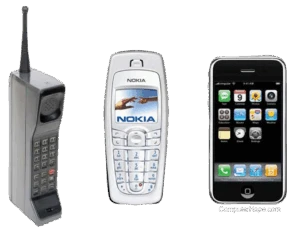
A mobile phone is a wireless handheld device used to make calls and send text messages, among other features.
- Other names: cellular phone or cellphone.
- Earliest phones: they could only make and receive calls, and were too bulky for a pocket.
- GSM phones: phones on the Global System for Mobile Communications network could send and receive text messages.
- MMS phones: multimedia messaging service allowed users to send and receive images, so these phones usually had cameras.
- Smartphone: a mobile phone with highly advanced features, such as web browsers, games, video players and navigation.
- Feature phone: a regular mobile phone with basic features.
- Cellular network: a network of cell sites spread across cities, countryside and hills.
- No signal: calls cannot be placed or received where the user’s network provider has no cell site signal.
What is a newspaper?

A newspaper is a publication issued at regular and usually close intervals, especially daily or weekly.
- Content: news, comment, features and advertising.
- Channel type: a printed medium, so it needs no signal.
What is radio?
Radio is the wireless transmission of electromagnetic energy through space.
- Main use: carrying information, such as sound, by changing (modulating) a property of the wave, such as its amplitude, frequency, phase or pulse width.
- Transmitter: modulates the energy to impress a signal on it, by amplitude modulation or angle modulation (frequency or phase modulation).
- Antenna: changes electric currents into radio waves and back again, and can both send and receive.
- Tuned circuits: let the listener select an individual station.
- Radio receiver: takes its input from an antenna and converts it into sound, pictures, digital data or other usable forms.
- Radio frequencies: the range is 3 kHz to 300 GHz, and commercial uses occupy only a small part of it.
- Voice system equipment: a microphone at the transmitter and a loudspeaker at the receiver.
How a radio voice broadcast works:
- The microphone changes the voice into an electrical signal.
- The transmitter modulates a radio wave with that signal.
- The transmitting antenna sends the wave through space.
- The tuned receiving antenna intercepts the wave.
- The listener’s tuned circuit selects the station.
- The receiver extracts the information and the loudspeaker turns it back into sound.
What is a telephone?
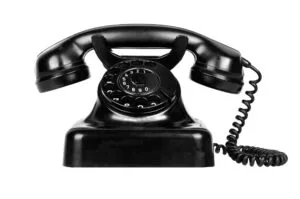
A rotary dial telephone, c.1940s
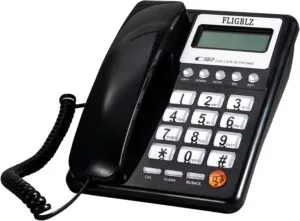
Modern telephones use push buttons
A telephone is a telecommunications device that lets two or more users hold a conversation when they are too far apart to be heard directly.
- Function: it converts sound, mainly the human voice, into electronic signals for transmission over cables or other media, and replays them as audible sound.
- History: in 1876, Alexander Graham Bell, a Scottish emigrant, was the first granted a United States patent for a device that reproduced the human voice intelligibly.
- Importance: it was the first device that let people talk directly across large distances.
Essential parts of a telephone:
- Microphone (transmitter): the part you speak into.
- Earphone (receiver): reproduces the voice at the distant end.
- Ringer: makes a sound to announce an incoming call.
- Dial or keypad: used to enter the number when starting a call.
Dial types:
- Rotary dial: used on most telephones until about the 1970s.
- DTMF push-button dial: replaced the rotary dial, and was first introduced to the public by AT&T in 1963.
How a telephone sends and receives a voice:
- The speaker talks into the transmitter in the handset.
- The transmitter converts the sound waves into electrical signals.
- The signals travel through the telephone network to the receiving phone.
- The receiving telephone converts the signals into audible sound in its earphone, or sometimes a loudspeaker.
- Duplex communication: both people can talk at the same time.
What is television?

Television, or TV, is a telecommunication medium for transmitting sound with moving images, in black-and-white or in colour.
- Other names: TV, telly or the tube.
- Meanings: a television set, a television programme, or the medium of transmission.
- Uses: entertainment, education, news and advertising, so it is a mass medium.
- Terrestrial television: the first method, using high-powered radio-frequency transmitters to broadcast to individual sets.
- Other distribution: co-axial cable, optical fibre, satellite systems and the Internet.
What are the types of information transmission?
There are two types of information transmission: wireless and cable.
What is wireless transmission?
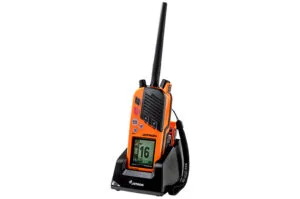
Wireless communication is the transfer of information between two or more points not connected by an electrical conductor.
- Radio: a common wireless technology.
- Communications satellite: the other common wireless technology.
- Less common methods: light, magnetic or electric fields, and sound.
How does radio work as wireless transmission?

Radio wireless transmission sends information as radio waves over short or very long distances.
- Short distance: a few metres, as with a television remote control.
- Long distance: thousands or even millions of kilometres, as in deep-space radio communication.
Applications of radio wireless technology:
- Communication devices: two-way radios, cellular telephones, cordless telephones and personal digital assistants (PDAs).
- Networking: wireless computer networks, mice, keyboards and headsets.
- Broadcasting: radio receivers, broadcast television and satellite television.
- Other uses: GPS units, garage door openers and headphones.
What is a communications satellite?

A communications satellite is an artificial satellite that relays and amplifies radio telecommunications signals through a transponder.
- Channel: it links a source transmitter and one or more receivers at different places on Earth.
- Uses: television, telephone, radio, internet and military applications.
- Users: private and government organisations.
- Problem solved: radio signals travel in straight lines and are blocked by the curve of the Earth.
- Purpose: to relay the signal around the curve of the Earth, so widely separated points can communicate.
What is cable transmission?
Cable communication is the transmission of data over a wire-based communication technology.
- Telephone networks: voice signals travel along wires.
- Cable television: the signal reaches the home by co-axial cable.
- Internet access: data travels through cables.
- Fibre-optic communication: signals travel through optical fibre.
What is the difference between wireless and cable transmission?
| Point | Wireless | Cable |
|---|---|---|
| Path of signal | Through space, with no electrical conductor | Along a wire or optical fibre |
| Waves used | Radio waves and other electromagnetic waves | Electrical or light signals in the cable |
| Examples | Radio, communications satellite, TV remote control | Cable television, fibre-optic link |
What is a receiver?
A receiver is the receiving end of a communication channel.
- Role: it receives messages or information from a sender, who first encoded them.
- Decoder: the receiver is sometimes modelled to include the decoder.
- Telephone example: the earphone reproduces the voice.
- Radio example: the radio receiver and loudspeaker turn the signal into sound.
Evaluation
- What is a chart? Name three symbols used to represent data in charts.
- Explain how a telephone sends a voice from one person to another.
- Differentiate between wireless communication and cable communication, giving one example of each.
- State the purpose of a communications satellite.
- What is a receiver in a communication channel?
Assignment
- List the six means of information transmission described in this lesson and write one sentence on each.
- Name four applications of radio wireless technology.
This term's Data Processing topics
SS1 Second Term · 7 topics
Get Data Processing as PDF and Word
Every week of SS1 Data Processing, Second Term, formatted and ready to print. Ad-free, and the copy lock comes off.
Get this term Card, bank transfer, USSD or OPay
SS1 Data Processing Lesson Notes for Other Topics
ICT Application In Everyday Life
Read the full lesson note.

The Art Of Information Processing
Read the full lesson note.
Medium to Information Transmission
Read the full lesson note.
Operating System
Read the full lesson note.

Operating System II
Read the full lesson note.
Word Processing
Read the full lesson note.
History Of Computing
Read the full lesson note.
Digitalization Of Data
Read the full lesson note.
Data And Information
Read the full lesson note.
History Of Computer
Read the full lesson note.
Classification Of Computers
Read the full lesson note.

Word Processing II
Read the full lesson note.
Spreadsheet
Read the full lesson note.
Database Management System
Read the full lesson note.
Database Management System II
Read the full lesson note.
Lesson Notes for Other Classes

SS2 Lesson Note
The complete lesson note to guide your studies.

SS3 Lesson Note
The complete lesson note to guide your studies.
