
Science of Living Things – SS1 Biology Lesson Note (First Term)
Lesson note at a glance
- Class
- SS1
- Subject
- Biology
- Term
- First Term
- Reading time
- 5 min
Biology is the science that studies living things in nature.
Behavioural objectives
By the end of the lesson, students should be able to:
- define science and biology, and state the origin of the word “biology”;
- name the main branches of biology and say what each studies;
- list the steps of the scientific method and explain each one briefly;
- describe the pattern used to report an experiment;
- state areas of human life in which biology is applied.
What is biology?
Biology is the branch of science that studies living things (organisms) in nature.
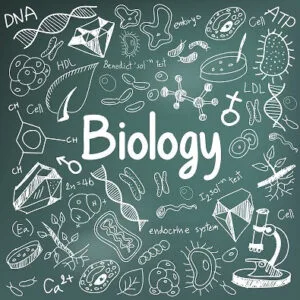
- Science: the study of nature, both living and non-living things.
- Origin of the word: “biology” comes from the Greek words “bio” (life) and “logos” (study of).
- Meaning: biology is therefore the study of life.
What are the branches of biology?
Biology has two main branches, botany and zoology, because organisms are generally classified into plants and animals.
Main branches
- Botany: the study of plants, such as maize, mango and hibiscus.
- Zoology: the study of animals, such as goats, fish and insects.
Other branches
- Microbiology: the study of microorganisms such as bacteria and viruses.
- Parasitology: the study of parasites and the harm they cause to their hosts.
- Anatomy: the study of the structure of organisms.
- Physiology: the study of how the parts of organisms work.
- Biotechnology: the use of living organisms or their parts to make useful products.
- Ecology: the study of how organisms relate to one another and to their environment.
- Genetics: the study of heredity and variation.
- Taxonomy: the naming and classification of organisms.
What is the scientific method?
The scientific method is a systematic series of steps used to investigate questions that arise from observations made in nature.
- Use: biologists use it to find answers about life.
- Starting point: it begins with observation.
- End point: it ends with a theory or law.
What are the steps of the scientific method?
There are eight steps in the scientific method, from observation to theory or law.
- Observation: using the senses to notice and describe what is seen or felt about an object.
- Classification: grouping the observations by their similarities and differences.
- Inference: logical reasoning from what has been observed.
- Measurement and identification: measuring quantities and identifying the exact problem to be solved.
- Hypothesis: a reasonable explanation for the observation that can be tested by experiment.
- Experiment: a planned test of the hypothesis.
- Control or conclusion: a control experiment is set up to check the result, and a conclusion is drawn.
- Theory or law: a hypothesis that has been tested repeatedly and found true.
How do the steps lead to one another?
What are a hypothesis, a theory and a law?
A hypothesis is a reasonable explanation for an observation that can be tested by experiment.
- After testing: a hypothesis may be accepted, rejected or modified to form a new hypothesis.
- Theory: a hypothesis that is repeatedly found true within the limits of available evidence.
- Law or principle: a theory that has been extensively tested and proven.
- Change: even a law can change because of continual experiments and research.
| Term | Meaning | Status |
|---|---|---|
| Hypothesis | Testable explanation for an observation | Not yet proven |
| Theory | Collection of many verified hypotheses | Supported by evidence |
| Law or principle | Extensively tested and proven theory | Accepted, but open to change |
What is a controlled experiment?
A controlled experiment is a parallel experiment set up to make sure the result of the main experiment is free from false conclusions.
- Constant factors: all factors that affect the result are kept the same in both set-ups.
- Variable: only the factor being tested is changed.
- Example: to test if bean seeds need water to germinate, one set of seeds gets water and the control set gets none. Temperature, light and type of seed stay the same.
How is an experiment reported?
An experiment is reported in a pattern accepted by scientists, with five parts in a fixed order.
- Aim: the purpose of the experiment.
- Apparatus or materials: the items required.
- Method or procedure: what was done, step by step.
- Observation: what was seen or measured.
- Conclusion: a statement based on the observation and the final result.
- Precautions: the care taken against dangers or hazards. They can also be included in a report.
What is the relevance of biology?
Biology is applied in many areas of human life, including medicine, agriculture, bioremediation, biotechnology and food production.
- Medicine: drugs and vaccines to prevent and cure diseases (for example penicillin), organ transplants (for example kidney transplant) and in-vitro fertilisation for infertile couples.
- Agriculture: hybrid crops and animals with desired qualities, and biological control of agricultural pests.
- Bioremediation: the use of naturally occurring bacteria to clean up oil spills and toxic chemicals.
- Biotechnology: the use of genetic engineering to fight genetic diseases.
- Food production: single-cell protein (SCP) to reduce protein deficiency, and food storage and preservation.
Which careers need knowledge of biology?
Many professions need a good knowledge of biology.
- Medical doctor and nurse: diagnose and treat illness.
- Pharmacist: prepares and supplies medicines.
- Medical laboratory scientist: tests samples to find the cause of diseases.
- Veterinary doctor: cares for the health of animals.
- Agriculturist: improves crop and livestock production.
- Nutritionist or dietitian: advises on healthy feeding.
- Forester and environmentalist: protect plants, animals and their habitats.
Evaluation
- Define science and biology.
- Name the two main branches of biology and say what each studies.
- List the steps of the scientific method in order.
- What is a hypothesis, and what can happen to it after testing?
- State three areas of human life in which biology is applied.
Assignment
- Describe the pattern followed when an experiment is reported, and explain how biology is relevant to you as a living organism, using three areas from this note.
This term's Biology topics
SS1 First Term · 11 topics
SS1 Biology Lesson Notes for Other Topics
Grassland
Read the full lesson note.
Recognizing Living Things
Read the full lesson note.
Classification Of Living Things I
Read the full lesson note.
The Cell
Read the full lesson note.
The Cell And It's Environment
Read the full lesson note.
Some Properties And Functions Of The Cell
Read the full lesson note.
Some Properties And Functions Of The Cell II
Read the full lesson note.
Some Properties And Functions Of The Cell III
Read the full lesson note.
Movement
Read the full lesson note.
Reproduction
Read the full lesson note.

Tissues And Supporting Systems
Read the full lesson note.

Nutrition In Mammals
Read the full lesson note.

Basic Ecological Concepts
Read the full lesson note.

Basic Ecological System II
Read the full lesson note.
Basic Ecological Systems III
Read the full lesson note.
Lesson Notes for Other Classes

SS2 Lesson Note
The complete lesson note to guide your studies.

SS3 Lesson Note
The complete lesson note to guide your studies.
