Gymnastics – JSS3 Physical Education Lesson Note (Second Term)
Download Lesson NoteLesson note at a glance
- Subject
- Physical Education
- Class
- JSS3
- Term
- Second Term
- Topic
- Gymnastics
- Order
- Topic 3 of 4 this term
- Reading time
- 2 min
Topic Gymnastics
The word gymnastics means naked art and it originated in ancient Greece.
Gymnastics are physical exercises designed to improve strength, balance, flexibility, agility, and coordination of the body.
Scope of gymnastics.
Gymnastics floor activities can be classified into three, which are
- The stunt activities (individual or with a partner)
- The tumbling activities
- The balancing activities
- The stunts are brief activities performed on the floor, mat, or foams. The stunt can be done individually or with a partner.
Examples of individual stunt activities include:
- Frog jump
- Sit up
- Cat spring
- Trunk curl
- Push-up
- Cycling in the air
- Rabbit Jump
- Bear walk
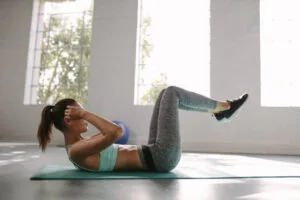
mage: Sit up
Examples of stunts with a partner include:
- Seesaw
- Wheelbarrow walk
- Leg wrestling

Image: Wheelbarrow Walk
(2) Tumbling: an activity that involves turning, twisting, rolling, and springing of the human body.
Examples of tumbling activities include:
- Cartwheel
- Headstand
- Handspring
- Forward roll
- Backward roll
- Front somersault
- Back somersault
- Balancing is a gymnastics activity that can also be carried out on the floor.
Examples of balancing activities include:
- Head stand balance
- Handstand balance
- Squat balance
- Knee balance
- Crab balance
- Chest balance
- Side arm balance
- Side arm balance
The sequence of forward rolls in gymnastics
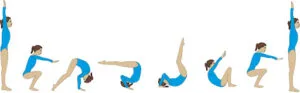
Spread a mat and stand at the end of the mat, facing the direction of rolling
- Take a squatting position, place palms forward on the mat, shoulders wide apart, and knees between the arms.
- Tuck the chin to the chest, making a rounded back.
- Raise the buttocks and look between the legs as far back as possible
- Roll over the neck and shoulders With the knees close to the chest
- Roll out and stand up.
Values of Gymnastics
The following are the values and benefits of gymnastics
- Gymnastics enhance alertness and quick reasoning. Participants become creative and discover new movement patterns.
- Participants build courage and self-confidence, determination and endurance
- Participants learn cooperation, teamwork, loyalty, and patriotism
- It develops the muscles and improves body posture, flexibility, agility, and strength.
- It provides a means of livelihood
Assignment
1 Who is a gymnast?
- Who is a spotter in gymnastics?
This term's Physical Education topics
JSS3 Second Term · 4 topics
Second Term Physical Education Lesson Notes for Other Topics

Officials Of Gymnastics And Their Duties
Read the full lesson note.
The Basic Swimming Strokes & Facilities for Swimming
Read the full lesson note.
Career Guidance in Physical
Read the full lesson note.
Lesson Notes for Other Classes

Basic 1 Lesson Note
The complete lesson note to guide your studies.
Basic 2 Lesson Note
The complete lesson note to guide your studies.

Basic 3 Lesson Note
The complete lesson note to guide your studies.

Basic 4 Lesson Note
The complete lesson note to guide your studies.
Basic 5 Lesson Note
The complete lesson note to guide your studies.
Basic 6 Lesson Note
The complete lesson note to guide your studies.