
Musical Styles – JSS2 Cultural & Creative Arts Lesson Note (Second Term)
Download this term · ₦1,000Lesson note at a glance
- Subject
- Cultural & Creative Arts
- Class
- JSS2
- Term
- Second Term
- Topic
- Musical Styles
- Order
- Topic 9 of 11 this term
- Reading time
- 7 min
Musical style is the particular way music is created, performed and sounds, based on the culture and traditions of a people.
- African style: puts rhythm first and involves the whole community.
- Western style: focuses on melody, harmony and written music, often performed formally.
- Mixed style: many Nigerian musicians combine both, as in highlife and Afrobeat.
Lesson details
- Subject: Cultural and Creative Arts (Creative Arts)
- Class: JSS2, Second Term
- Duration: 40 minutes
Behavioural objectives
By the end of the lesson, pupils should be able to:
- Explain what musical style means.
- Describe the characteristics of African musical style.
- Describe the characteristics of Western musical style.
- List at least five African instruments and five Western instruments.
- State the differences between African and Western musical styles.
- Recognise some of these instruments by sight and sound.
What materials are needed?
- African pictures: talking drum, shekere, ekwe, thumb piano, flute.
- Western pictures: piano, guitar, violin, trumpet, saxophone.
- Audio samples: African and Western music.
- Real instruments (if available): drum, shaker, recorder or flute.
- Chart: comparing African and Western musical styles.
- World map: showing Africa and the Western countries.
What should pupils already know?
- Genres and listening: pupils have learned about music genres and listening skills.
- Music-making: pupils know that music can be made with instruments and voices.
How can the lesson be introduced?
The teacher uses two short music clips to show that musical styles can sound different.
- Play a traditional African drumming piece with a lot of percussion.
- Play a Western classical orchestra piece with strings and piano.
- Ask: “Did these two pieces sound the same or different?”
- Ask: “Why were they different?” Pupils may mention drums, different sounds or different feelings.
- Explain that the pieces show two musical styles, African and Western.
What is musical style?
Musical style is the particular way music is created, performed and sounds, based on the culture and traditions of a people.
- Everyday comparison: families cook jollof rice differently. The rice is the same, but the style of cooking changes the taste.
- Map work: show Africa, Europe and America. Geography and culture help to create different styles.
What factors create different musical styles?
- Instruments: the instruments available in that culture.
- Purpose: worship, celebration, storytelling or entertainment.
- Traditions and beliefs: what the people practise and value.
- Language: how the language sounds and is sung.
- Taste: what the people consider beautiful or pleasing to the ear.
What is African musical style?
African musical style is music that puts rhythm first and involves the whole community in making it.
What are the characteristics of African musical style?
- Rhythm as the foundation: the beat is the most important element, and people naturally want to dance.
- Polyrhythm: several rhythms play at the same time, and the drum patterns interlock like puzzle pieces.
- Call and response: a leader sings or plays a line and the group answers. Example: Leader: “Ay-ya-ya!” Group: “Ay-ya-ya!”
- Repetition and variation: patterns repeat, with small changes each time. This keeps the music interesting and lets people join in easily.
- Community participation: music is for everyone, not only trained musicians. The audience claps, dances and sings.
- Improvisation: musicians create new parts as they play, so each performance is unique.
What are examples of African instruments?
There are many African instruments, and they include drums, shakers, plucked instruments, xylophones and flutes.
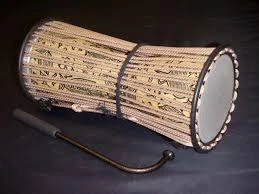
- Talking drum (Dundun/Gangan): hourglass-shaped drum that can “talk” when the strings are squeezed to change the pitch. Very important in Yoruba music.
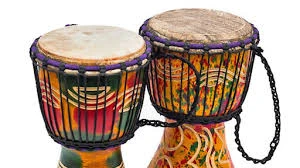
- Djembe: large goblet-shaped drum from West Africa, played with bare hands. It makes deep bass and sharp high sounds.
- Shekere: gourd covered with a net of beads or shells. It is shaken and hit to create rhythm. Common in Nigerian music.
- Ekwe (slit drum): wooden drum with slits carved in it. It is hit with sticks to make different tones. Used for communication.
- Thumb piano (Mbira/Kalimba): small instrument with metal keys fixed to a wooden board. It is played by plucking with the thumbs.
- Balafon: African xylophone made from wooden bars with gourds underneath for resonance.
- Kora: West African harp with 21 strings. It looks like a large gourd cut in half, with a long neck.
- Traditional flutes: made from bamboo, wood or animal horns. They are blown to make melodies.
- Rattles and bells: made from gourds, seeds, shells or metal. They are worn on the ankles or shaken in the hands.
- Udu pot: clay pot with holes, played by hitting with the hands. It makes deep, hollow sounds.
The teacher demonstrates the sounds with real instruments, or plays audio recordings.
What is Western musical style?
Western musical style is music from Europe and America that focuses on melody, harmony and written notation.
What are the characteristics of Western musical style?
- Melody and harmony: melody is the tune and harmony is notes played together as chords. Rhythm matters but is not the main focus.
- Written notation: music is written on paper with special symbols. Musicians read the sheet music and play what is written.
- Less improvisation: performers follow the composer’s instructions closely.
- Formal performance: performers and audience are separate. The audience listens quietly in places such as concert halls and churches.
- Orchestra and ensemble: many instruments play together in an organised way. A conductor leads the musicians, and each section has its own role.
- Composition: composers write music that can be performed again and again. The music often tells a story or expresses a feeling.
What are examples of Western instruments?
Western instruments are grouped into four families: strings, winds, percussion and keyboards.
String instruments (bowed or plucked)
- Violin: small stringed instrument held under the chin and played with a bow. It makes high, sweet sounds.
- Cello: large stringed instrument played sitting down. It makes deep, rich sounds.
- Guitar: usually six strings, strummed or plucked. Used in many types of music, from classical to rock.
Wind instruments (blown)
- Flute: silver tube with holes, blown sideways. It makes clear, airy sounds.
- Clarinet: dark wooden tube with a reed. It makes smooth, warm sounds.
- Saxophone: metal (usually brass) instrument played with a single reed. Used in jazz and classical music.
- Trumpet: brass instrument with valves. It makes bright, powerful sounds.
Percussion instruments (hit)
- Drum set: several drums and cymbals played together in rock, pop and jazz.
- Timpani: large kettle drums used in orchestras. They can be tuned to different pitches.
Keyboard instruments
- Piano: keyboard instrument with 88 keys. It can play melody and harmony at the same time.
- Organ: large keyboard instrument often found in churches. It uses air to make sound.
- Synthesizer: electronic keyboard that can create many different sounds.
The teacher plays audio samples of different Western instruments.
How do African and Western musical styles differ?
African style is community music built on rhythm, and Western style is composed music built on melody and harmony.
- African style: passed down orally, with rhythm, call and response, improvisation and dance.
- Western style: usually written down, with melody, harmony, structured pieces and formal performance.
| African style | Western style |
|---|---|
| Rhythm is most important | Melody and harmony are most important |
| Passed down orally (by listening and practising) | Written down on paper (sheet music) |
| Everyone participates (community music) | Performers and audience are separate |
| Lots of improvisation | Written music is followed closely |
| Call and response pattern | Structured compositions |
| Dance is part of the music | Dancing is separate from concert music |
| Drums and percussion dominate | Variety of instrument families |
| Informal, relaxed atmosphere | Formal, structured performances |
What are mixed musical styles?
Mixed musical styles combine African and Western features, and many Nigerian musicians use them.
- Highlife: African rhythm with Western guitars.
- Afrobeat: African drums with Western horns and bass.
- Contemporary gospel: Western keyboards with African percussion.
- Key attitude: neither style is better than the other. Both are valuable.
- Appreciation: pupils should enjoy African traditional music, learn about Western music and respect all types of music.
Evaluation
The teacher plays short music clips. Pupils say whether each is African style, Western style or a mixture. Then they answer these questions.
- What is musical style?
- What is the most important element in African musical style?
- Name three African instruments and three Western instruments.
- In which style do audiences join in by clapping and dancing, African or Western?
- Which style uses written music notation, and which instrument can “talk”, the talking drum or the violin?
Assignment
List five African instruments and five Western instruments, with one sentence describing each. Then write three differences between African and Western musical styles.
This term's Cultural & Creative Arts topics
JSS2 Second Term · 11 topics
Get Cultural & Creative Arts (CCA) as PDF and Word
Every week of JSS2 Cultural & Creative Arts (CCA), Second Term, formatted and ready to print. Ad-free, and the copy lock comes off.
Get this term Card, bank transfer, USSD or OPay
JSS2 Cultural & Creative Arts (CCA) Lesson Notes for Other Topics
Production of Pattern
Read the full lesson note.
Practical Work On Production of Pattern
Read the full lesson note.

Beadwork
Read the full lesson note.
Production of Beadwork Jewelleries
Read the full lesson note.

Uses of Beadwork
Read the full lesson note.

History of Music
Read the full lesson note.
Early Forms of Music
Read the full lesson note.

Music Practices
Read the full lesson note.

Singing
Read the full lesson note.
Introduction to Play Production
Read the full lesson note.
Element Of Design
Read the full lesson note.
Element Of Design/Art
Read the full lesson note.
Practical Work On Element Of Design
Read the full lesson note.
Principles Of Design
Read the full lesson note.
Uses Of Principles Of Design And Its Practical Work
Read the full lesson note.
Lesson Notes for Other Classes

JSS1 Lesson Note
The complete lesson note to guide your studies.

JSS3 Lesson Note
The complete lesson note to guide your studies.
