
Sources of History – JSS1 Nigerian History Lesson Note (First Term)
Download Lesson NoteLesson note at a glance
- Subject
- Nigerian History
- Class
- JSS1
- Term
- First Term
- Topic
- Sources of History
- Order
- Topic 2 of 3 this term
- Reading time
- 11 min
Sources of history are the materials, documents and evidence that historians use to learn about and understand the past. They are classified as primary, secondary or tertiary sources, according to how close they are to the events they describe. Historians must evaluate each source critically and compare several sources.
Behavioural objectives
By the end of the lesson, students should be able to:
- explain what sources of history are;
- name and describe primary, secondary and tertiary sources;
- give examples of primary and secondary sources;
- state the factors historians use to evaluate sources;
- describe some challenges historians face when working with sources.
What are sources of history?
Sources of history are the foundation of historical knowledge. They provide the information from which historians construct their understanding of what happened in earlier times. Without historical sources, we would have very little knowledge about events, people and societies that existed before our own time.
Historical sources are extremely diverse. They can include written documents, physical objects, oral accounts, visual materials, and even landscapes. Each type of source offers different kinds of information and requires different methods of analysis and interpretation. By examining multiple sources and comparing the information they provide, historians can develop a more complete and accurate understanding of the past.
The quality, reliability and accessibility of historical sources vary greatly. Some periods and places have abundant sources, while others have very few. Some sources provide detailed and accurate information, while others may be biased, incomplete or misleading. Learning to evaluate sources critically is an essential skill for anyone studying history.
How are historical sources classified?
Historical sources are typically classified into three main categories based on their proximity to the events they describe.
Primary sources
Primary sources are materials that provide first-hand evidence about a historical event, person or period. They were created at the time of the event or shortly afterwards by people who witnessed or participated in the event. Primary sources are the most direct evidence available about the past and form the foundation of historical research.
Primary sources have not been filtered through interpretation or evaluation by others. They represent the original materials on which historical knowledge is based. However, primary sources are not automatically accurate or unbiased. They still need to be analysed critically, since they reflect the perspectives and limitations of their creators.
Secondary sources
Secondary sources are interpretations and analyses of primary sources, created by people who did not directly witness or participate in the events they describe. They are usually created after the events they discuss, sometimes many years or even centuries later. They synthesise, interpret, analyse and explain information from primary sources.
Secondary sources are valuable because they often provide context, analysis and connections that might not be obvious from primary sources alone. They can help us understand the significance of historical events and place them in a broader context. However, secondary sources are influenced by the perspectives, biases and historical context of their authors.
Tertiary sources
Tertiary sources compile, summarise or digest information from primary and secondary sources. They provide a broad overview or summary of a topic without adding new interpretations or analyses. They are often designed for quick reference or to provide basic information about a topic.
Examples of tertiary sources include encyclopedias, textbooks and almanacs. These sources can be useful starting points for research, but they typically contain information that is further removed from the original events and has been filtered through multiple layers of interpretation.
What are the types of primary sources?
Primary sources come in many different forms. Here are some of the most important types.
Archival materials
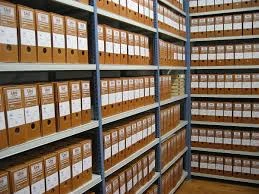
Archives are collections of documents and records that have been preserved because of their historical value. Archival materials can include:
- Government records and documents
- Personal and family papers
- Business and organisational records
- Correspondence (letters, telegrams, emails)
- Diaries and journals
- Photographs and other visual materials
- Maps and architectural drawings
- Sound recordings and films
Archives are typically housed in specialised institutions such as national archives, university libraries, historical societies or private foundations. Archivists organise, preserve and provide access to these materials for researchers.
Museums and museum collections
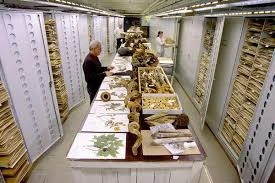
Museums collect, preserve and display objects of historical, scientific, artistic or cultural importance. Museum collections can provide valuable primary source material, including:
- Tools and household items
- Clothing and textiles
- Weapons and military equipment
- Artwork
- Scientific instruments
- Transportation vehicles
- Cultural artefacts
These objects can tell us about the technology, daily life, artistic expressions and values of past societies. Museums preserve these objects and often provide context and interpretation to help visitors understand their significance.
Historical sites and archaeological remains
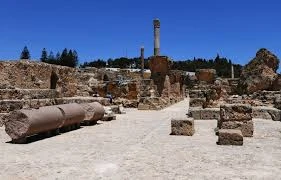
Historical sites are locations where significant historical events occurred or where people in the past lived, worked or conducted activities. These sites can include:
- Ancient settlements and cities
- Battlefields
- Religious buildings
- Castles and palaces
- Industrial sites
- Traditional villages
- Burial grounds
Archaeological excavations at these sites can uncover physical remains from the past. These remains provide evidence about how people lived, what they ate, what tools they used, how they organised their societies, and many other aspects of past life. Archaeological findings might include:
- Buildings and structures
- Tools and weapons
- Pottery and other household items
- Coins and jewellery
- Human remains
- Food remains and environmental evidence
Oral traditions and oral history
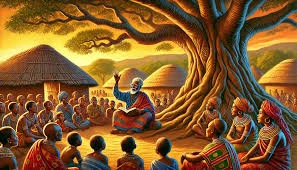
Oral traditions are historical accounts, stories and knowledge passed down verbally from one generation to the next. They are particularly important in cultures without written records or where written records were limited to certain groups or subjects.
Oral history involves collecting and recording people’s spoken memories and personal commentaries about their experiences or events they witnessed. This is typically done through interviews that are recorded, transcribed and preserved for future researchers.
Oral sources provide perspectives that might not be captured in written records. They show especially the experiences of ordinary people and marginalised groups whose voices are often absent from official documents. However, they also present challenges for historians, as human memory can be fallible and stories may change as they are retold over time.
Folklores and proverbs
Folklores are traditional stories, myths, legends and fairy tales passed down through generations within a culture. They often contain elements of fantasy or supernatural occurrences but may also preserve historical memories and cultural values.
Proverbs are short, traditional sayings that express a perceived truth or piece of wisdom. They can provide insights into the values, beliefs and perspectives of past societies.
Folklores and proverbs are not usually reliable for specific historical facts. They can, however, help historians understand how people in the past viewed their world, what they valued, and how they explained their experiences.
Other primary sources
Additional types of primary sources include:
- Inscriptions and epigraphy: Writing carved into stone, metal or other durable materials, often found on monuments, buildings and tombstones.
- Coins and currency: Besides their economic function, coins often feature images of rulers, symbols and inscriptions that provide historical information.
- Art and visual materials: Paintings, drawings, sculptures, photographs, films and other visual materials that depict historical events, people, places or daily life.
- Material culture: Everyday objects from the past, including tools, clothing, furniture and decorative items.
- Environmental and scientific evidence: Tree rings, ice cores, pollen samples and other scientific data that can provide information about past climates, environments, and how humans interacted with them.
What are the types of secondary sources?
Secondary sources offer interpretation, analysis and context based on primary sources. Here are some important types.
Textbooks
Textbooks are books designed specifically for educational purposes that synthesise and present information about a particular subject. History textbooks typically provide a broad overview of a historical period, region or theme. They organise information into a coherent narrative and often reflect mainstream historical interpretations at the time they were written.
Textbooks are useful for gaining a general understanding of a historical topic. However, they simplify complex historical events and may not present multiple perspectives or the latest historical research.
Academic books and monographs
These are scholarly works focused on specific historical topics, periods or questions. They are written by historians after extensive research using primary sources, and they provide in-depth analysis and interpretation. Academic books typically include detailed citations and bibliographies that allow readers to verify information and examine primary sources themselves.
Journals and academic articles
Historical journals publish shorter scholarly works in article format. These articles typically focus on specific questions or aspects of history and represent current research and thinking in the field. Academic articles undergo peer review, where other experts evaluate their quality and accuracy before publication.
Biographies and autobiographies
Biographies are accounts of a person’s life written by someone else, while autobiographies are written by the subjects themselves. Both can provide valuable information about historical figures and periods. Autobiographies are also considered primary sources for understanding how the writer viewed their own life and times.
Newspapers and magazines
Newspapers can be primary sources when they report on current events of their time. They become secondary sources when later historians use them to learn about past events. Articles analysing historical events in newspapers and magazines are secondary interpretations of primary sources.
Documentaries and historical films
Documentaries and historical films that present and interpret historical events are secondary sources. They typically combine primary source materials (like historical footage or documents) with analysis and narration to tell a story about the past.
Government reports and analysis
Government agencies often produce reports analysing historical trends, events or conditions. These represent secondary interpretations of primary data collected by the government or other sources.
What are the types of tertiary sources?
Tertiary sources compile and summarise information from primary and secondary sources, often providing a broad overview without original analysis. They include the following.
Encyclopedias
General and specialised encyclopedias provide concise summaries of knowledge about a wide range of topics. They typically synthesise information from multiple sources into brief articles designed for quick reference.
Dictionaries and glossaries
Historical dictionaries and glossaries provide definitions and explanations of historical terms, concepts and events. They summarise existing knowledge without adding new interpretations.
Bibliographies and indexes
These sources list and organise references to primary and secondary sources on particular topics, helping researchers locate relevant materials for further study.
Almanacs and chronologies
These reference works provide collections of facts, statistics and timelines of historical events, often organised by date or theme.
How do historians evaluate historical sources?
Not all historical sources are equally reliable or valuable for understanding the past. Historians need to evaluate sources critically by considering several factors.
Authenticity
Is the source what it claims to be? Has it been altered or forged? For physical objects and documents, scientific techniques like carbon dating, handwriting analysis or material testing can help verify authenticity.
Reliability and bias
What biases or limitations might affect the source’s accuracy? Who created it, and what were their motivations and perspectives? Does the source reflect personal opinions, political views or cultural assumptions that might influence how events are presented?
Context
When and where was the source created? What was happening at that time that might have influenced its creation or content? Understanding the historical context helps interpret the source accurately.
Corroboration
Does the information in the source match what we know from other sources? If multiple independent sources provide similar information, it is more likely to be accurate. If a source contradicts other reliable evidence, it requires careful scrutiny.
Purpose
Why was the source created? Was it meant to inform, persuade, entertain, or record information for future reference? The intended purpose can affect what information was included or emphasised.
Why do historians use multiple sources?
No single historical source can provide a complete picture of the past. Each source offers a partial perspective, influenced by its creator’s knowledge, interests, biases and limitations. To develop a more accurate and fuller understanding of history, historians use multiple sources that provide different perspectives and types of information.
By comparing and contrasting information from different sources, historians can identify areas of agreement and disagreement, recognise patterns and trends, and develop more nuanced interpretations of historical events and processes.
What challenges do historians face when working with sources?
Historians face several challenges when working with historical sources.
Gaps in the historical record
For many periods and places, few sources have survived. Natural disasters, wars, deliberate destruction and simple decay have eliminated many potential sources. Some groups and activities were also less likely to be documented than others, creating uneven representation in the historical record.
Access to sources
Some historical sources are difficult to access because of their location, fragility, ownership or restrictions on their use. Digital technology has improved access to many sources, but challenges remain, particularly for materials not yet digitised or those in private collections.
Language and cultural barriers
Sources from different times and cultures may be written in unfamiliar languages or use terms and references that are difficult for modern researchers to understand. Cultural practices and assumptions that were obvious to the original creators and audiences may be obscure to modern observers.
Changes in language and terminology
Languages evolve over time, so words and phrases in older sources may have different meanings than they do today. Understanding these changes is essential for accurate interpretation.
Bias in source creation and preservation
The sources that were created and preserved often reflect the interests and values of powerful groups in society. The perspectives of marginalised groups (including women, ethnic minorities, the poor and the illiterate) are frequently underrepresented in traditional historical sources.
Evaluation
- What are sources of history?
- Name the three main categories of historical sources.
- Explain the difference between a primary source and a secondary source.
- List four examples of primary sources.
- State two challenges historians face when working with historical sources.
Assignment
- Explain why historians use more than one source when studying the past.
- Describe any two factors historians consider when they evaluate a historical source.
This term's Nigerian History topics
JSS1 First Term · 3 topics
- Meaning of History
- Sources of History
- Importance of History
First Term Nigerian History Lesson Notes for Other Topics

Civil Rule in Nigeria - Third Republic (1992-1993)
Read the full lesson note.

Civil Rule in Nigeria (Cont'd) - Forth Republic (1999-Present)
Read the full lesson note.

Other Pre-Colonial Settlers In Lagos
Read the full lesson note.

Nigerian People - North West And North East
Read the full lesson note.
Nigerian People: South East And North Central
Read the full lesson note.

Nigerian People: South West And South-South
Read the full lesson note.

Indigenous Occupation And Mode Of Transportation In Lagos
Read the full lesson note.

Tradition And Origin People Of Awori, Ijebu, e.t.c
Read the full lesson note.

Location Of The Indigenous People Of Lagos State
Read the full lesson note.

Indigenous People Of Lagos State - Awori, Egun, Ijebu Etc.
Read the full lesson note.

British Rule In Nigeria, Traditional Nationalism, And Resistances
Read the full lesson note.

Detailed Study Of Major Constitutions
Read the full lesson note.
Meaning Of A Constitution
Read the full lesson note.

British Rule In Nigeria 3
Read the full lesson note.

British Rule In Nigeria
Read the full lesson note.
Lesson Notes for Other Classes

Basic 1 Lesson Note
The complete lesson note to guide your studies.

Basic 2 Lesson Note
The complete lesson note to guide your studies.

Basic 3 Lesson Note
The complete lesson note to guide your studies.

Basic 4 Lesson Note
The complete lesson note to guide your studies.

Basic 5 Lesson Note
The complete lesson note to guide your studies.

Basic 6 Lesson Note
The complete lesson note to guide your studies.

