
Historical Sites in Nigeria: Ile Ife – JSS1 Nigerian History Lesson Note (Second Term)
Download this term · ₦1,000Lesson note at a glance
- Subject
- Nigerian History
- Class
- JSS1
- Term
- Second Term
- Topic
- Historical Sites in Nigeria: Ile Ife
- Order
- Topic 2 of 3 this term
- Reading time
- 5 min
Ile-Ife is an ancient Yoruba city in present-day Osun State, regarded as the spiritual home of the Yoruba people.
Behavioural objectives
By the end of the lesson, students should be able to:
- state where Ile-Ife is located;
- explain the place of Ile-Ife in Yoruba history;
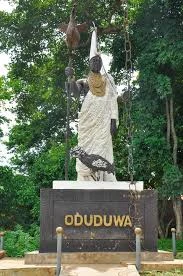
- narrate the oral tradition of the origin of the Yoruba and name the sons of Oduduwa;
- list the occupations and traditional festivals of the people of Ile-Ife;
- explain the significance of Ife art.
What is Ile-Ife?
Ile-Ife, also called Ife, is an ancient Nigerian city that flourished between the 11th and 15th centuries CE.
- Capital: it was the capital and chief religious centre of the Yoruba kingdom of Ife.
- Trade: the kingdom prospered through trade with other West African kingdoms.
- Art: Ife is famous for its metal sculptures, including life-like human heads.
- Early European view: Europeans once wrongly believed these works were made by another civilisation, not by Africans.
Where is Ile-Ife located?
Ile-Ife is located in the southern forest of Nigeria, in present-day Osun State.
- River Niger: the city lies west of the River Niger.
- Lagos: it is north-east of Lagos, about 218 kilometres away.
- Ibadan: it is east of Ibadan.
- Roads: it lies at the meeting point of roads from Ibadan, Ilesha and Ondo.
What is the place of Ife in Yoruba history?
Ile-Ife was, and still is, the spiritual headquarters of the Yoruba states.
- Extent of Yoruba states: they once stretched east to Warri in the Niger Delta and west to Dahomey and Togo.
- Modern countries: Dahomey and Togo are now the Republic of Benin and Togo.
- Orisha: about 401 spirits, called Orisha, are traditionally worshipped in Ile-Ife.
Who is the Ooni of Ife?
The Ooni of Ife is the king (Oba) who rules Ile-Ife.
- Current Ooni: Oba Adeyeye Enitan Ogunwusi, Ojaja II.
- Chief priest: he is the head of the traditional religion in the city.
- Custodian: he keeps the holy city of Ife on behalf of the whole Yoruba nation.
Why is Ile-Ife important to the Yoruba?
Ile-Ife is important because the Yoruba regard it as the centre of creation and their fatherland.
- Origin of life: it is believed to be where life on earth began.
- Fatherland: it is the ancestral home of the Yoruba people.
- Language: the indigenous people speak Yoruba.
- Character: the people are known as peaceful and spiritually conscious.
What is the oral tradition of Yoruba origin?
One oral tradition says the Yoruba came from Mecca, led by the descendants of Lamurudu.
- Lamurudu was an important chief in Mecca and is believed to be the ancestor (progenitor) of the Yoruba.
- The tradition says he was killed in a religious war in Mecca.
- His sons, one of whom was Oduduwa, fled from Mecca and moved westward.
- Oduduwa travelled for several years.
- He consulted the gods through Setilu Agboniregun, the Ifa priest.
- He then settled in Ile-Ife and had sons and daughters.
- Another tradition: some accounts say Oduduwa came down from heaven to Ile-Ife.
- Record of the tradition: the British explorer Hugh Clapperton wrote it down after meeting Mohammed Bello in Sokoto.
Who were the seven sons of Oduduwa?
The seven sons of Oduduwa later left Ile-Ife and founded their own Yoruba kingdoms.
| S/N | Title | Place |
|---|---|---|
| 1 | Orangun | Oke-Ila |
| 2 | Olowu | Owu |
| 3 | Alaketu | Ketu |
| 4 | Onisabe | Sabe |
| 5 | Onipopo | Popo |
| 6 | Onibini | Benin |
| 7 | Oranmiyan | Oyo |
What are the occupations of the people of Ile-Ife?
The people of Ile-Ife are mainly farmers today, and in the past they were also skilled sculptors and craftspeople.
What did the people of ancient Ife do?
- Sculpture: they made naturalistic bronze, stone and terracotta (clay) works.
- Iron work: they were advanced in iron technology and bronze casting.
- Farming and hunting: many people were farmers and hunters.
- Museums: many of their artefacts are in the Ife Museum, the National Museum and some museums in Europe.
What was the role of women in the precolonial period?
In the precolonial period, women played a major part in social and economic life.
- Division of labour: work was shared along gender lines.
- Women’s work: food processing, mat weaving, pottery making and cooking.
- Land: land was owned by the community, and women used it through their husbands or parents.
What do the people of Ife do today?
- Cash crops: Ile-Ife is a major collection point for cocoa and cotton.
- Food crops: palm oil, yams, cassava, corn, pumpkins and kola nuts are grown for local markets.
- Palm wine: it is produced in large quantities.
- Blacksmithing: blacksmiths make cutlasses, hoes and other farm tools.
- Hunting and carving: there are hunters and carvers (gbénàgbénà).
What is the summary of occupations in Ile-Ife?
- Farming
- Palm wine tapping
- Palm oil production
- Blacksmithing
- Hunting
- Carving
- Pottery
- Trading
- Fishing
- Drumming
What are the traditional festivals of Ile-Ife?
Ile-Ife has four well-known traditional festivals: Edi, Olojo, Itapa and Igare.
- Edi Festival: it recalls the story of Moremi, the Ife heroine.
- Olojo Festival: the Ooni appears in public wearing the royal crown.
- Itapa Festival: a yearly festival of the people of Ife.
- Igare Festival: a yearly festival of the people of Ife.
- Others: there are more festivals linked to the Orisha.
What is the significance of Ife art and culture in Nigeria?
Ife art is important because its lifelike style helps historians understand the past.
- Link with Nok: Ife art is similar to Nok art, especially in the beads on the neck, wrists and ankles.
- Meaning of the link: it suggests the two groups were connected at some point in history.
- Distinctive style: the sculptures are highly developed and look like real human beings.
- Source of history: the features on the works help us learn about events during the reigns of some Ife rulers.
- Achievements: they also show the rulers’ achievements in time order.
Evaluation
- Where is Ile-Ife located?
- Who is the Ooni of Ife, and what is his role?
- Name the seven sons of Oduduwa.
- List four occupations of the people of Ile-Ife.
- Why is Ife art important to historians?
Assignment
Write a short note on the oral tradition of Yoruba origin, naming Lamurudu and Oduduwa, and list four traditional festivals of Ile-Ife.
This term's Nigerian History topics
JSS1 Second Term · 3 topics
- Historical Sites in Nigeria-Nok
- Historical Sites in Nigeria: Ile Ife
- Historical Sites in Nigeria-Benin
Get Nigerian History as PDF and Word
Every week of JSS1 Nigerian History, Second Term, formatted and ready to print. Ad-free, and the copy lock comes off.
Get this term Card, bank transfer, USSD or OPay
JSS1 Nigerian History Lesson Notes for Other Topics

Historical Sites In Nigeria-Nok
Read the full lesson note.

Historical Sites In Nigeria-Benin
Read the full lesson note.
Meaning Of History
Read the full lesson note.

Sources Of History
Read the full lesson note.
Importance Of History
Read the full lesson note.

Major Centralised States In Pre-Colonial Nigeria
Read the full lesson note.

Non-Centralised States In Pre-Colonial Nigeria
Read the full lesson note.
Lesson Notes for Other Classes

JSS2 Lesson Note
The complete lesson note to guide your studies.

JSS3 Lesson Note
The complete lesson note to guide your studies.
