
Characteristics of Selected Farm Animals – JSS1 Agricultural Science Lesson Note (Second Term)
Download Lesson NoteLesson note at a glance
- Subject
- Agricultural Science
- Class
- JSS1
- Term
- Second Term
- Topic
- Characteristics of Selected Farm Animals
- Order
- Topic 3 of 6 this term
- Reading time
- 4 min
Farm animals are animals kept by farmers for food, clothing, work, manure, pleasure and protection. Each kind has its own features, such as body size, horns, tail, gestation period and the number of young produced at a time. This note describes cattle, goats, sheep and pigs, then explains why farm animals are important to people.
Behavioural objectives
By the end of the lesson, students should be able to:
- state the main characteristics of cattle, goats, sheep and pigs;
- give the gestation period of each of these animals;
- name the products obtained from sheep and goats;
- list the importance of farm animals to people.
Characteristics of selected farm animals
What are the characteristics of cattle?

- It has a large body size.
- It is a ruminant that grazes on herbs and pasture.
- It has a pair of hoofs on each limb.
- Male and female have horns.
- It calves once in a year.
- It produces one calf in one parturition.
- The udder has four glands.
- It has well-formed earlobes.
- The gestation period is between 283-305 days.
- The puberty age ranges between 8-12 months.
What are the characteristics of goats?
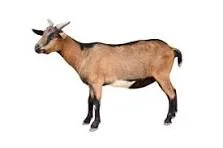
- They are very hardy and can survive unfavourable environmental conditions.
- They have a medium size.
- Male and female have horns.
- They are very prolific and can produce kids three times in two years.
- They have an upturned tail.
- They are reared mostly for meat, skin, milk and fibre.
- They are the most acceptable breed of farm animals.
- The male often has a beard.
- The gestation period is between 145-154 days, or 4-5 months.
- They are mostly reared on the extensive system.
What are the characteristics of sheep?

- They have a medium size with long legs.
- They have a long, thin tail that hangs down.
- The earlobes are long and drooping.
- They are grazers and can also scavenge on roadside relish.
- They are kept mostly for meat, wool, fleece and milk.
- Leather from sheep hides is used to make shoes, gloves and jackets.
- They appear unintelligent in looks and behaviour.
- The gestation period is between 151-154 days, or about 5 months.
- Only the males have horns. The females are polled (hornless).
- Twinning (delivery of twins) is very common.
What are the characteristics of pigs?

- They have a high deposit of fat and sweat very little, hence their association with ponds or water, where they cool their bodies.
- They are very prolific, producing 8-16 piglets at a time.
- They can farrow twice in a year.
- The gestation period is very short. It is 114 days (3 months, 3 weeks and 3 days).
- They have high feed convertibility.
- They can breed at any time of the year.
- They are monogastric animals and are mostly omnivores in nature.
- The neck is short and fixed, that is, immovable.
- The tail is short and coiled.
Why are farm animals important?
- Food and feed: The major importance of farm animals is the provision of food protein, which is essential to good health.
- Employment: Livestock production is a full-time occupation for some farmers. These farmers get all their products from these animals, such as milk, eggs and wool.
- Clothing: Sheep are used for the production of both meat and wool. Farmers remove the wool with an instrument called shears (shearing) at the beginning of the hot weather every year. The wool is sold to the textile industry, where it is used to make materials such as woollen dresses, cardigans, pullovers, socks and hats.
- Work: In Nigeria, large animals like cattle (e.g. Red Bororo) are used for ploughing the field in the Northern parts of the country. Other animals such as the donkey and camel are used to carry heavy loads from place to place.
- Manure: While grazing, farm animals such as cattle drop their faeces on the field. The faeces are a good source of organic manure (farmyard manure), which enriches the soil for subsequent crops.
- Pleasure and protection: Some animals are kept mainly for pleasure, racing or protection of their owners. Animals such as cats are kept as pets. Animals kept in the zoo are kept for the recreation and pleasure of visitors.
Horses are kept for racing and riding during ceremonies and occasions. The dog is used to protect its owner against thieves or other invaders, and hunters also use it for hunting small wild animals.
Evaluation
- State five characteristics of cattle.
- Give the gestation period of the pig, the goat and the sheep.
- Which of these animals has horns on both male and female: sheep, goat or cattle?
- Name three products obtained from sheep.
- Explain how farm animals help to improve the soil.
Assignment
- Write any four characteristics of pigs.
- List four importance of farm animals and explain any two of them.
This term's Agricultural Science topics
JSS1 Second Term · 6 topics
- Revision on Classification of Crops
- Classes and Uses of Farm Animals
- Characteristics of Selected Farm Animals
- Methods of Weed and Pest Control
- Pest Control
- Methods of Weed and Pest Control III
Second Term Agricultural Science Lesson Notes for Other Topics

Packaging of Processed Foods
Read the full lesson note.

Primary, Secondary and Tertiary Packaging
Read the full lesson note.
Types of Agricultural Market
Read the full lesson note.

Materials used for Packaging; Nylon, Carton, Paper, Sack, Boxes etc
Read the full lesson note.

Reasons for Packaging Farm Produce
Read the full lesson note.

Crops that can be Packaged
Read the full lesson note.
Market and Marketing of Agricultural Produce
Read the full lesson note.
Agricultural Marketing Activities
Read the full lesson note.

Damages Caused By Pests
Read the full lesson note.

Control Of Insect Pests
Read the full lesson note.

Classification Of Insect Pests; Piercing And Sucking Insect Pest
Read the full lesson note.
Pest And Disease Of Crops
Read the full lesson note.
Benefits Of Weeds: Animal Feed, Of Drugs, Food To Man
Read the full lesson note.

Control Of Weeds
Read the full lesson note.

Effects of Weeds on Farmers
Read the full lesson note.
Lesson Notes for Other Classes

Basic 1 Lesson Note
The complete lesson note to guide your studies.

Basic 2 Lesson Note
The complete lesson note to guide your studies.

Basic 3 Lesson Note
The complete lesson note to guide your studies.

Basic 4 Lesson Note
The complete lesson note to guide your studies.

Basic 5 Lesson Note
The complete lesson note to guide your studies.

Basic 6 Lesson Note
The complete lesson note to guide your studies.

