
Gender Discrimination – Basic 6 Social Studies Lesson Note (Second Term)
Download this term · ₦1,000Lesson note at a glance
- Subject
- Social Studies
- Class
- Basic 6
- Term
- Second Term
- Topic
- Gender Discrimination
- Order
- Topic 13 of 18 this term
- Reading time
- 6 min
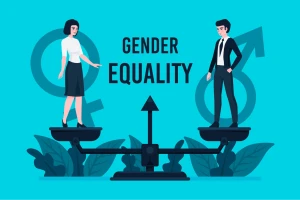
Gender discrimination is the unfair treatment of a person because he or she is male or female.
Behavioural objectives
By the end of the lesson, pupils should be able to:
- Define gender and gender discrimination.
- Name and give examples of areas where gender discrimination occurs.
- State the consequences of gender discrimination on women, men, children and society.
- Suggest ways of stopping gender discrimination.
- Name some Nigerian women who are good role models.
What is gender discrimination?
Gender discrimination is the unfair treatment of people because of their sex, that is, because they are male or female.
- Gender: the social and cultural differences between males and females, such as the roles and behaviour society expects of each.
- Discrimination: treating a person badly or unfairly because of a group he or she belongs to.
- Who is affected most: women and girls usually face more discrimination than men and boys.
- Key point: males and females are equal in value and ability, yet society often treats them differently.
What are the areas of gender discrimination?
There are ten main areas where gender discrimination shows itself: education, employment, politics, home life, inheritance, marriage, religion, sports, legal rights and culture.
| Area | How discrimination shows | Example |
|---|---|---|
| Education | Boys’ schooling is put first. Girls are kept at home or married early. | “Girls should stay home and help mother.” |
| Employment | Unequal pay, no promotion, and some jobs said to be “for men only”. | A female doctor is paid less than a male doctor for the same work. |
| Politics | Few women hold office. Women are not supported in elections. | “Politics is for men.” |
| Home life | Housework is left to women and girls. | Girls do more chores than boys. |
| Inheritance | Sons receive the father’s property. Daughters and widows get little or nothing. | A widow is chased out of her late husband’s house. |
| Marriage | Girls are married early or by force. Women are treated as property. | A girl is forced to marry before she finishes school. |
| Religion | Some groups limit leadership roles to men and give women smaller roles. | Women cannot be pastors or imams in some places. |
| Sports | Less money, less prize money and less media coverage for women’s sports. | “Football is for boys.” |
| Legal rights | Some laws or practices favour men. Some cases are not taken seriously. | Reports of rape or domestic violence are ignored. |
| Culture | Harmful traditions and stricter rules are placed on women. | Female genital mutilation (FGM), harmful widowhood practices. |
How does gender discrimination affect education?
- Discrimination: girls are not sent to school, boys come first, and some subjects are called “for boys only”.
- Effect: there are more illiterate women.
- Effect: there are fewer female professionals.
- Effect: women have fewer opportunities.
How does gender discrimination affect employment?
- Unequal pay: women earn less than men for the same work.
- Job limits: women are told “you cannot be a mechanic” or an engineer or pilot.
- Pregnancy: some pregnant women lose their jobs.
- Harassment: some women face sexual harassment at work.
- Leadership: few women are promoted to top positions.
How does gender discrimination affect politics?
- Few women in office: there are few female governors and senators.
- No female president yet: Nigeria has not had a woman as president.
- Ignored voices: women’s opinions are often not heard.
What other harmful practices are there at home and in marriage?
- Housework: people say men should not cook or clean.
- Male child preference: families value sons above daughters.
- Domestic violence: some homes treat it as normal.
- Early and forced marriage: girls lose their choice and their schooling.
- Polygamy: a man may marry many wives, but a woman may not have many husbands.
- Bride price: when misused, it makes a woman seem like property.
- Surname: a woman is expected to change her name, but a man is not.
What are the consequences of gender discrimination?
Gender discrimination harms four groups: women, society, men and children.
What are the effects on women?
- Limited opportunities: skills are wasted and women cannot reach their full potential.
- Poverty: women earn less, depend on men and may be unable to own property.
- Low self-esteem: women feel inferior and lose confidence.
- Health problems: early pregnancy, injuries from violence, FGM complications and mental stress.
- Lack of voice: opinions are not valued and women cannot make decisions.
What are the effects on society?
- Slow development: half of the population is not fully used and talents are wasted.
- Poverty cycle: uneducated mothers raise uneducated children, so poverty continues.
- Social injustice: society becomes unfair and human rights are violated.
- Violence: domestic violence and abuse of women increase.
- Economic loss: women could add more to the national economy, and new ideas are lost.
What are the effects on men?
- Pressure: men must always be “strong”, hide their feelings and be the only breadwinner.
- Limited parenting: caring for children is called “not a man’s job”, so fathers miss bonding with their children.
What are the effects on children?
- Poor role models: children learn discrimination from their parents.
- Low aspirations: girls expect less from life.
- Unfair attitudes: boys may grow up to treat women badly.
How can gender discrimination be stopped?
Gender discrimination can be stopped through ten steps: education, laws, economic support, awareness, cultural change, family teaching, political participation, legal reform, male involvement and role models.
- Education: educate boys and girls equally, teach equality in schools and give scholarships to girls.
- Laws and policies: make equal rights laws, punish discrimination, protect maternity leave and enforce laws against domestic violence.
- Economic support for women: give equal pay for equal work, loans for women who start businesses and property rights.
- Awareness campaigns: use media, community talks and religious leaders to spread the message.
- Cultural change: challenge harmful traditions, stop FGM, end child marriage and allow equal inheritance.
- Family education: parents treat children equally, share chores, let boys cook and clean, and let girls play sports.
- Political participation: encourage women to contest elections and support female candidates.
- Legal reform: change unfair laws and give women access to justice and legal aid.
- Male involvement: men and boys speak against discrimination, and fathers guide their daughters.
- Role models: celebrate successful women and run mentorship programmes for girls.
Who are some notable Nigerian women who are role models?
Many Nigerian women have succeeded in their fields and show what girls can achieve.
- Ngozi Okonjo-Iweala: Director-General of the World Trade Organization (WTO).
- Chimamanda Adichie: author.
- Funke Akindele: actress and producer.
- Folorunsho Alakija: businesswoman.
- Late Dora Akunyili: former Director-General of NAFDAC.
Evaluation
- What is gender discrimination?
- Give three examples of gender discrimination.
- List four consequences of gender discrimination.
- How can gender discrimination be stopped?
- Why should boys and girls be treated equally?
Assignment
Write a short essay on gender discrimination. Define it, give four areas where it occurs with one example each, state three consequences and suggest three solutions. Name one Nigerian woman you admire and say what you learned from her.
This term's Social Studies topics
Basic 6 Second Term · 18 topics
- Concepts of Drug and Drug Abuse
- Synthetic and Naturally Occurring Drugs
- Resource Utilization
- Labour Force
- Transport and Communication
- Gender Discrimination
- Group Conflicts and Cooperation
- International Organizations
- Peace Education
- Concepts of Drug and Drug Abuse
- Synthetic and Naturally Occurring Drugs
Get Social Studies as PDF and Word
Every week of Basic 6 Social Studies, Second Term, formatted and ready to print. Ad-free, and the copy lock comes off.
Get this term Card, bank transfer, USSD or OPay
Basic 6 Social Studies Lesson Notes for Other Topics

Resources Utilization
Read the full lesson note.

Labour and Force
Read the full lesson note.

Transport and Communication
Read the full lesson note.
Gender Discrimination
Read the full lesson note.

Group Conflict and Cooperation
Read the full lesson note.

International Organizations
Read the full lesson note.

Peace Education
Read the full lesson note.

Concepts of Drug and Drug Abuse
Read the full lesson note.

Synthetic and Naturally Occurring Drugs
Read the full lesson note.
Resource Utilization
Read the full lesson note.
Labour Force
Read the full lesson note.
Transport and Communication
Read the full lesson note.
Group Conflicts and Cooperation
Read the full lesson note.
International Organizations
Read the full lesson note.
Peace Education
Read the full lesson note.
Lesson Notes for Other Classes

Basic 1 Lesson Note
The complete lesson note to guide your studies.

Basic 2 Lesson Note
The complete lesson note to guide your studies.

Basic 3 Lesson Note
The complete lesson note to guide your studies.

Basic 4 Lesson Note
The complete lesson note to guide your studies.

Basic 5 Lesson Note
The complete lesson note to guide your studies.
