
Transport and Communication – Basic 6 Social Studies Lesson Note (Second Term)
Download this term · ₦1,000Lesson note at a glance
- Subject
- Social Studies
- Class
- Basic 6
- Term
- Second Term
- Topic
- Transport and Communication
- Order
- Topic 12 of 18 this term
- Reading time
- 8 min
Transport is the movement of people and goods from one place to another, and communication is the sending and receiving of information. This note covers water transport, air transport and communication systems in Nigeria.
Behavioural objectives
- Define water transport and air transport and give examples of each.
- Name major seaports and airports in Nigeria.
- State the uses, problems and solutions of water and air transport.
- List the means of communication in Nigeria.
- Choose the right means of telecommunication for emergency, business, personal, education, banking and shopping needs.
- Solve simple telephone and internet problems.
What is water transportation?
Water transportation is the movement of people and goods by water using boats, ships and ferries.
What are the types of water transport?
There are two types of water transport: inland water transport and ocean (marine) transport.
Inland water transport

- Meaning: travel on rivers, lakes and lagoons within the country.
- Examples: River Niger, River Benue and Lagos Lagoon.
Ocean (marine) transport

- Meaning: travel on the sea by ship, mainly to carry goods to and from other countries.
- Water body: the Atlantic Ocean borders southern Nigeria.
- Seaports: harbours where ships load and unload goods.
What are the vehicles used in water transport?
The main water vehicles are canoes, speed boats, ferries, ships, tankers and barges.
- Canoes: small boats, often paddled, used on rivers and creeks.
- Speed boats: fast, small motor boats for short trips.
- Ferries: boats that carry people, and sometimes vehicles, across water.
- Ships: large vessels for cargo or passengers.
- Tankers: ships that carry oil.
- Barges: flat-bottomed boats that carry heavy goods on rivers.
What are the major seaports in Nigeria?
Nigeria has six major seaports: Apapa, Tin Can Island, Port Harcourt, Calabar, Warri and Onne.
| Seaport | Location |
|---|---|
| Apapa Port | Lagos |
| Tin Can Island Port | Lagos |
| Port Harcourt Port | Port Harcourt |
| Calabar Port | Calabar |
| Warri Port | Warri |
| Onne Port | Onne |
What are the uses of water transport?
- Trade: import and export of goods.
- Fishing: boats carry fishermen and their catch.
- Oil and gas industry: tankers and boats serve oil work.
- Tourism and recreation: boat rides and visits to beaches.
- Local transport: people travel by boat, especially in Lagos.
What are the problems of water transportation?
The main problems of water transport are poor infrastructure, accidents, delays, pollution, limited routes and piracy.
- Poor infrastructure: shallow waterways, no dredging, poor port facilities and inadequate terminals.
- Safety concerns: boat accidents, overloading, no life jackets and untrained operators.
- Inefficiency: slow cargo clearing, port congestion, corruption, delays and high costs.
- Environmental issues: water pollution, oil spillage, waste dumping and loss of aquatic life.
- Limited routes: not all areas can be reached, water levels change with the season and navigation is hard.
- Piracy: sea robbery, kidnapping, theft of goods and insecurity.
What are the solutions to the problems of water transport?
- Dredging: clear and deepen waterways.
- Modern ports: build better port facilities.
- Safety rules: enforce safety regulations, such as life jackets and no overloading.
- Training: train boat and ship operators.
- Security: provide security measures against sea robbers.
- Maintenance: repair vessels and facilities regularly.
- Technology: adopt modern equipment and systems.
- Pollution control: stop oil spills and waste dumping.
What is air transportation?
Air transportation is the movement of people and goods by aircraft.
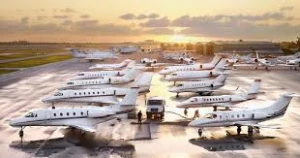
What are the types of air transport?
There are five types of air transport: domestic flights, international flights, cargo flights, private jets and helicopters.
- Domestic flights: flights within Nigeria.
- International flights: flights to other countries.
- Cargo flights: planes that carry goods.
- Private jets: aircraft owned or hired by individuals or companies.
- Helicopters: aircraft that take off and land straight up and down.
What are the major airports in Nigeria?
An airport is a place where aircraft take off and land, and Nigeria has international and domestic airports.
International airports
| Airport | Location |
|---|---|
| Murtala Muhammed Airport | Lagos |
| Nnamdi Azikiwe Airport | Abuja |
| Port Harcourt International Airport | Port Harcourt |
| Mallam Aminu Kano Airport | Kano |
| Akanu Ibiam Airport | Enugu |
Domestic airports
- Examples: Kaduna, Ibadan, Owerri, Benin, Sokoto, Maiduguri and Jos.
What are some airlines in Nigeria?
Airlines are companies that operate flights.
- Examples: Air Peace, Arik Air, Dana Air, Aero Contractors, Max Air and Azman Air.
What are the uses of air transport?
- Speed: it is the fastest means of transport.
- Business travel: people attend meetings in other cities quickly.
- Tourism: visitors travel to different places.
- Emergency services: air ambulances carry the sick.
- Military operations: the armed forces use aircraft.
- Cargo transport: goods are moved quickly over long distances.
What are the problems of air transportation?
The main problems of air transport are high cost, safety, poor infrastructure, delays, limited routes, poor management and security threats.
- High cost: tickets are expensive and many people cannot afford them. Fuel and maintenance cost a lot.
- Safety concerns: plane crashes, poor maintenance, old aircraft and safety rules not followed.
- Infrastructure decay: poor runways, outdated equipment, poor terminals and outdated navigation systems.
- Delays and cancellations: unpredictable schedules, poor time management, technical faults and bad weather.
- Limited routes: few domestic flights, some cities not connected and irregular flights to some areas.
- Poor management: corruption, mismanagement, regulatory problems and the lack of a successful national carrier.
- Security issues: terrorism threats, smuggling and drug trafficking.
What are the solutions to the problems of air transport?
- Airport modernisation: upgrade terminals and runways.
- Investment: spend more on infrastructure.
- Safety rules: apply strict safety regulations.
- Training: train pilots, engineers and other personnel.
- Competitive pricing: airlines keep fares fair.
- Government support: help airlines to operate well.
- Technology upgrade: use modern navigation and equipment.
- Better security: screen passengers and goods properly.
- National carrier: set up a national airline.
- Public-private partnership: government and private companies work together.
What is a communication system?
A communication system is a method of sending and receiving information.
What are the types of communication systems in Nigeria?
There are four types of communication systems: telecommunication, postal services, print media and digital communication.
1. Telecommunication
Telecommunication is communication over a distance using electronic means.

- Mobile phones: used for calls, text messages and internet access. Network providers include MTN, Airtel, Glo and 9Mobile.
- Landline (fixed) telephones: office phones, now less common. NITEL was the old national telephone company.
- Internet: available through broadband, mobile data, WiFi and fibre optic cables.
- Television: cable TV (DStv, GOtv, StarTimes), digital terrestrial TV and satellite TV.
- Radio: FM stations, AM stations, community radio and internet radio.
2. Postal services
- NIPOST: the Nigerian Postal Service.
- Courier services: private companies such as DHL and FedEx.
- Mail delivery: letters and parcels are carried to addresses.
3. Print media
- Newspapers: daily or weekly news.
- Magazines: features and stories on many topics.
- Journals: written reports and studies, often on one subject.
4. Digital communication
- Email: electronic letters sent over the internet.
- Social media: WhatsApp, Facebook, Instagram and Twitter (now called X).
- Video calls: Zoom and Google Meet.
- Instant messaging: short messages delivered at once.
When and how do we use telecommunications?
We use telecommunications for emergencies, business, personal contact, education, banking and shopping.
| Use | How it is done |
|---|---|
| Emergency | Call 112, the emergency number, for quick help from police, fire or ambulance services. |
| Business | Official calls and emails, video conferences, document sharing and professional communication. |
| Personal | Keep in touch with family and friends, enjoy entertainment and get information. |
| Education | Online learning, research, contact with teachers and educational apps. |
| Banking | Mobile banking, USSD codes, internet banking and transfers. |
| Shopping | Online stores, ordering products, payment and delivery arrangements. |
Why does telecommunication fail and how can we fix it?
Telecommunication fails because of network faults, weak signal, lack of airtime or a faulty device.
| Problem | Causes | Solutions |
|---|---|---|
| No network signal | Poor coverage, network congestion, damaged SIM | Move to a better location, restart the phone, check the SIM card, contact the provider |
| Slow internet | Network congestion, low data, weak signal, device problem | Restart the phone, clear cache, check data balance, change location |
| Call drops | Weak signal, network issue, low battery | Charge the phone, change location, check network settings |
| Cannot make calls | No airtime, barred line, network problem | Recharge, pay any bill owed, contact customer service |
| SMS not sending | Wrong message centre number, network issue | Check settings, restart the phone, contact the provider |
| Phone not connecting | Airplane mode on, network selection problem | Check settings, select the network manually, restart the device |
| Device issues | Software problem, hardware damage | Update software, visit a service centre, reset the device |
What are the problems of the communication system in Nigeria?
The main problems are poor infrastructure, high costs, power supply, insecurity and the digital divide.
- Poor infrastructure: weak network coverage, rural areas neglected and few telecommunication masts.
- High costs: expensive data, high call tariffs and costly devices.
- Power supply: irregular electricity affects masts and disrupts the internet.
- Security: cybercrime, hacking, fraud and invasion of privacy.
- Digital divide: not everyone has access, with gaps between urban and rural areas and between rich and poor.
What are the solutions to the problems of communication?
- Infrastructure expansion: build more masts and networks.
- Affordable services: lower the cost of data and calls.
- Stable electricity: supply steady power to masts and homes.
- Cybersecurity measures: protect users from hackers and fraud.
- Digital literacy programmes: teach people to use digital tools.
- Rural connectivity: extend networks to villages.
- Government regulation: make rules that protect users.
- Competition among providers: encourages better service and fair prices.
Evaluation
- Name three types of water transport vehicles.
- List three problems of air transportation.
- What are four means of telecommunication?
- Why might your phone have no network signal?
- Name two major airports in Nigeria.
Assignment
Write a short note on water transport, air transport and communication in Nigeria. For each one, give two examples, one problem and one solution. Then say which means of telecommunication you would use to buy an item online.
This term's Social Studies topics
Basic 6 Second Term · 18 topics
- Peace Education
- Concepts of Drug and Drug Abuse
- Synthetic and Naturally Occurring Drugs
- Resource Utilization
- Labour Force
- Transport and Communication
- Gender Discrimination
- Group Conflicts and Cooperation
- International Organizations
- Peace Education
- Concepts of Drug and Drug Abuse
Get Social Studies as PDF and Word
Every week of Basic 6 Social Studies, Second Term, formatted and ready to print. Ad-free, and the copy lock comes off.
Get this term Card, bank transfer, USSD or OPay
Basic 6 Social Studies Lesson Notes for Other Topics
Resources Utilization
Read the full lesson note.
Labour and Force
Read the full lesson note.
Transport and Communication
Read the full lesson note.
Gender Discrimination
Read the full lesson note.
Group Conflict and Cooperation
Read the full lesson note.
International Organizations
Read the full lesson note.
Peace Education
Read the full lesson note.

Concepts of Drug and Drug Abuse
Read the full lesson note.
Synthetic and Naturally Occurring Drugs
Read the full lesson note.
Resource Utilization
Read the full lesson note.
Labour Force
Read the full lesson note.
Gender Discrimination
Read the full lesson note.
Group Conflicts and Cooperation
Read the full lesson note.
International Organizations
Read the full lesson note.
Peace Education
Read the full lesson note.
Lesson Notes for Other Classes

Basic 1 Lesson Note
The complete lesson note to guide your studies.

Basic 2 Lesson Note
The complete lesson note to guide your studies.

Basic 3 Lesson Note
The complete lesson note to guide your studies.

Basic 4 Lesson Note
The complete lesson note to guide your studies.

Basic 5 Lesson Note
The complete lesson note to guide your studies.
