
Dialogue Further Practice in Excusing, Possibility, Obligation, Permission, Etc. – Basic 4 English Lesson Note (First Term)
Download this term · ₦1,000Lesson note at a glance
- Subject
- English Studies
- Class
- Basic 4
- Term
- First Term
- Topic
- Dialogue Further Practice in Excusing, Possibility, Obligation, Permission, Etc.
- Order
- Topic 21 of 28 this term
- Reading time
- 4 min
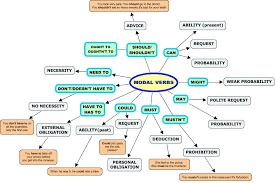
Modal verbs such as can, may, must, have to and ought to help us excuse ourselves, show possibility, ask permission and state obligation.
Behavioural objectives
- State the meaning of can, may, have to, must and ought to.
- Use can and may correctly to show possibility and ask for permission.
- Use have to, must and ought to to show obligation and what is right.
- Excuse oneself politely using suitable expressions.
- Act out short dialogues using these words.
What are modal verbs?
A modal verb is a helping verb that shows ability, possibility, permission or obligation.
- Examples: can, may, must, ought to, have to.
- Rule: the main verb after a modal stays in its simple form (can run, may go, must obey).
- Rule: modals do not add s, even with he, she or it (he can, not he cans).
What does “can” mean?
Can shows that something is possible or that a person is able to do it.
- Possibility: it is possible for the action to happen.
- Ability: a person has the power or skill to do it.
- Informal permission: we use it with friends and family.
Examples with can
- Can Segun wash his plates?
- Can you run?
- Can I take his textbook?
- Can Mr. Michael borrow his neighbour’s hoe and cutlass?
What does “may” mean?
May is used to ask for or give permission, and to show that something is possible.
- Asking permission: May is more polite than can, so use it with elders and teachers.
- Giving permission: You may go out now.
- Possibility: It may rain today.
Examples with may
- May I borrow your books, please?
- Father may correct the children.
- You may sit down.
What is obligation and which words show it?
Obligation is a duty that a person must carry out.
- Have to: shows a duty that must be done, as in “I have to obey my mother.”
- Must: shows a strong duty or rule, as in “Mother must be obeyed.”
- Must not: shows something forbidden, as in “Mother must not be disobeyed.”
- Ought to: shows what is right or good to do, as in “You ought to sweep your class.”
Note: has to is used with he, she and it (Segun has to wash the plates).
How do we excuse ourselves politely?
To excuse yourself is to ask pardon or leave politely when you have done wrong or must go.
- Excuse me: used to get attention or to pass by someone.
- I am sorry: used when you have done something wrong.
- Pardon me: used to ask someone to forgive or repeat.
- May I be excused?: used to ask a teacher for permission to leave.
Examples
- Excuse me, madam, may I pass?
- I am sorry, sir. I have to go to the toilet.
- Please excuse me, I cannot come because I am sick.
What is the difference between can, may, have to and ought to?
| Word | Meaning | Example |
|---|---|---|
| can | possible, able, informal permission | Can you run? |
| may | polite permission, possibility | May I come in? |
| have to | duty that must be done | I have to obey my mother. |
| must | strong duty or rule | You must be on time. |
| ought to | what is right | You ought to respect elders. |
What are some practice dialogues?
A dialogue is a talk between two or more people.
Dialogue 1: asking to share a secret
- Ayomide: Can I tell you my secret? (or: Please permit me to tell you a secret.)
- Olamide: Yes, I am listening.
Dialogue 2: giving permission
- Ayomide: Can I tell you something new?
- Olamide: You may (or can) if you like.
- Ayomide: Daddy has permitted me to go to the national stadium to watch that football match.
Dialogue 3: excusing oneself
- Pupil: Excuse me, madam. May I be excused?
- Teacher: Yes, you may. Come back quickly.
- Pupil: Thank you, madam.
What mistakes should we avoid?
- Wrong verb form: write “Can Mr. Michael borrow”, not “Can Mr. Michael borrows”.
- Wrong word: write “You ought to sweep your class”, not “Your ought to sweep you class”.
- Capital letters: may in the middle of a sentence has no capital letter.
Evaluation
- Write two sentences using can to show possibility.
- Which word is more polite for asking an elder for permission, can or may?
- Complete: You ______ (ought to / can) respect your teachers.
- Write what you would say to excuse yourself when you reach school late.
- Correct this sentence: Your ought to sweep you class.
Assignment
Write a short dialogue of six lines between you and your teacher. Use may, can and ought to at least once each.
This term's English Studies topics
Basic 4 First Term · 28 topics
- Passages Based on the Narrative of Real Life Stories
- Dialogue Further Practice in Excusing, Possibility, Obligation, Permission, Etc.
- Recommended Reading Passage II
- Rhythmic Poem: Song and Poem
- Fill in the Gaps with Words
- Dialogue Further Practice in Excusing, Possibility, Obligation, Permission, Etc.
- Making Sentences from the Table
- Further Practice in the Use of Tense
- Oral Composition: Narrative (Description)
- Aural Discrimination Consonants
- Further Practice in the Use of Tense
Get English Studies as PDF and Word
Every week of Basic 4 English Studies, First Term, formatted and ready to print. Ad-free, and the copy lock comes off.
Get this term Card, bank transfer, USSD or OPay
Basic 4 English Studies Lesson Notes for Other Topics
Week 1: Speech Work, Reading,Structure, Grammar, Writing, Dictation
Read the full lesson note.
Week 2: Speech Work, Reading,Structure, Grammar, Writing, Dictation
Read the full lesson note.
Week 3: Speech Work, Reading,Structure, Grammar, Writing, Dictation
Read the full lesson note.
Week 4: Speech Work, Reading, Structure, Grammar, Writing, Dictation
Read the full lesson note.

Week 5: Speech Work, Reading, Structure, Grammar, Writing, Dictation
Read the full lesson note.

Week 6: Speech Work, Reading, Structure, Grammar, Writing, Dictation
Read the full lesson note.
Week 7: Speech Work, Reading, Structure, Grammar, Writing, Dictation
Read the full lesson note.
Week 8: Speech Work, Reading, Structure, Grammar, Writing, Dictation
Read the full lesson note.
Week 9: Speech Work, Reading, Structure, Grammar, Writing, Dictation
Read the full lesson note.

Further Practice in Expressing Possible and Permission
Read the full lesson note.
Recommended Reading Passages
Read the full lesson note.
Reading to Find The Main Points
Read the full lesson note.
Fill in the Gaps With Words
Read the full lesson note.

How I Spent my Last Holiday
Read the full lesson note.
Teaching of New and Difficult Words
Read the full lesson note.
Lesson Notes for Other Classes

Basic 1 Lesson Note
The complete lesson note to guide your studies.

Basic 2 Lesson Note
The complete lesson note to guide your studies.

Basic 3 Lesson Note
The complete lesson note to guide your studies.

Basic 5 Lesson Note
The complete lesson note to guide your studies.
Basic 6 Lesson Note
The complete lesson note to guide your studies.
