Week 1: Speech Work, Reading, Structure, Grammar, Writing, Dictation – Basic 4 English Lesson Note (First Term)
Download Lesson NoteLesson note at a glance
- Subject
- English Studies
- Class
- Basic 4
- Term
- First Term
- Topic
- Week 1: Speech Work, Reading, Structure, Grammar, Writing, Dictation
- Order
- Topic 1 of 9 this term
- Reading time
- 13 min
- TOPIC: FURTHER PRACTICE IN EXPRESSING POSSIBLE AND PERMISSION
LEARNING AREA
- Lesson Introduction
- Expressing Possibilities
- Expressing Permission
- Lesson Evaluation and Weekly Assessment (Test)
PERFORMANCE OBJECTIVES
By the end of the lesson, most of the pupils should have attained by following objectives: –
- Use the following model auxiliaries in the sentences in contextual situation so as to bring out their meaning.
- Differentiate their shades of meaning.
ENTRY BEHAVIOR
The pupils can form sentences and respond to questions.
INSTRUCTIONAL MATERIALS
The teacher will enrich the lesson with the aid of appropriate interest books.
METHOD OF TEACHING
Choose a suitable and appropriate method for the lesson.
Note: – irrespective of choosing methods of teaching, always introduce an activity that will arouse pupils attention at least 3min on the lesson.
REFERENCE MATERIALS
- Scheme of Work
- A- Basic Education Curriculum
- Textbooks
- All Relevant Materials
- Video Materials
CONTENT OF THE LESSON
INTRODUCTION
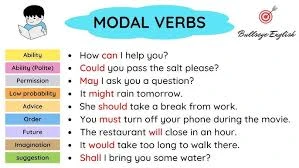
Sometimes, you are not sure you will do something but like to do it. That is called: Possible/Permitted/Free.
If you want to go out because the teacher permits it, you must ask your dad to allow you to go out. That is: Permission.
Sometimes, your instructions can be put in a negative form only when it may not.
EXPRESSING POSSIBILITIES – CAN AND CANNOT
Possibility is the chance of something happening or being true.
FOR EXAMPLE: CAN and CANNOT
CAN is positive while the negative form of can is cannot. Can mostly express possibility.
CANNOT is used to express impossibility.
EXAMPLE
- Can you come on Saturday? It is impossible
Response:- I cannot
- Can a stone sink in water? It is impossible
Response:- A stone cannot sink in water.
- Can I arrange things myself? It is possible
Response:- It is little possible if time suppresses me before.
- Can you think for us without sugar? It is possible
Response:- I can.
Possible/Impossible
GUIDE PUPILS ACTIVITY
Choose the correct response
- Can I come drink water? Possible or Impossible
- Can I clean the car? Possible or Impossible
- Can a stone drink a table salt? Possible or Impossible
- Can a father become a baby? Possible or Impossible
EXPRESSING PERMISSION – MAY AND MAY NOT
Permission is: Allowing someone to do a particular thing or allow something to happen.
For example: MAY and MAY NOT
MAY is positive while the negative form of may is may not.
MAY is used to express possibility.
CANNOT is used to express impossibility.
EXAMPLE
- May I stand beside you?
Response:- Yes, you may or may not.
- May I come with you now?
Response:- You may or may not.
- May I go out with you?
Response:-
- May I come with you?
Response:- You may or may not.
REFERENCE BOOK
Highway English II
Page 35: 1-11
FURTHER EXPRESSION OF POSSIBLE AND PERMISSION
Organize a simple conversation between two people as follows:
TASK 1:
Daniel: Can I sell your myself or can you sell you a sword?, seeking permission.
Michael: No, I am learning them, replying(permission).
TASK 2:
Daniel: I am going to the stadium, (permission).
Michael: May I come with you, seeking permission.
Daniel: You may or may not, for permission.
Here is a list of other models:
- am able I can
- is able I cannot
- May I come?
- should I ought not to ought not to
- might I might not
- cannot I may not to
- cannot I can not
- can not I can not be
- may not I may not say
- must I must not say
PRESENTATION STEPS
To deliver the lesson, the teacher adopts the following steps:
- To introduce the lesson, the teacher revises the previous lesson. Related to this, the teacher asks the pupils some questions.
- To create a situation in which pupils awareness and the power to bring out their knowledge. Note: You cannot say all since; “Can you see that we can’t find in her room?.” “Impossible: Can I arrange things myself?” “It is little possible if time suppresses me before”. “Can you think for us without sugar?”
- Pupils activities: Repeat the exercise in context comments after the interactions.
- Introduces a dialogue for the entire exercise:- Daniel: Can I sell you a sword?”, ask me sell you a sword?, Michael: No, I am learning them: I am going to the stadium; Michael: May I come come with you?; Daniel: You may or may not, for it say.
Pupils Activities: Divide in distinct characteristics in groups where they with use the possibility is contextualize situations.
CONCLUSION
To conclude the lesson for this week, the teacher revises the entire lesson; and relate it to the following week’s lesson.
LESSON EVALUATION
Ask pupils to
- form model auxiliaries in sentences.
- state more than examples of expressing correctly.
- mention of the auxiliary verb(s).
WORKBOOK
WEEKLY ASSESSMENT (TEST)
Complete the following sentences with can, cannot, may and may not.
- I………….. visit you today
- This…………… never happens
- This…………… do that now
- The rain…………. not follow up in the market today
- I can feel……………… eatable
- The early supper there I cannot…………… be late to rest
- I cannot be………………. be allowed
- I cannot……… eat them perhaps?
- TOPIC: Recommended Reading Passages
LEARNING OBJECTIVES
By the end of the lesson, most of the pupils should have attained the following objectives; –
- identify new and difficult words.
- read the passage.
- skim for the main points in passage.
- scan for the specific information.
- answer the questions in complete sentences.
ENTRY BEHAVIOR
The pupils can read and write.
INSTRUCTIONAL MATERIALS
The teacher will teach the lesson with the aid of:
- Course book
- Dictionary
- Pictures
METHOD OF TEACHING
Choose a suitable and appropriate methods for the lessons.
Note – Inrespective of choosing methods of teaching, always introduce an activities that will arouse pupil’s interest or lead them to the lessons.
REFERENCE MATERIALS
- Scheme of Work
- 9 – Years Basic Education Curriculum
- Course Book
- All Relevant Material
- Online Information
CONTENT OF THE LESSON
FOCUS LESSON
- New Words and their meaning
- Reading Comprehension – A reading passage selected from the course book based on regard and concern for interest of others.
C: READING TO FIND THE MAIN POINTS
Note – For reading focus, let pupils read the passage first.
PRESENTATION
To deliver the lesson, the teacher adopts the following steps:
- To introduce the lesson, the teacher revises the previous lesson. Based on this, he/she asks the pupils some questions.
- Teacher organizes pupils in groups or pairs depending on the size of the class.
- Teacher make list of new words or difficult words on the board.
- Teacher guides pupils so groups or pairs for find the meaning of each word using dictionary.
Pupil’s Activities – Find the meaning of the new words.
- Teacher uses the new and pupil’s responses to introduce the lesson.
Pupil’s Activities – Pay attention to the lesson to the lesson introduction.
- Teacher allows groups or pairs reading before independently reading.
- Teacher reads and discuss the content of the passage.
Pupil’s Activities – Participate actively in the discussion.
- Teacher highlights the main points.
Pupil’s Activities – Read the passage to skim for the main points.
- Teacher distinguishes the theme and subject matter of the passage.
- Teacher summarizes the lesson on the board with using appropriate lesson evaluation and guides pupils to answer in a complete sentence.
Pupil’s Activities – Participate actively in the summary of the lesson by responding to questions in complete sentences and write as instructed.
CONCLUSION
To conclude the lesson for the week, the teacher revises the entire lesson and links it to the following week’s lesson.
- TOPIC – FILL IN THE GAPS WITH WORDS
PERFORMANCE OBJECTIVES
By the end of the lesson, most of the pupils should have attained the following objectives –
- choose appropriate words from a given list.
- fill in the gaps in sentences to make the sentences meaningful.
ENTRY BEHAVIOURS
The pupils can read and answer questions.
INSTRUCTIONAL MATERIALS
The teacher will teach the lesson with the aid of:
- Course book
- Passage from other sources
- Flash cards
METHOD OF TEACHING
Choose a suitable and appropriate methods for the lessons.
Note – Irrespective of choosing methods of teaching, always introduce an activities that will arouse pupil’s interest or lead them to the lessons.
REFERENCE MATERIALS
- Scheme of Work
- 9 – Years Basic Education Curriculum
- Course Book
- All Relevant Material
- Online Information – First-Term Scheme of Work and Plan Lesson Notes for English Studies (Primary 4)
CONTENT OF THE LESSON
Short passages with blank spaces to be filled in with appropriate structural and lexical items selected from a given list.
Seun and Michael are good friends.
They often play roughly. Seun __________1. (tries/tried) to sit on a chair. Michael __________2. (pull/pulled) the chair.
Seun __________3. (falls/fell) on the floor. Michael __________4. (laughed/laughs) at him.
Their teacher __________5. (was/is) angry with Michael. He beat him.
PRESENTATION
To deliver the lesson, the teacher adopts the following steps:
- To introduce the lesson, the teacher revises the previous lesson. Based on this, he/she asks the pupils some questions.
- Writes a short passage leaving blank spaces in between.
Pupil’s Activities – Read the passage and get the meanings.
- Provides pupils with a list of words and expressions of which some are appropriate to fill in the blanks, guides and supervise pupil’s activities.
Pupil’s Activities – Choose the right words to fill the blank spaces to make sentences meaningful.
CONCLUSION
To conclude the lesson for the week, the teacher revises the entire lesson and links it to the following week’s lesson.
LESSON EVALUATION
Asks pupil to :-
- do written work;
- make the right choice of words, objects to fill in the blank spaces;
- fill in the blank spaces in sentences to make the sentences meaningful.
- Attempt all the questions below :-
WORKBOOK
WEEKLY ASSESSMENT (TEST)
Seun and Michael are good friends.
They often play roughly. Seun __________1. (tries/tried) to sit on a chair. Michael __________2. (pull/pulled) the chair.
Seun __________3. (falls/fell) on the floor. Michael __________4. (laughed/laughs) at him.
Their teacher __________5. (was/is) angry with Michael. He beat him.
- TOPIC – HOW I SPENT MY LAST HOLIDAY
PERFORMANCE OBJECTIVES
By the end of the lesson, the pupils should have attained the following objectives (cognitive, affective and psychomotor) and able to:
- use sentences to the narrative composition.
- write a composition on a given topic.
ENTRY BEHAVIOR
The pupils can read and write.
INSTRUCTIONAL MATERIALS
The teacher will teach the lesson with the aid of picture/charts of exciting events.
REFERENCE MATERIALS
Scheme of Work 9 – Years Basic Education Curriculum All Relevant Materials.
CONTENT OF THE LESSON
HOW I SPENT MY LAST HOLIDAY

I spent my last holidays in Lagos. I stayed at my friend’s house. Lagos is a big and beautiful city. There are many things to see and enjoy in Lagos. My friend and I went to the harbours and we saw hundreds of ship. We enjoyed the boat rides and visited some of the island in Lagos, which is the Victoria Island. We also visited the Victoria Garden City and the Ajah Shopping Mall.
At night we visited night market and parks. At we went around the city, I saw a lot of beautiful things, clothes in the shops. I brought a few things for my brothers, sisters and myself. I returned home only one day before my school reopened. I really enjoyed my stay in Lagos. Source = Success English Composition.com
MY FAVOURITE HOLIDAY ACTIVITY

My favorite holiday activity is decorating the house and putting up the Christmas tree. I love getting out all the ornaments and lights and making the house look festive and cozy. It’s a fun and creative way to bring the holiday spirit into our home and it always puts me in a good mood. Plus, I love the tradition of doing it with family and friends, listening to Christmas music and enjoying some hot cocoa. It’s definitely the highlight of my holiday season.
PRESENTATION
To deliver the lesson, the teacher adopts the following steps: 1. To introduce the lesson, the teacher revises the previous lesson. Based on this, he/she asks the pupils some questions: 2. Discusses the content of the composition with pupils. Each mentioning their own memorable day. Pupil’s Activities – Talk about their experiences with regard to the event. 3. Let them say why it is memorable. 4. Lets them write it as a creative piece of writing to go on display on the notice board. Pupil’s Activities – Write two or three paragraphs on their own memorable day.
CONCLUSION
To conclude the lesson for the week, the teacher revises the entire lesson and links it to the following week’s lesson.
LESSON EVALUATION
Teacher asks pupil to: –
- narrate their own story.
- write their own composition on a topic of their interest.
WORK BOOK
WEEKLY ASSIGNMENT
Write a composition on How I spent my last holiday.
- TOPIC: TEACHING OF NEW AND DIFFICULT WORDS
LEARNING AREA
- Introductory Activities
- New Words/Difficult Words
- Making Sentences with New/Difficult Word
- Spelling and Dictation
- Lesson Evaluation and Weekly Assessment (Test)
PERFORMANCE OBJECTIVES
By the end of the lesson, most of the pupils should have attained the following objectives: –
- pick out new and difficult words from the week comprehension passages.
- pronounce new and difficult words correctly.
- write the meaning of new and difficult words in the passages.
- Make a sentence with these words.
- attempt 70% (and above) of weekly assessment correctly.
ENTRY BEHAVIOR
The pupils can use dictionary to find the meaning of new words.
INSTRUCTIONAL MATERIALS
The teacher will teach the lesson with the aid of dictionary and chart showing difficult words.
REFERENCE MATERIALS
- Scheme of work
- 9 – Years Basic Education Curriculum.
- MacMillan Brillant Primary English school book 6
- All Relevant Materials
CONTENT OF THE LESSON
NEW AND DIFFICULT WORDS
1.
2.
3.
4.
5.
PRONUNCIATION OF NEW AND DIFFICULT WORDS
1.
2.
3.
4.
5.
MEANING OF NEW AND DIFFICULT WORDS
1.
2.
3.
4.
5.
MAKING SENTENCES WITH THE NEW WORDS AND DIFFICULT WORDS
1.
2.
3.
4.
5.
PRESENTATION
To deliver the lesson, the teacher adopts the following steps:
- To introduce the lesson, the teacher revises the previous lesson. Based on this, he/she asks the pupils some questions.
- Guides pupils to identify new and difficult words from the passage.
Pupil’s Activities – Scan the meaning of the new words.
- Write the new and difficult words on the board and let the pupils to find the meaning of each word in the dictionary.
Pupil’s Activities – Find the meaning of each word in the dictionary.
- Supports pupils to make sentences with the new and difficult words.
Pupil’s Activities – Make a sentence each with the new and difficult words.
- Organise pronunciation and spelling competition (whole and group spelling) with the new and difficult words.
Pupil’s Activities – Participate actively in the individual or group competitions.
- Summary the lesson with dictation.
Pupil’s Activities – Take part in the dictation.
- Prepare weekly assessment (test) questions.
Pupil’s Activities – Attempt 70% (and above) of weekly assessment correctly.
CONCLUSION
To conclude the lesson for the week, the teacher revises the entire lesson and links it to the following week’s lesson.
NEXT LESSON
Take time to preview the next lesson, identify new and difficult words and give pupils as assignment.
LESSON EVALUATION/ASSIGNMENT
Ask pupils to:
- Pronounce and spell new and difficult words correctly.
- Find the meaning of new and difficult words.
- Make sentences with new and difficult words.
- Write dictated words correctly.
This term's English Studies topics
Basic 4 First Term · 9 topics
- Week 1: Speech Work, Reading, Structure, Grammar, Writing, Dictation
- Week 2: Speech Work, Reading, Structure, Grammar, Writing, Dictation
- Week 3: Speech Work, Reading, Structure, Grammar, Writing, Dictation
- Week 4: Speech Work, Reading, Structure, Grammar, Writing, Dictation
- Week 5: Speech Work, Reading, Structure, Grammar, Writing, Dictation
- Week 6: Speech Work, Reading, Structure, Grammar, Writing, Dictation
- Week 7: Speech Work, Reading, Structure, Grammar, Writing, Dictation
- Week 8: Speech Work, Reading, Structure, Grammar, Writing, Dictation
- Week 9: Speech Work, Reading, Structure, Grammar, Writing, Dictation
First Term English Studies Lesson Notes for Other Topics

Build Rhyming Words Family
Read the full lesson note.
Writing: Describe an Object
Read the full lesson note.
Vocabulary: New Words II
Read the full lesson note.
Structure: Articles "a" and "an"
Read the full lesson note.
Phonics: Rhyming Words & one Syllable Words
Read the full lesson note.
Writing - Writing of Alphabet (cont'd)
Read the full lesson note.

Vocabulary - New Words
Read the full lesson note.
Vocabulary: Objects in the Kitchen
Read the full lesson note.

Reading: Pictorial Reading
Read the full lesson note.
Structure: Action Verbs with Kitchen Objects
Read the full lesson note.
Writing: First Letters of Kitchen Objects
Read the full lesson note.
Phonics: Songs and Rhymes
Read the full lesson note.
Structure: Matching Words and Figures
Read the full lesson note.
Vocabulary: New Words III
Read the full lesson note.
Writing: 'Our House' & Two Letter Words
Read the full lesson note.
Lesson Notes for Other Classes

Basic 1 Lesson Note
The complete lesson note to guide your studies.

Basic 2 Lesson Note
The complete lesson note to guide your studies.
Basic 3 Lesson Note
The complete lesson note to guide your studies.

Basic 5 Lesson Note
The complete lesson note to guide your studies.
Basic 6 Lesson Note
The complete lesson note to guide your studies.

JSS1 Lesson Note
The complete lesson note to guide your studies.