
Vocabulary Building: New Words and Reading – Basic 2 English Lesson Note (First Term)
Download Lesson NoteTopic: Vocabulary Building – New Words And Reading
Lesson note at a glance
- Subject
- English Studies
- Class
- Basic 2
- Term
- First Term
- Topic
- Vocabulary Building: New Words and Reading
- Order
- Topic 3 of 39 this term
- Reading time
- 2 min
Learning Objectives: By the end of the lesson, pupils should be able to:
- Explain vocabulary building
- Identify new words
- Analyse techniques used in reading
DETAILED LESSON CONTENT
WHAT IS VOCABULARY BUILDING?
Definition: Vocabulary building means learning new words and understanding what they mean so we can use them when we speak, read, and write.
Why is it important?
- Helps us understand stories better
- Makes us better speakers
- Helps us express our feelings and ideas
- Makes reading more fun
NEW WORDS FOR THE WEEK
FAMILY WORDS:
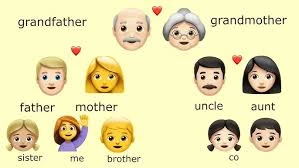
- mother – the female parent in a family (Mom takes care of me)
- father – the male parent in a family (Dad goes to work)
- sister – a female child in the same family (My sister plays with dolls)
- brother – a male child in the same family (My brother likes football)
- baby – a very young child (The baby cries when hungry)
- family – people who live together and love each other (My family eats dinner together)
SCHOOL WORDS:

- teacher – a person who helps children learn (The teacher writes on the board)
- book – pages with words and pictures (I read my book every day)
- pen – used for writing (I write with a blue pen)
- desk – a table where you sit to work (My desk has my books on it)
- school – a place where children go to learn (I go to school Monday to Friday)
- class – a group of pupils who learn together (There are 30 children in my class)
HOME WORDS:
- house – a building where people live (My house has a red door)
- room – a space inside a house (My room has a bed and toys)
- kitchen – the room where food is cooked (Mom cooks in the kitchen)
- bed – furniture for sleeping (I sleep in my bed at night)
- door – used to enter and exit rooms (Close the door when you leave)
- window – opening in a wall to let in light (I look out the window to see birds)
READING TECHNIQUES
Technique 1: Picture Clues
- Look at pictures in books
- Pictures help us understand the story
- If you see a picture of a dog, the word might be “dog”
Technique 2: Sounding Out Words
- Break words into sounds
- /c/ /a/ /t/ = cat
- /d/ /o/ /g/ = dog
- Practice with simple 3-letter words
Technique 3: Context Clues
- Look at other words in the sentence
- “The _____ is yellow” (could be sun, banana, or flower)
- Use what makes sense
Technique 4: Known Words
- Look for small words inside big words
- “inside” has “in” and “side”
- “cannot” has “can” and “not”
VOCABULARY PRACTICE
Word and Meaning Match:
- teacher → person who helps you learn
- book → has pages with words
- mother → female parent
- house → where you live
- pen → used for writing
Complete the Sentence:
- I live in a _____ with my family. (house)
- My _____ helps me with my homework. (mother/father)
- I write with a _____. (pen)
- The _____ reads us a story. (teacher)
- I keep my toys in my _____. (room)
This term's English Studies topics
Basic 2 First Term · 39 topics
- Phonics: Vowel Sounds /A/ and /A:/
- Phonemic Awareness
- Vocabulary Building: New Words and Reading
- Oral and Written Comprehension
- Comprehension: New Words and Meaning
- Oral and Written Comprehension on Passage
- Phonics: Learn Sounds Through Songs
- Simple Commands at Home and School
- Picture Reading
- Supplementary Reading
- Listening to and Telling a Story
First Term English Studies Lesson Notes for Other Topics

Build Rhyming Words Family
Read the full lesson note.
Writing: Describe an Object
Read the full lesson note.
Vocabulary: New Words II
Read the full lesson note.
Structure: Articles "a" and "an"
Read the full lesson note.
Phonics: Rhyming Words & one Syllable Words
Read the full lesson note.
Writing - Writing of Alphabet (cont'd)
Read the full lesson note.

Vocabulary - New Words
Read the full lesson note.
Vocabulary: Objects in the Kitchen
Read the full lesson note.

Reading: Pictorial Reading
Read the full lesson note.
Structure: Action Verbs with Kitchen Objects
Read the full lesson note.
Writing: First Letters of Kitchen Objects
Read the full lesson note.
Phonics: Songs and Rhymes
Read the full lesson note.
Structure: Matching Words and Figures
Read the full lesson note.
Vocabulary: New Words III
Read the full lesson note.
Writing: 'Our House' & Two Letter Words
Read the full lesson note.
Lesson Notes for Other Classes

Basic 1 Lesson Note
The complete lesson note to guide your studies.

Basic 3 Lesson Note
The complete lesson note to guide your studies.

Basic 4 Lesson Note
The complete lesson note to guide your studies.

Basic 5 Lesson Note
The complete lesson note to guide your studies.

Basic 6 Lesson Note
The complete lesson note to guide your studies.

JSS1 Lesson Note
The complete lesson note to guide your studies.

