Exploring Your Environment I – Basic 1 Basic Science Lesson Note (Third Term)
Download Lesson NoteLesson note at a glance
- Subject
- Basic Science
- Class
- Basic 1
- Term
- Third Term
- Topic
- Exploring Your Environment I
- Order
- Topic 7 of 9 this term
- Reading time
- 3 min
Learning Objectives:
By the end of the lesson, pupils should be able to:
- Name things found in the classroom
- Identify things around the school
- List things found at home
Introduction:
Good morning children! Let us look around and explore the things we see every day. Our environment is everything around us. Today we will explore our classroom, school, and home.
Lesson Content:
What is Environment?
- Environment means everything around us
- It includes all the things we can see, touch, and hear
- Our environment has living and non-living things
- We live and play in our environment every day
Things in the classroom:
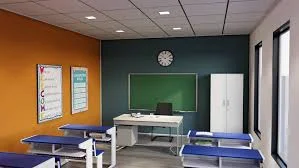
Furniture:
- Tables and desks (where we sit and write)
- Chairs (where we sit)
- Teacher’s table (where teacher keeps books)
- Shelves (to store books and materials)
- Cupboards (to keep supplies safe)
Learning Materials:
- Blackboard or whiteboard (where teacher writes)
- Books (for reading and learning)
- Pencils and pens (for writing)
- Crayons (for coloring)
- Exercise books (for our work)
- Ruler (for drawing straight lines)
Wall Items:
- Clock (tells us the time)
- Calendar (shows dates and months)
- Charts (with alphabets and numbers)
- Pictures (of animals, plants, maps)
- Rules chart (classroom behavior rules)
Other Things:
- Windows (let in light and air)
- Doors (we enter and exit through them)
- Light bulbs (give us light)
- Fan (keeps us cool)
- Waste basket (for throwing rubbish)
Things around the school:
Buildings:
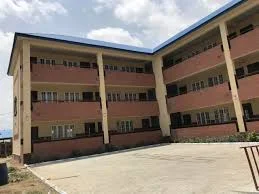
- Classrooms (where we learn)
- Principal’s office (where head teacher works)
- Library (full of books)
- Toilet facilities (for our needs)
- Staff room (where teachers rest)
Outdoor Areas:

- Playground (where we play during break)
- Garden (with flowers and plants)
- Football field (for sports)
- Assembly ground (where we gather for assembly)
- Parking area (for cars and buses)
School Equipment:
- Swings and slides (for playing)
- Basketball court (for sports)
- Flag pole (where we hoist school flag)
- Water taps (for drinking water)
- Security gate (entrance to school)
Things at home:
In the Living Room:
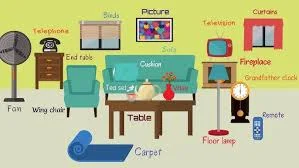
- Sofa and chairs (for sitting)
- Television (for watching programs)
- Center table (for placing things)
- Curtains (for windows)
- Carpet (on the floor)
In the Kitchen:
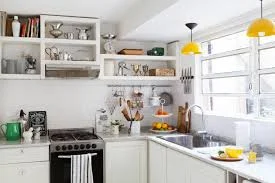
- Stove (for cooking food)
- Refrigerator (keeps food cold)
- Plates and cups (for eating)
- Sink (for washing dishes)
- Dining table (where family eats)
In the Bedroom:
- Bed (where we sleep)
- Pillow and blanket (for comfort)
- Wardrobe (stores our clothes)
- Mirror (to see ourselves)
- Lamp (gives light for reading)
In the Bathroom:

- Toilet (for our needs)
- Bathtub or shower (for bathing)
- Sink (for washing hands and face)
- Toothbrush and soap (for cleaning)
- Towel (for drying)
Outside the House:
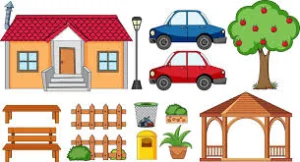
- Garden (with plants and flowers)
- Gate (entrance to compound)
- Well or water tank (for water supply)
- Fence (around the compound)
- Trees (for shade and fresh air)
Class Activity:
Children walk around classroom and school compound (with teacher) to identify and count different items in each area.
Evaluation Questions:
- Name three things you find in the classroom
- What do we use the playground for?
- Where do we keep our clothes at home?
- What gives us light in the classroom?
- Name two things in the kitchen
Assignment:
Draw your bedroom and label five things you find there. Make a list of three favorite things in your home environment.
This term's Basic Science topics
Basic 1 Third Term · 9 topics
Third Term Basic Science Lesson Notes for Other Topics
Simple Machines
Read the full lesson note.
Simple Machines - The Safe Use of Simple Machines
Read the full lesson note.
Concept of Technology
Read the full lesson note.
Technology in Home - Electric Gadgets
Read the full lesson note.
Technology in Transportation - Land and Air
Read the full lesson note.
What Is Water Transportation?
Read the full lesson note.
Exploring Your Environment II
Read the full lesson note.

Exploring Your Environment III
Read the full lesson note.
Animals - As Living Things (Characteristics)
Read the full lesson note.

Uses of Animals
Read the full lesson note.
Meaning and Characteristics of Plants
Read the full lesson note.

Meaning and Characteristics of Animals
Read the full lesson note.
Plants - As Living Things II
Read the full lesson note.
Uses of Plants
Read the full lesson note.
Meaning And Characteristics Of Plants
Read the full lesson note.
Lesson Notes for Other Classes
Basic 2 Lesson Note
The complete lesson note to guide your studies.
Basic 3 Lesson Note
The complete lesson note to guide your studies.
Basic 4 Lesson Note
The complete lesson note to guide your studies.
Basic 5 Lesson Note
The complete lesson note to guide your studies.
Basic 6 Lesson Note
The complete lesson note to guide your studies.
JSS1 Lesson Note
The complete lesson note to guide your studies.