
Mali Empire – JSS2 Nigerian History Lesson Note (Third Term)
Lesson note at a glance
- Class
- JSS2
- Subject
- Nigerian History
- Term
- Third Term
- Reading time
- 10 min
The Mali Empire was a West African kingdom founded by the Mandinka people under Sundiata Keita, which lasted from about 1230 CE to 1600 CE. It grew rich by controlling trans-Saharan trade, especially in gold, and became famous under Mansa Musa and for the learning of Timbuktu.
Behavioural objectives
By the end of the lesson, students should be able to:
- state who founded the Mali Empire and describe how Sundiata Keita established it
- describe how the empire was governed
- explain how trade, taxation and farming supported the economy
- describe the pilgrimage and achievements of Mansa Musa
- explain why Timbuktu was important
- give reasons for the decline of Mali and state its legacy
What was the Mali Empire?
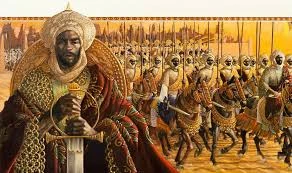
The Mali Empire was a powerful West African state that existed from about 1230 CE to 1600 CE and rose after the decline of the Ghana Empire.
- Size: it stretched from the Atlantic Ocean in the west to the trading centres of Timbuktu and Gao in the east.
- Modern countries: it covered parts of present-day Mali, Senegal, Mauritania, Gambia, Guinea and Niger.
- Wealth: it controlled trade routes across the Sahara Desert and was famous for gold.
- Trading partners: North African and Middle Eastern merchants brought salt, textiles and other goods.
- Learning: cities such as Timbuktu became centres of Islamic learning and culture.
- Fame: Mansa Musa’s pilgrimage to Mecca made Mali known across the world.
What are the key dates in Mali’s history?
The dates below are approximate, because they come partly from oral tradition and travellers’ accounts.
| Date | Event |
|---|---|
| About 1217 CE | Sundiata Keita is born (according to tradition). |
| About 1235 CE | Sundiata defeats Soumaoro Kanté at the Battle of Kirina. |
| About 1255 CE | Sundiata dies. |
| 1312 to 1337 CE | Mansa Musa rules Mali. |
| 1324 to 1325 CE | Mansa Musa makes his pilgrimage to Mecca. |
| 1352 CE | Ibn Battuta visits Mali. |
| About 1468 CE | The Songhai Empire takes Timbuktu. |
| About 1600 CE | Mali is reduced to a small kingdom. |
How did the Mali Empire rise to power?
The Mali Empire rose when the Mandinka, led by Sundiata Keita, filled the gap left by the decline of the Ghana Empire.
Who were the Mandinka?
The Mandinka (also called Malinke) were the people who founded the Mali Empire.
- Home: they lived in the upper Niger River valley.
- Farming: they grew millet, rice and sorghum and kept cattle and goats.
- Trade: they traded along the Niger River.
- Government: they lived in small kingdoms led by chiefs called “faamas”.
- Tribute: their states paid tribute to the Ghana Empire for many years.
- Opportunity: when Ghana declined around 1200 CE, several groups competed for power, and the Mandinka emerged as the strongest.

Who was Sundiata Keita?
Sundiata Keita was the founder of the Mali Empire, sometimes called “the Lion of Mali”.
- Source of his story: oral epic poems memorised and recited by storytellers called griots.
- Birth: he was born around 1217 CE, the son of a Mandinka chief.
- Childhood: tradition says he was disabled and could not walk until he was a teenager.
- Exile: he was forced to leave his homeland, then returned as a powerful warrior.
- Victory: he defeated the cruel king Soumaoro Kanté at the Battle of Kirina around 1235 CE.
- Capital: he built his new state around the town of Niani on the Niger River.
- Death: he ruled until about 1255 CE, and his family continued to rule Mali for generations.
How did Sundiata lay the foundations of Mali’s government?
After Kirina, Sundiata united many Mandinka clans and other groups and set up a lasting system of rule.
- He placed each territory under a representative who reported to him.
- He set up laws and customs to govern the empire.
- He organised a strong army to protect trade routes and expand Mali.
- He built alliances with neighbouring peoples through diplomacy and marriage.
- He supported trade throughout the region.
How was the Mali Empire governed?
The Mali Empire was ruled by a king called the mansa, who was helped by governors, chiefs and councils of elders.
Who was the mansa and what was the royal court like?
The mansa was the king and emperor of Mali, with both political and religious authority.
- Sacred role: he was seen as a living link between the people and their ancestors.
- Throne: he sat on a raised platform decorated with gold.
- Attendants: officials, advisers, guards and musicians surrounded him.
- Respect: visitors approached barefoot and put dust on their heads.
- Praise songs: court musicians sang about the royal family’s history.
- Dress: he wore fine clothes decorated with gold and precious stones.
What was the administrative structure?
The empire was divided into provinces under governors appointed by the mansa.
- Core provinces: ruled directly by members of the royal family.
- Conquered territories: often kept their local rulers, who paid tribute to Mali.
- Trading cities: had special governors who collected taxes and kept order.
- Villages: each had a chief in charge of local affairs.
- Local councils: religious leaders and elders helped to govern.
- Result: Mali controlled a vast area with few administrators, as long as tribute was paid and trade routes stayed safe.
How were justice and law kept?
Mali kept law and order through the mansa, Islamic law and local custom.
- Highest judge: the mansa.
- Islamic law (Sharia): applied in Muslim regions, especially in cities.
- Traditional law: governed rural areas.
- Everyday disputes: settled by local chiefs and elders.
- Serious cases: taken to provincial governors.
- Safety: the Moroccan traveller Ibn Battuta, who visited in 1352, reported that people could travel without fear of robbery because justice was applied equally.
What was the economy of the Mali Empire based on?
The economy of Mali was based on trans-Saharan trade, taxation and farming.
How did trans-Saharan trade support Mali?
Trans-Saharan trade was the exchange of goods between West Africa and North Africa across the Sahara, and Mali controlled it as Ghana had done.
| Goods | Source and movement |
|---|---|
| Gold | Mined in Bambuk and Bure, then carried north across the Sahara. |
| Salt | Mined in the desert, then brought south into Mali. |
| Copper | Mined in the Sahara and traded within the empire. |
| Cloth, horses and manufactured goods | Brought from North Africa and the Middle East. |
| Kola nuts | Taken from the forest regions to the north, where they were valued. |
- Guards: the rulers stationed guards along major routes.
- Rest houses: traders found shelter and water along the way.
- Standard measures: the mansas fixed weights and measures to make trading easier.
How did taxation fill the royal treasury?
Taxation was the collection of a share of goods and wealth from the people for the mansa.
| Who paid | What they paid |
|---|---|
| Traders | Taxes on goods entering or leaving the empire. |
| Gold miners | A portion of the gold they found. |
| Farmers | A harvest tax, usually in food. |
| Salt miners | Taxes on their production. |
| Conquered peoples | Tribute in goods, gold or slaves. |
- Public buildings: some of the wealth built mosques, palaces and other structures.
- Court and army: much of it paid for the royal court and the army.
How did farming and local production help Mali?
Most people in Mali were farmers, and their work fed the empire.
- Crops: millet, rice, sorghum and cotton.
- Livestock: cattle, sheep and goats.
- Fishing: important along the Niger River.
- Crafts: villages made pottery, textiles and household items, and specialists made luxury goods.
- Annual flood: the Niger left rich soil for farming each year.
- Specialists: good harvests freed some people to become craft workers, traders, scholars or soldiers.
Who was Mansa Musa?
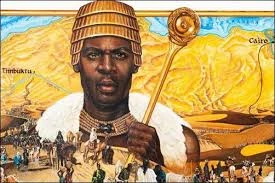
Mansa Musa (also spelled Moussa) was the most famous ruler of Mali, who reigned from about 1312 to 1337 CE.
- Peak of Mali: the empire reached its greatest size and wealth during his reign.
- Expansion: he added cities such as Timbuktu and Gao to the empire.
What was Mansa Musa’s pilgrimage?
Mansa Musa’s pilgrimage was his journey from Mali to Mecca, which took place from 1324 to 1325.
- Procession: accounts say he travelled with about 60,000 people.
- Gold: accounts say 80 to 100 camels each carried about 300 pounds of gold.
- Caravan: it included soldiers, officials, merchants, camel drivers and servants.
- Gold staffs: reports say 500 servants each carried a staff of gold.
- Cairo: he gave away so much gold that its value in Egypt fell for several years.
- Fame: the pilgrimage made Mali known to the Muslim world and Europe, and Mali later appeared on European maps.
What did Mansa Musa achieve at home?
Mansa Musa used his wealth to promote building, learning and Islam in Mali.
- Architects: he brought architects back from his pilgrimage to build new mosques.
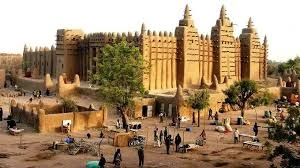
- Djinguereber Mosque: it was built in Timbuktu during his reign.
- Schools and libraries: Islamic schools and libraries were set up across the empire.
- Study abroad: he sent students to study in Morocco and Egypt.
- Scholars: he invited scholars to Mali from across the Muslim world.
Why was Timbuktu important?
Timbuktu was the commercial and intellectual centre of the Mali Empire, near the northernmost bend of the Niger River.
Why was Timbuktu a trading centre?
- Meeting point: goods from the forest regions were exchanged for desert products.
- Caravans: large camel caravans arrived carrying salt and other goods.
Why was Timbuktu a centre of learning?
- Sankore: it was home to Sankore, a renowned centre of learning.
- Students: many came to study religion, astronomy, mathematics, law and medicine.
- Libraries: the city held many handwritten books and manuscripts.
- Writing: scholars wrote on religion, history, science and literature.
- Quran and law: students memorised the Quran and studied Islamic law.
- Astronomy: scholars observed the stars and made calendars.
- Mathematics and medicine: scholars developed calculating methods and wrote medical texts.
- Manuscripts today: many survive, kept by families in Mali.
What were society and culture like in Mali?
Mali society had several social classes and mixed Islam with traditional African beliefs.
What were the social classes?
| Class | Members |
|---|---|
| Ruling class | The royal family and nobles. |
| Middle class | Islamic scholars and wealthy merchants. |
| Free commoners | Farmers, craft workers and traders. |
| Slaves | Often captives from wars, who worked for wealthy families and the court. |
- Birth: a person’s place usually depended on their family.
- Rising up: talented people could rise through military service, scholarship or trade.
What was religious life like?
- Islam: the mansas and many town dwellers were Muslims.
- Traditional religion: rural people often followed ancestor worship and belief in nature spirits.
- Mixed practice: many people followed both.
- Ceremonies: the mansas performed both Islamic and traditional ceremonies.
- Tolerance: subjects were not forced to convert, and Islam spread through traders and scholars.
What were the arts and culture?
- Griots: oral historians who recited the history of families and the empire.
- Music: the kora (a 21-string harp), the balafon (wooden xylophone) and drums.
- Crafts: textiles, pottery and jewellery.
- Architecture: North African styles blended with local building methods.
- Woodcarving: masks, doors and household items with detailed designs.
Why did the Mali Empire decline?
The Mali Empire declined because of weak rule, rebellion, rival states and changes in trade.
- Power struggles: disputes inside the royal family weakened the central government.
- Breakaway provinces: provinces declared independence.
- Songhai conquest: the rival Songhai Empire took key cities such as Timbuktu around 1468.
- Raids: Moroccan and Tuareg raiders attacked the northern territories.
- New trade routes: some routes bypassed Mali’s control.
- Weak rulers: a series of weak mansas could not keep the empire united.
- Result: by about 1600 CE, Mali was a small kingdom around its original homeland.
What was the legacy of the Mali Empire?
The legacy of Mali is the lasting influence it left on West African culture, religion and learning.
- Culture: Mali remained a significant cultural region to this day.
- Islam: the empire helped spread Islam across much of West Africa.
- Learning: its schools preserved and advanced knowledge in mathematics, astronomy and literature.
- Exploration: stories of its wealth drew later European interest in Africa.
- Traditions: music, storytelling and crafts from this period still influence West African societies.
- Lesson: Africa had well-organised states with advanced learning and world trade links long before colonisation.
Evaluation
- Who founded the Mali Empire, and at which battle did he defeat Soumaoro Kanté?
- State four ways in which Sundiata Keita laid the foundations of Mali’s government.
- List four goods traded across the Sahara in the Mali Empire.
- Describe the pilgrimage of Mansa Musa and say how it affected Mali’s fame.
- Give four reasons why the Mali Empire declined.
Assignment
Write a short note of at least five points explaining why Timbuktu was important in the Mali Empire.
This term's Nigerian History topics
JSS2 Third Term · 3 topics
- Ghana Empire
- Mali Empire
- Songhai Empire
JSS2 Nigerian History Lesson Notes for Other Topics
Ghana Empire
Read the full lesson note.
Songhai Empire
Read the full lesson note.
Major Non-Centralized States In Pre-Colonial Nigeria
Read the full lesson note.
Non-Centralized States - The Tiv
Read the full lesson note.
Non-Centralized States: The Igbo
Read the full lesson note.
Non-Centralized States: The Idoma
Read the full lesson note.
Relationship Between People From Different Centres Of Civilization In Precolonial Nigeria: Ife/Benin
Read the full lesson note.
Relationship Between People From Different Centers Of Civilization In Precolonial Nigeria: Igbo/Ibibio
Read the full lesson note.
Inter-Relationships Of Some Centres Of Civilisation In Pre-Colonial Nigeria
Read the full lesson note.
Lesson Notes for Other Classes

JSS1 Lesson Note
The complete lesson note to guide your studies.

JSS3 Lesson Note
The complete lesson note to guide your studies.
