
Songhai Empire – JSS2 Nigerian History Lesson Note (Third Term)
Lesson note at a glance
- Class
- JSS2
- Subject
- Nigerian History
- Term
- Third Term
- Reading time
- 8 min
The Songhai Empire was the third great West African empire, after Ghana and Mali, and it lasted from around 1375 CE to 1591 CE.
- Capital: Gao, on the middle Niger River.
- Source of wealth: trans-Saharan trade in gold, salt and other goods.
- Greatest rulers: Sunni Ali Ber and Askia Muhammad Touré.
- End: defeat by Morocco in 1591.
Behavioural objectives
By the end of the lesson, students should be able to:
- State when the Songhai Empire existed and name the area it covered.
- Describe how Songhai became independent from Mali.
- Describe the military conquests and government of Sunni Ali Ber.
- Explain how Askia Muhammad Touré improved government, learning and trade.
- Give the reasons for the decline and fall of the empire.
- State the legacy of the Songhai Empire.
What was the Songhai Empire?
The Songhai Empire was a powerful West African state centred on Gao that controlled trade across the Sahara from about 1375 CE to 1591 CE.
- Position: it was the last of the three great West African empires, after Ghana and Mali.
- Size: at its height it stretched from near the Atlantic Ocean to the edge of present-day Nigeria.
- Modern countries covered (in part): Mali, Niger, Nigeria, Senegal, Mauritania, Guinea, Gambia and Burkina Faso.
- Famous cities: Timbuktu, Gao and Djenné, known for trade and learning.
- Importance: it was one of the largest states in African history up to that time.
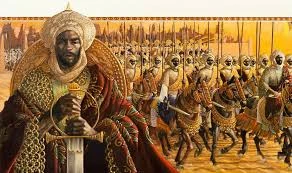
Timeline of the Songhai Empire
How did the Songhai Empire begin?
The Songhai Empire grew from a small kingdom at Gao that broke free from Mali around 1375 and then expanded along the Niger River.
Who were the Songhai people?
- Home: they lived along the middle Niger River around Gao.
- Early work: many were fishermen and farmers.
- Gao: it became a trading centre because of its position on the Niger.
- Trade: as trans-Saharan trade grew, the Songhai took a bigger part in it.
- Mali rule: Gao was conquered by Mali in the early 1300s and ruled as part of Mali for about 50 years.
- What they learned: Islam spread among them, and their leaders studied how Mali governed a large state.
How did Songhai become independent from Mali?
Songhai became independent when its leaders seized Gao from a weakening Mali around 1375.
- Mali grew weak in the late 1300s.
- Around 1375, a Songhai leader of the Sunni dynasty took control of Gao.
- He declared Gao free from Mali.
- Over the next hundred years, the Sunni rulers built up their army.
- They conquered smaller kingdoms and villages along the Niger River.
- Songhai grew stronger while Mali grew weaker.
How did Sunni Ali Ber build the empire?
Sunni Ali Ber, who ruled from 1464 to 1492, turned Songhai into a true empire through conquest.
- His name: “Ber” means “the Great” in the Songhai language.
- His army: he led cavalry (soldiers on horseback).
- His navy: he used war canoes to control the Niger River.
What were Sunni Ali’s military conquests?
- Timbuktu: captured from the Tuareg in 1468.
- Djenné: taken after a siege of about seven years.
- Mali lands: he took control of many former Mali territories.
- Army: he built a professional army of cavalry and a river navy.
- Result: he created the largest empire in West Africa at that time.
- Weakness: he was harsh to conquered peoples and to Muslim scholars who opposed him.
- Effect: this made him unpopular with the Muslim elite, although he was Muslim himself.
How did Sunni Ali organise his government?
- Provinces: he divided the empire into provinces under loyal officials.
- Military commanders: he placed them in charge of newly conquered areas.
- Tribute: he required regular tax payments from all regions.
- Standing army: a large army enforced his rule.
Who was Askia Muhammad Touré?
Askia Muhammad Touré, also called Askia the Great, was the general who founded the Askia dynasty and ruled Songhai from 1493 to 1528.
How did he rise to power?
- Sunni Ali died in 1492.
- His son took power for a short time.
- Muhammad Touré, one of Sunni Ali’s generals, led a rebellion against the son.
- He won and took the title “Askia”.
- He started a new dynasty, the Askia dynasty.
What administrative reforms did Askia Muhammad make?
- Provinces: he divided Songhai into more carefully managed provinces.
- Governors: he appointed loyal officials, called “koys”, to run regions.
- Ministers: he created ministers for finance, justice, agriculture and other areas.
- Weights and measures: he standardised them to make trade easier.
- Taxes: he set up an efficient tax collection system.
How did he support Islamic learning?
- Pilgrimage: he went on a famous pilgrimage to Mecca and brought back scholars and ideas.
- Mosques and schools: he built many across the empire.
- Qadis: he appointed Islamic judges to apply Muslim law in the cities.
- Scholars: he gave money and land to scholars and teachers.
- Timbuktu: it became a world-famous centre of learning, with the University of Sankore drawing students from Africa and the Middle East.
- Books: thousands of hand-written books were collected, copied and studied there.
How did he develop trade?
- Safe trade: peace and good government made trade routes safer.
- Foreign merchants: he encouraged them to visit Songhai cities.
- Exports: gold, leather goods and textiles went north across the Sahara.
- Imports: goods from North Africa, Europe and the Middle East came south.
- Salt: it came from Taghaza in the desert.
- Slaves: enslaved people were also part of the caravan trade.
How do Sunni Ali Ber and Askia Muhammad compare?
- Sunni Ali Ber: a warrior king who built the empire by conquest, from 1464 to 1492.
- Askia Muhammad Touré: a ruler who organised the empire and supported learning, from 1493 to 1528.
| Point | Sunni Ali Ber | Askia Muhammad Touré |
|---|---|---|
| Reign | 1464 to 1492 | 1493 to 1528 |
| Main work | Conquest and expansion | Government, learning and trade |
| Dynasty | Sunni | Askia |
| Relations with Muslim scholars | Often harsh | Supportive |
| Key events | Took Timbuktu and Djenné | Pilgrimage to Mecca, reforms |
What did the empire look like at its height?
At its height under Askia Muhammad, Songhai was one of the largest states in African history, so large that crossing it took months.
How far did the empire stretch?
- West: parts of present-day Senegal and Gambia.
- East: the edge of present-day Nigeria.
- North: parts of the Sahara in present-day Mauritania and Mali.
- South: the edge of the forest regions, in present-day Burkina Faso.
What were the major cities?
| City | Importance |
|---|---|
| Gao | Capital and royal residence |
| Timbuktu | Centre of Islamic learning and trans-Saharan trade |
| Djenné | Market city and centre of building skill |
| Taghaza | Desert source of salt |
| Walata | Trading post on the western trade routes |
What was daily life like in the Songhai Empire?
Most people in Songhai were farmers who lived in small villages and paid taxes through their local chiefs.
- Crops: millet, rice and sorghum.
- Fishing: important along the Niger River for food and trade.
- Towns: people of many ethnic groups lived there.
- Crafts: town workers made textiles, pottery, leather goods and metal items.
- Markets: goods from across Africa and beyond were bought and sold.
What were the social classes?
| Class | Who they were |
|---|---|
| Ruling class | The royal family and nobles |
| Influential group | Islamic scholars and wealthy merchants |
| Free commoners | Farmers, craft workers and small traders |
| Slaves | Often war captives, working for rich families and the government |
Why did the Songhai Empire fall?
The Songhai Empire fell because of weakness inside the empire and a Moroccan invasion in 1591.
What internal problems weakened Songhai?
Problems began after Askia Muhammad was removed from power by his sons in 1528.
- Succession disputes: different branches of the royal family fought one another.
- Weak control: provinces became more independent.
- Corruption: it increased among officials.
- Weak army: it became less disciplined and effective.
- Trade losses: political instability disrupted trade.
How did the Moroccan invasion end the empire?
Morocco defeated Songhai at the Battle of Tondibi in 1591 using firearms.
- In 1591, the Sultan of Morocco, Ahmad al-Mansur, sent an army across the Sahara.
- The force was small, about 4,000 men, but it had muskets and cannons.
- At Tondibi, it defeated the much larger Songhai army, which used traditional weapons.
- The Moroccans then captured Gao, Timbuktu and other major cities.
- The Songhai government collapsed.
- The empire broke into smaller kingdoms, and Morocco never ruled all of it effectively.
What was the legacy of the Songhai Empire?
The legacy of Songhai is its record of learning, trade and strong government in pre-colonial West Africa.
- Manuscripts: thousands of Timbuktu books preserved knowledge in mathematics, astronomy, medicine, history and literature.
- Building styles: styles from the Songhai era still influence West African buildings.
- Education: Islamic learning in cities such as Timbuktu continued after the empire fell.
- Trade networks: they formed the basis for later regional trade.
- Government: its provinces, ministers and officials showed advanced political organisation.
- Inspiration: the memory of Songhai inspired later West African states.
- Lesson for history: Africa had a rich record of state-building, trade and learning long before European colonisation.
Evaluation
- Name the city that served as the capital of the Songhai Empire.
- State two things Sunni Ali Ber did during his reign.
- Give two reforms made by Askia Muhammad Touré to help Islamic learning.
- Give two internal problems that weakened Songhai after 1528.
- Why did the small Moroccan army defeat the Songhai army at the Battle of Tondibi in 1591?
Assignment
Write a short paragraph explaining why Timbuktu became famous during the Songhai Empire. Use at least three points from the lesson.
This term's Nigerian History topics
JSS2 Third Term · 3 topics
- Ghana Empire
- Mali Empire
- Songhai Empire
JSS2 Nigerian History Lesson Notes for Other Topics
Ghana Empire
Read the full lesson note.
Mali Empire
Read the full lesson note.
Major Non-Centralized States In Pre-Colonial Nigeria
Read the full lesson note.
Non-Centralized States - The Tiv
Read the full lesson note.
Non-Centralized States: The Igbo
Read the full lesson note.
Non-Centralized States: The Idoma
Read the full lesson note.
Relationship Between People From Different Centres Of Civilization In Precolonial Nigeria: Ife/Benin
Read the full lesson note.
Relationship Between People From Different Centers Of Civilization In Precolonial Nigeria: Igbo/Ibibio
Read the full lesson note.
Inter-Relationships Of Some Centres Of Civilisation In Pre-Colonial Nigeria
Read the full lesson note.
Lesson Notes for Other Classes

JSS1 Lesson Note
The complete lesson note to guide your studies.

JSS3 Lesson Note
The complete lesson note to guide your studies.
