Horticultural Crop Improvement – SS2 Horticulture and Crop Production Lesson Note (First Term)
Download Lesson NoteLesson note at a glance
- Subject
- Horticulture and Crop Production
- Class
- SS2
- Term
- First Term
- Topic
- Horticultural Crop Improvement
- Order
- Topic 1 of 8 this term
- Reading time
- 3 min
Class: SS2
Subject: Horticulture and Crop Production
What is Crop Improvement?
Think about the fruits and vegetables we eat today. If you saw a “wild” watermelon from hundreds of years ago, it would be small, hard, and bitter. Crop improvement is simply the process of changing the genetics of plants to make them more useful to humans.
In horticulture, we aren’t just looking for food; we are looking for beauty (flowers) and high-quality nutrition (fruits and vegetables).
Why Do We Improve Horticultural Crops? (The Aims)
We don’t just change plants for fun. We do it for very specific reasons:
- Higher Yield: This is the big one. We want more tomatoes per plant or bigger pineapples.
- Better Quality: We want sweeter mangoes, crunchier carrots, or roses that smell stronger and last longer in a vase.
- Resistance to Pests and Diseases: Some plants are “tougher” than others. We try to give that toughness to our favorite crops so they don’t die easily when bugs attack.
- Adaptability: We want crops that can grow in different climates—like a cabbage that can handle heat or a citrus tree that can survive a dry season.
- Early Maturity: Farmers want plants that grow fast so they can harvest and sell them sooner.
Method 1: Selection
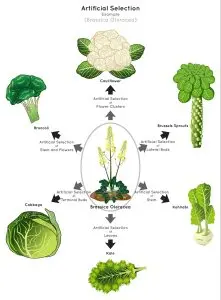
Selection is the oldest and simplest method. It is exactly what it sounds like: picking the best and throwing away the rest.
How it works: A farmer goes into a field of peppers. He notices that most plants are small, but one specific plant has huge, bright red peppers. He saves the seeds from only that plant to sow next year. By doing this repeatedly, the “bad” traits eventually disappear, and the “good” traits become the standard.
Types of Selection:
- Mass Selection: Picking a large group of plants with good traits and mixing their seeds together.
- Pedigree Selection: Keeping very careful records of the “parents” and “grandparents” of a plant to ensure the quality stays high (like a family tree).
Method 2: Hybridization (Crossing)
This is where things get a bit more “scientific” but still very natural. Hybridization is the process of mating two different plants with different good qualities to create a “super plant.”
The Logic: Imagine you have two mango trees:
- Tree A: Produces very sweet fruit but gets sick easily.
- Tree B: Produces sour fruit but never gets sick.
If you cross-pollinate them, you might get a Hybrid that is both sweet and strong.
How it’s done:
- Emasculation: We remove the male parts (anthers) of a flower so it can’t fertilize itself.
- Pollination: We manually take pollen from the “father” plant and put it on the “mother” plant.
- Protection: We bag the flower so bees don’t bring in “random” pollen from other trees.
The Result: Hybrid Vigor
When we successfully hybridize two plants, the offspring is often better, faster, and stronger than both parents. Scientists call this Heterosis or Hybrid Vigor. It’s like the plant got an upgrade in its DNA!
Summary Table for Quick Revision
| Method | Process | Difficulty | Key Benefit |
| Selection | Picking the best existing plants. | Easy | Keeps the best natural traits. |
| Hybridization | Combining two different parents. | Moderate | Creates brand new, “super” varieties. |
Teacher’s Note to Students
Keep in mind that crop improvement takes patience. You might have to plant and harvest for many years before you get the “perfect” flower or fruit. Nature moves at its own pace!
This term's Horticulture and Crop Production topics
SS2 First Term · 8 topics
First Term Horticulture and Crop Production Lesson Notes for Other Topics

Advanced Greenhouse Technology
Read the full lesson note.

Hydroponics
Read the full lesson note.
Aeroponics
Read the full lesson note.
Aquaponics
Read the full lesson note.

Precision Agriculture
Read the full lesson note.
Climate Change and Crop Production
Read the full lesson note.

Sustainable Horticultural Practices
Read the full lesson note.
Environmental Sustainability in Horticulture
Read the full lesson note.

Agroforestry
Read the full lesson note.
Urban and Peri-Urban Horticulture
Read the full lesson note.

Greenhouse Technology
Read the full lesson note.

Organic Horticulture
Read the full lesson note.

Biotechnology in Horticulture
Read the full lesson note.
Genetic Principles in Crop Production
Read the full lesson note.
Irrigation and Watering Techniques
Read the full lesson note.
Lesson Notes for Other Classes

Basic 1 Lesson Note
The complete lesson note to guide your studies.
Basic 2 Lesson Note
The complete lesson note to guide your studies.

Basic 3 Lesson Note
The complete lesson note to guide your studies.

Basic 4 Lesson Note
The complete lesson note to guide your studies.

Basic 5 Lesson Note
The complete lesson note to guide your studies.

Basic 6 Lesson Note
The complete lesson note to guide your studies.