
Centers of Ancient Civilization in Nigeria – SS3 Nigerian History Lesson Note (First Term)
Lesson note at a glance
- Class
- SS3
- Subject
- Nigerian History
- Term
- First Term
- Reading time
- 6 min
A centre of ancient civilisation is a place where early people built an organised society with skilled crafts, farming, trade and leadership.
Behavioural objectives
By the end of the lesson, students should be able to:
- Name the early centres of civilisation in Nigeria and say where each was found.
- Describe the features of Nok, Igbo-Ukwu, Ife and Benin.
- State the artistic works and occupations of each centre.
- Explain how the lost-wax method was used to make metal art.
- Discuss the relationship between these centres and other groups in Nigeria.
Instructional techniques and materials
Instructional techniques
- Identification: students pick out each centre and its artworks from pictures.
- Explanation: the teacher explains the features of each centre.
- Questions and answers: students answer short oral questions.
- Demonstration: the teacher shows how the artworks and crafts were made.
- Videos from source: short clips on the artworks and the centres.
Instructional materials
- Videos: clips on Nok, Igbo-Ukwu, Ife and Benin art.
- Loudspeaker: for playing the video sound in a large class.
- Textbook: the approved SS3 History text.
- Pictures: photographs of the heads, plaques and vessels.
What makes a place a centre of ancient civilisation?
A centre of ancient civilisation is a settlement whose people showed advanced skills and organisation long before European contact.
- Skilled crafts: artists and metalworkers made lasting works of art and tools.
- Farming: food production supported a settled population.
- Trade: goods and ideas moved between communities.
- Leadership: kings, priests or chiefs organised the people.
What were the early centres of civilisation in Nigeria?
There are four main early centres of civilisation in Nigeria: Nok, Igbo-Ukwu, Ife and Benin.
| Centre | Approximate period | Best-known work |
|---|---|---|
| Nok | About 1500 BCE to 200 CE | Terracotta heads and figures |
| Igbo-Ukwu | 9th to 10th century CE | Bronze and copper vessels, masks and jewellery |
| Ife | From the 12th century CE | Naturalistic heads in bronze, terracotta and stone |
| Benin | From the 13th century CE | Bronze plaques and ivory carvings |
What are the key terms in this topic?
- Terracotta: baked clay, used by Nok and Ife artists for heads and figures.
- Bronze: a metal alloy, mainly copper mixed with tin, used for casting art.
- Brass: a metal alloy of copper and zinc, used in Benin works.
- Plaque: a flat metal panel with a scene in relief, as in Benin.
- Naturalistic: showing people as they really look, as in Ife heads.
- Artefact: an object made by people in the past and dug up by archaeologists.
What are the features of the Nok civilisation?
The Nok civilisation is the earliest known centre of terracotta art in Nigeria, named after the village of Nok.
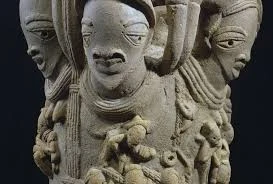
- Location: central Nigeria, named after the village of Nok in southern Kaduna.
- Period: dating from around 1500 BCE to 200 CE.
- Known for: terracotta sculptures, especially the Nok heads.
- Iron working: the people were skilled ironworkers, making tools and weapons.
- Occupations: agriculture, hunting and fishing were the main occupations.
- Artistic works: human figures with detailed hairstyles and facial features.
What are the features of the Igbo-Ukwu civilisation?
Igbo-Ukwu is a centre in the south-east known for fine bronze and copper artefacts.
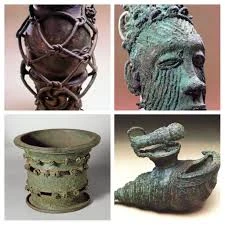
- Location: Igbo-Ukwu in present-day Anambra State, in the south-east.
- Period: flourished between the 9th and 10th centuries CE.
- Known for: detailed bronze and copper artefacts.
- Occupations: bronze and copper metallurgy, agriculture and trade.
- Artistic works: ceremonial vessels, masks and jewellery with fine designs.
What are the features of the Ife civilisation?
Ife is a Yoruba centre in the south-west known for lifelike sculptures in bronze, terracotta and stone.
- Location: Ile-Ife in present-day Osun State, in the south-west.
- Period: dating back to the 12th century CE.
- Known for: naturalistic and highly expressive sculptures in bronze, terracotta and stone.
- Occupations: sculpture, metallurgy and agriculture.
- Artistic works: lifelike human figures with elaborate headdresses and facial scarification.
What are the features of the Benin civilisation?
Benin is a centre in present-day Edo State known for bronze plaques and ivory carvings made for the royal court.
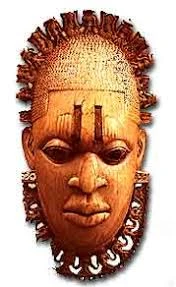
- Location: Benin City in present-day Edo State.
- Period: originating around the 13th century CE.
- Known for: bronze plaques, sculptures and ivory carvings.
- Occupations: bronze casting, ivory carving, trade, agriculture and governance.
- Artistic works: plaques showing historical events, royal court scenes and symbolic motifs.
- Other works: ivory carvings and brass sculptures.
How do the four centres compare?
The four centres differ mainly in location, the materials their artists used and their main occupations.
| Centre | Present-day location | Main material | Main occupations |
|---|---|---|---|
| Nok | Kaduna State (central Nigeria) | Terracotta (baked clay) and iron | Farming, hunting, fishing, iron working |
| Igbo-Ukwu | Anambra State | Bronze and copper | Metalwork, farming, trade |
| Ife | Osun State | Bronze, terracotta and stone | Sculpture, metalwork, farming |
| Benin | Edo State | Bronze, brass and ivory | Casting, carving, trade, farming, governance |
How did early artists cast metal using the lost-wax method?
The lost-wax method is a way of casting metal in which a wax model is melted out of a clay mould.
- The artist shapes a rough core of clay.
- The artist covers the core with beeswax and carves the fine details.
- The wax model is coated with more clay, leaving small holes.
- The mould is heated, and the wax melts and runs out.
- Molten metal is poured into the space the wax left.
- The metal cools, the clay mould is broken and the work is cleaned and polished.
What was the relationship between these centres and other groups in Nigeria?
The centres were linked to other groups in Nigeria through trade, cultural exchange and political and artistic influence.
- Cultural exchange: the centres were hubs of trade and contact with neighbouring communities and ethnic groups.
- Trade: trade networks passed on goods, ideas and artistic techniques.
- Cultural diffusion: shared skills and ideas enriched the surrounding regions.
- Political influence: some centres influenced neighbours through diplomacy, military conquest and economic strength.
- Artistic influence: their art and technology inspired the traditions of other groups in Nigeria and beyond.
What are examples of these links?
- Ife and Benin: Benin tradition links its royal line and its casting skills to Ife.
- Igbo-Ukwu: beads found with its bronzes suggest contact with distant trading partners.
- Benin: its plaques record dealings with neighbours and with visiting traders.
Why are these centres important to Nigerian history?
These centres give evidence that Nigerians had advanced art, metalwork and organised states before European contact.
- Evidence of skill: the artworks show high levels of craft and technology.
- Source of history: artefacts help historians where there are few written records.
- Cultural heritage: the works are part of Nigeria’s national identity.
- Teaching value: they show how trade and contact spread ideas between peoples.
Evaluation
- Describe the features of the Nok and Benin civilisations.
- Identify four relationships between these centres of ancient civilisation and other groups in Nigeria.
- State the main artistic work of Igbo-Ukwu and Ife.
- Name the present-day state in which each of the four centres is found.
- List the steps of the lost-wax method in order.
Assignment
Classwork: Draw a table with the four centres. For each, write its location, period, main artistic work and main occupations.
This term's Nigerian History topics
SS3 First Term · 6 topics
SS3 Nigerian History Lesson Notes for Other Topics
Definition Of History
Read the full lesson note.
Sources Of History
Read the full lesson note.
State Formation Process In Pre-Colonial Nigeria
Read the full lesson note.
People From Sudan And Sahel Savanna Zone In Nigeria
Read the full lesson note.
Semi-Guinea Savannah, Niger, Benue Confluence, Middle Belt Zone In Nigeria
Read the full lesson note.

Debt Relief And International Aids
Read the full lesson note.
Peacekeeping/Socio-Political Interest Of The Developed Societies
Read the full lesson note.
Lands And People Of North Africa, Egypt, And The Maghreb
Read the full lesson note.
Lands And People Of East And Center Africa: Omani(Zanzibar), Buganda And Ethiopia
Read the full lesson note.
Land And People In Southern Africa: Bantu
Read the full lesson note.
Lesson Notes for Other Classes

SS1 Lesson Note
The complete lesson note to guide your studies.

SS2 Lesson Note
The complete lesson note to guide your studies.
