
Transportation – SS2 Commerce Lesson Note (Second Term)
Download this term · ₦1,000Lesson note at a glance
- Subject
- Commerce
- Class
- SS2
- Term
- Second Term
- Topic
- Transportation
- Order
- Topic 5 of 5 this term
- Reading time
- 6 min
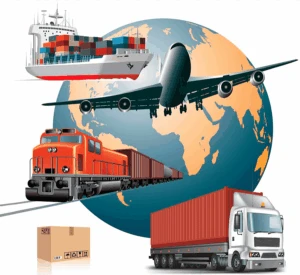
Transportation is the movement of people and goods from one place to another by road, rail, water or air, and it is one of the aids to trade.
Behavioural objectives
- Define transportation.
- State the importance of transport.
- List the major forms of transport.
- Describe road transportation, with its advantages and disadvantages.
- Describe rail transportation in Nigeria.
- Describe water and air transportation, with one advantage and one disadvantage of each.
What are the key terms in transportation?
Key terms are the words a student must know before studying the forms of transport.
- Transportation: the movement of people and goods from one place to another.
- Freight: goods carried from one place to another, or the charge for carrying them.
- Perishable goods: goods that spoil quickly, such as fish, tomatoes and fresh meat.
- Bulky goods: goods that are heavy or take up a lot of space, such as timber and cement.
- Port: a place on the coast or a river where ships load and unload goods, such as Apapa and Port Harcourt.
- Airport: a place where aircraft take off and land, such as the Murtala Muhammed Airport in Lagos.
Why is transport important?
Transport is important because it moves goods and people to where they are needed.
- Movement of goods and persons: it allows quick and efficient distribution of goods in a country.
- Trade between countries: air and sea transport greatly promote international trade.
- Improved standard of living: goods and services reach people at the right time and in the right place.
- Employment opportunity: it gives work to drivers, pilots, sailors, engineers, conductors and others.
- Widening of a firm’s market: it extends the area where a firm can sell its goods and services.
- Prevention of wastage of perishable goods: an efficient system moves goods like fish and tomatoes quickly to where they are needed.
- Movement of productive resources: raw materials, labour and equipment move from where they are found to firms that need them.
What are the forms of transport?
There are three main forms of transport: land, water and air.
- Land transport: movement on land, by road or by rail.
- Water transport: movement on rivers, lakes, seas and oceans.
- Air transport: movement by aircraft.
- Four forms: when road and rail are counted separately, the forms are road, rail, water and air.
Which form is best for which use?
| Form | Examples of vehicles | Best used for |
|---|---|---|
| Road | Bicycles, cars, buses, lorries | Short and medium distances, door-to-door delivery |
| Rail | Passenger and cargo trains | Heavy and bulky goods over long distances |
| Water | Canoes, ferries, barges, ships | Very heavy goods, overseas trade |
| Air | Aeroplanes, helicopters | Fast delivery, long distances, urgent or valuable goods |
What is land transportation?
Land transportation is the movement of people and goods on land from one place to another.
- Use: it is the most common means of transport and is mainly used in the home trade.
What are the methods of land transportation?
- Road transportation: vehicles move on roads.
- Rail transportation: trains move on rails.
What is road transportation?
Road transportation is the movement of people and goods on roads.
- Role: it is the most common means of transport and links towns and villages in Nigeria.
- Means used: bicycles, cars, lorries, tankers, motorcycles, buses and trailers.
What are the advantages of road transportation?
- Wide reach: it is possible to reach all parts of the country by road.
- Perishable goods: it is a suitable means of carrying perishable goods.
- No special routes: it does not need special tracks like trains.
What are the disadvantages of road transportation?
- Congestion: there is usually traffic congestion (hold-up).
- Slow over long distances: journeys tend to take long.
- Accidents: the rate of accidents is high.
What is rail transportation?
Rail transportation is the second type of land transportation, in which trains move on rails, that is, on specially made routes.
- Speed: it is slow, but it is less risky than road transport.
- Control in Nigeria: it is a federal concern, run by the Nigerian Railway Corporation (NRC).
What are the types of train?
There are two types of train: passenger trains and cargo trains.
- Passenger trains: carry people, with first, second and third classes.
- Cargo trains: carry goods.
What are the advantages of rail transportation?
- Heavy loads: it carries bulky and heavy goods in large quantities.
- Safety: it is less risky than road transport.
- Less congestion: trains run on their own tracks.
What are the disadvantages of rail transportation?
- Fixed routes: trains can only go where rails have been laid.
- No door-to-door service: goods must be moved to and from stations by road.
- Slow: it is slower than air transport.
What is water transportation?
Water transportation is the movement of people and goods on water by boats and ships.
What are the types of water transport?
There are two types of water transport: inland water transport and ocean transport.
- Inland water transport: on rivers, lakes and canals, using canoes, boats, ferries and barges, as on the Niger and Benue.
- Ocean transport: on seas and oceans, using ships such as cargo ships, passenger liners and oil tankers.
What are the advantages of water transportation?
- Heavy goods: ships carry very large and bulky loads.
- Low cost: it is cheap for bulk goods over long distances.
- International trade: it links countries separated by sea.
What are the disadvantages of water transportation?
- Slow: ships move slowly.
- Port needed: goods must be taken to and from ports, such as Apapa and Port Harcourt.
- Weather risk: storms and low water levels can cause delay or loss.
What is air transportation?
Air transportation is the movement of people and goods by aircraft, such as aeroplanes and helicopters.
- Airports: aircraft use airports, such as the Murtala Muhammed Airport in Lagos.
What are the advantages of air transportation?
- Speed: it is the fastest form of transport.
- Distance: it covers long distances and places hard to reach by land or water.
- Urgent and valuable goods: it suits items like medicines and documents.
What are the disadvantages of air transportation?
- High cost: fares and freight charges are expensive.
- Small loads: aircraft carry less than ships or trains.
- Weather: bad weather can delay or cancel flights.
- Serious accidents: an air accident often causes heavy loss.
How do the four forms of transport compare?
The table below compares road, rail, water and air on speed, cost and size of load.
| Form | Speed | Cost | Size of load |
|---|---|---|---|
| Road | Moderate, slow over long distances | Moderate | Small to medium |
| Rail | Slow | Low for bulk goods | Large |
| Water | Slow | Low for bulk goods | Very large |
| Air | Fastest | High | Small |
Evaluation
- Define transportation and state four reasons why it is important.
- List four means of transport used on roads.
- State three advantages and three disadvantages of road transportation.
- Which body controls rail transport in Nigeria, and what are the two types of train?
- Give two differences between water transport and air transport.
Assignment
Explain how a good transport system prevents the wastage of perishable goods. Name two perishable goods and the form of transport suited to each.
This term's Commerce topics
SS2 Second Term · 5 topics
- Credit
- Trade Associations
- Insurance
- Consumer Protection
- Transportation
Get Commerce as PDF and Word
Every week of SS2 Commerce, Second Term, formatted and ready to print. Ad-free, and the copy lock comes off.
Get this term Card, bank transfer, USSD or OPay
SS2 Commerce Lesson Notes for Other Topics
Credit
Read the full lesson note.
Trade Associations
Read the full lesson note.
Insurance
Read the full lesson note.
Consumer Protection
Read the full lesson note.

National Consciousness
Read the full lesson note.
Warehousing
Read the full lesson note.

The Stock Exchange
Read the full lesson note.

The Second Tier Securities Market
Read the full lesson note.

Capital
Read the full lesson note.

Turnover
Read the full lesson note.

Communication
Read the full lesson note.
Lesson Notes for Other Classes

SS1 Lesson Note
The complete lesson note to guide your studies.

SS3 Lesson Note
The complete lesson note to guide your studies.
