
Consequences of Obedience and Disobedience – SS2 Christian Religious Studies Lesson Note (Second Term)
Download this term · ₦1,000Lesson note at a glance
- Subject
- Christian Religious Studies
- Class
- SS2
- Term
- Second Term
- Topic
- Consequences of Obedience and Disobedience
- Order
- Topic 2 of 6 this term
- Reading time
- 6 min
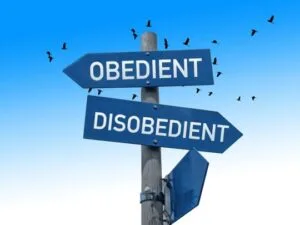
Obedience is keeping the instructions of God and of the society, and it brings reward and progress.
Behavioural objectives
By the end of the lesson, students should be able to:
- Explain how King Saul disobeyed God and state the consequences.
- Narrate the story of the young prophet who disobeyed God in 1 Kings 13.
- Define obedience and state its benefits to society.
- Describe how Joseph, David and the three Hebrews were rewarded for obeying God.
What are obedience and disobedience?
Obedience is the act of keeping the laid down instructions of God or of a society, while disobedience is the refusal to keep them.
- Obedience: doing what God or lawful authority commands, and it brings reward.
- Disobedience: going against God’s command, and it brings God’s anger and punishment.
- Consequence: the result of an action, good or bad.
- Anointed of the Lord: a person chosen and set apart by God, such as a king.
What were the consequences of disobedience?
The Bible shows that disobedience to God brought rejection, suffering and death, as seen in King Saul and the young prophet from Judah.
How did Saul disobey God? (1 Sam. 15:20-26)
- The command: God told Saul, through Samuel, to destroy the Amalekites completely, because they opposed Israel after the exodus from Egypt.
- The order: nobody, young or old, was to be spared.
- The sin: Saul defeated the Amalekites, but his men spared the best of the sheep, cattle and other valuables.
- King Agag: Saul also spared Agag, king of Amalek, and took him captive.
- The lie: when Samuel asked about the bleating of the sheep, Saul said the people kept them for sacrifice to the Lord.
- Blame: Saul did not admit his fault. He shifted the blame to the people.
What happened to Saul after he disobeyed? (1 Sam. 16:14-23; 31:1-13)
Saul lost the kingship, was tormented in spirit, and died in battle with his three sons.
- God rejected Saul as king.
- The Spirit of God left him, and an evil spirit from the Lord tormented him.
- Saul was relieved only when he listened to music.
- David was brought to the palace because he played the lyre skilfully.
- The Philistines defeated Israel at Mount Gilboa.
- Saul and his three sons, Jonathan, Malchishua and Abinadab, were killed on the same day.
- The Philistines cut off Saul’s head and stripped off his armour.
- They put the armour in the temple of Ashtaroth and fastened his body to the wall of Beth Shan.
How did the young prophet disobey God? (1 Kgs. 13:11-24)
The young prophet from Judah was killed by a lion because he disobeyed God’s command not to eat or drink in Bethel.
- God sent the prophet from Judah to prophesy at Bethel.
- King Jeroboam was at the altar, burning incense.
- The prophet declared that God would raise up Josiah to reform the religion of the land.
- Jeroboam stretched out his hand to have the prophet arrested, and the hand dried up.
- The king begged the prophet to pray, and his hand was restored.
- Jeroboam invited the prophet to refresh himself and receive a reward.
- The prophet refused, because God had told him not to eat or drink there.
- An old prophet rode after him on a donkey and found him sitting under an oak tree.
- The old prophet invited him to eat, and the young prophet repeated what God had told him.
- The old prophet lied that an angel had told him to bring the young prophet back.
- The young prophet believed him and went back to eat.
- While they ate, God told the old prophet that the young prophet’s body would not lie in his fathers’ tomb.
- On the way home, a lion killed the young prophet.
What are the rewards for obedience?
Obedience to God and to lawful authority brings reward to the individual and progress to the society.
What are the benefits of obedience to society?
- Social progress: keeping the laws of the land helps people live together in peace.
- Moral progress: obedience encourages honesty, respect and good character.
- Economic progress: an orderly society makes work and trade run smoothly.
- Political progress: respect for law and leaders keeps government stable.
- Smooth running: obedience can be individual or corporate, and both help the society to function.
How was Joseph rewarded for obeying God? (Gen. 39:7-12)
- His position: Joseph was a slave in the house of Potiphar, the captain of Pharaoh’s guard.
- His conduct: he behaved well and was careful in his dealings, so Potiphar trusted him with everything except his wife.
- The temptation: Potiphar’s wife pestered him for several days to sleep with her, but he refused.
- The escape: one day she grabbed his garment, and Joseph left it in her hand and fled.
- The false charge: she accused him of attempted rape, and Potiphar put him in prison.
- The reward: in prison Joseph met the cupbearer, who later introduced him to Pharaoh, and he became Prime Minister of Egypt.
How was David rewarded for obeying God? (1 Sam. 26:1-12)
- David found Saul and Abner asleep in the camp on the hill of Hachilah, in the wilderness of Ziph.
- Abishai urged David to kill Saul, because God had delivered his enemy into his hands.
- David refused to lay hands on the Lord’s anointed, for the second time.
- He took Saul’s spear and the cruse of water and went away.
- David showed Saul and Abner that he had spared Saul’s life.
- Saul admitted that he had sinned, and each man went his way.
- Later, David became king of Israel.
- Qualities shown: respect for God’s chosen leader, patience, mercy and trust in God.
How were the three Hebrews rewarded for obeying God? (Dan. 3:1-30)
- King Nebuchadnezzar set up a golden image and ordered everyone to bow to it when music played.
- Shadrach, Meshach and Abednego, officials in Babylon, refused to bow.
- The king summoned them and threatened to throw them into a burning fiery furnace.
- He asked what god could save them from his hands.
- They replied that their God could save them, and that even if he did not, they would not serve the king’s gods.
- The king grew furious and ordered the furnace heated seven times hotter.
- The soldiers who bound the three men were killed by the heat.
- The three men walked in the fire unhurt, and the king saw four men in the furnace.
- Nebuchadnezzar called them out, and the fire had not harmed them.
- The king decreed that nobody should speak against their God, and he promoted them to higher offices.
How do the examples compare?
| Person | Action | Result |
|---|---|---|
| King Saul | Spared Agag and the best animals, then lied | Rejected as king, tormented, died at Gilboa |
| Young prophet | Ate in Bethel against God’s command | Killed by a lion |
| Joseph | Refused Potiphar’s wife | Later became Prime Minister of Egypt |
| David | Refused to kill Saul, the Lord’s anointed | Later became king of Israel |
| Three Hebrews | Refused to bow to the golden image | Saved from the furnace and promoted |
Evaluation
- How did King Saul disobey God in the battle against the Amalekites?
- State the consequences of Saul’s disobedience.
- Why was the young prophet from Judah killed by a lion?
- Explain how Joseph was rewarded for obeying God.
- State three benefits of obedience to society.
Assignment
Describe how the three Hebrews were persecuted for refusing to bow to the golden image, and how God rewarded them.
This term's Christian Religious Studies topics
SS2 Second Term · 6 topics
- Parental Responsibility
- Consequences of Obedience and Disobedience
- Friendship
- Making Decisions as a Christian
- Submission to the Will of God
- Greed and its Effects
Get Christian Religious Studies (CRS) as PDF and Word
Every week of SS2 Christian Religious Studies (CRS), Second Term, formatted and ready to print. Ad-free, and the copy lock comes off.
Get this term Card, bank transfer, USSD or OPay
SS2 Christian Religious Studies (CRS) Lesson Notes for Other Topics

Parental Responsibility
Read the full lesson note.

Friendship
Read the full lesson note.

Making Decisions as a Christian
Read the full lesson note.

Submission To The Will of God
Read the full lesson note.

Greed And Its Effects
Read the full lesson note.

God The Creator Of Man And All Things
Read the full lesson note.

God The Sovereign Creator
Read the full lesson note.

God The Controller Of The Universe
Read the full lesson note.
Leadership: Joseph As A Leader
Read the full lesson note.

Leadership: Moses As A Leader
Read the full lesson note.

Joshua As A Leader
Read the full lesson note.

Deborah As A Leader
Read the full lesson note.

Provision
Read the full lesson note.

God Cares For His People Through Guidance
Read the full lesson note.

Protection
Read the full lesson note.
Lesson Notes for Other Classes

SS1 Lesson Note
The complete lesson note to guide your studies.

SS3 Lesson Note
The complete lesson note to guide your studies.
