
Three Column Cash Book – SS1 Financial Accounting Lesson Note (Second Term)
Download this term · ₦1,000Lesson note at a glance
- Subject
- Financial Accounting
- Class
- SS1
- Term
- Second Term
- Topic
- Three Column Cash Book
- Order
- Topic 1 of 6 this term
- Reading time
- 6 min
A three-column cash book is a cash book with a discount column, a cash column and a bank column on each side.
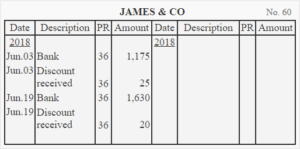
- Discount allowed column: on the debit side.
- Discount received column: on the credit side.
- Discount columns: memoranda columns, and their periodic totals are posted to the discount accounts in the ledger.
Behavioural objectives
- Describe the layout of a three-column cash book.
- State on which side the discounts allowed and discounts received columns appear.
- Explain why the discount columns are memoranda columns.
- Record cash, bank, discount and contra entries in a three-column cash book.
- Explain how the discount columns are totalled and posted to the ledger.
What is a three-column cash book?
A three-column cash book is a cash book that records cash, bank and discount figures in one book.
- Cash book: a book of original entry that records all receipts and payments of cash and cheques.
- Three-column cash book: a cash book with discount, cash and bank columns on both sides.
- Double entry: the principle applies as in other cash books, so receipts go on the debit side and payments on the credit side.
- Memoranda columns: the discount columns look like account columns, but they only collect figures for later posting.
What are the types of cash book?
There are four common types of cash book: single-column, two-column, three-column and petty cash book.
- Single-column cash book: has one money column, for cash only.
- Two-column cash book: has cash and bank columns on each side.
- Three-column cash book: adds a discount column to the cash and bank columns on each side.
- Petty cash book: records small day-to-day payments such as transport and stamps.
What are the two types of discount?
There are two types of cash discount: discount allowed and discount received.
- Discount allowed: a reduction a business gives to a customer (debtor) who pays promptly.
- Discount received: a reduction a business gets from a supplier (creditor) when it pays promptly.
| Item | Discount allowed | Discount received |
|---|---|---|
| Meaning | Cash discount given to a customer (debtor) for prompt payment | Cash discount got from a supplier (creditor) for prompt payment |
| Side in cash book | Debit side | Credit side |
| Nature | An expense to the business | A gain to the business |
| Ledger account | Discount Allowed Account | Discount Received Account |
| Total posted to | Debit side of Discount Allowed Account | Credit side of Discount Received Account |
What is the layout of a three-column cash book?
The layout has a debit side for receipts and a credit side for payments, each with six columns.
Debit side (receipts)
- Date: the day of the transaction.
- Details: the name of the account affected, such as the customer.
- Folio: the ledger page number of the other account.
- Discount allowed: memorandum column for discounts given to customers.
- Cash: cash received.
- Bank: cheques and money paid into the bank.
Credit side (payments)
- Date, Details and Folio: same use as on the debit side.
- Discount received: memorandum column for discounts got from suppliers.
- Cash: cash paid out.
- Bank: cheques issued and money taken out of the bank.
What is a contra entry?
A contra entry is a transaction with both its debit and credit in the same cash book.
- Cash paid into bank: debit the bank column and credit the cash column.
- Cash withdrawn from bank for office use: debit the cash column and credit the bank column.
- Folio mark: write the letter C in the folio column, because no ledger posting is needed.
How do we record transactions in the three-column cash book?
- Enter the opening cash and bank balances on the debit side as balances brought down (b/d).
- Enter money received in the cash or bank column on the debit side.
- Enter any discount allowed in the discount column on the debit side, on the same line as the receipt.
- Enter payments in the cash or bank column on the credit side.
- Enter any discount received in the discount column on the credit side, on the same line as the payment.
- Record contra entries on both sides and mark them C.
How do we balance the cash and bank columns?
To balance a column, find the difference between its two sides and carry it down as the new balance.
- Add the cash column on each side and the bank column on each side.
- Find the difference between the two sides of each column.
- Write the difference on the side with the smaller total as balance carried down (c/d).
- Write the same total on both sides of the column and rule off.
- Bring the balance down (b/d) on the opposite side, below the totals.
- Normal balance: the debit side is larger, so the balance c/d is on the credit side and b/d is on the debit side.
- Bank overdraft: if the bank credit side is larger, the balance b/d is on the credit side.
What is a worked example of a three-column cash book?
This example records six transactions for January, then balances the book.
- 1 January: opening balances were cash N5,000 and bank N20,000.
- 3 January: received a cheque of N4,750 from A. Bello, after allowing him N250 discount.
- 4 January: cash sales of N3,000.
- 5 January: paid C. Okoro N4,500 in cash, after receiving N500 discount.
- 6 January: paid N3,000 cash into the bank.
- 8 January: paid rent of N2,000 by cheque.
Debit side
| Date | Details | Folio | Discount allowed (N) | Cash (N) | Bank (N) |
|---|---|---|---|---|---|
| Jan 1 | Balances b/d | 5,000 | 20,000 | ||
| Jan 3 | A. Bello | 250 | 4,750 | ||
| Jan 4 | Sales | 3,000 | |||
| Jan 6 | Cash | C | 3,000 | ||
| Total | 250 | 8,000 | 27,750 |
Credit side
| Date | Details | Folio | Discount received (N) | Cash (N) | Bank (N) |
|---|---|---|---|---|---|
| Jan 5 | C. Okoro | 500 | 4,500 | ||
| Jan 6 | Bank | C | 3,000 | ||
| Jan 8 | Rent | 2,000 | |||
| Jan 8 | Balances c/d | 500 | 25,750 | ||
| Total | 500 | 8,000 | 27,750 |
- Balances b/d (9 January): cash N500 and bank N25,750 on the debit side.
- Discount allowed total: N250, posted to the debit of the Discount Allowed Account.
- Discount received total: N500, posted to the credit of the Discount Received Account.
How are the discount columns treated?
The discount columns are totalled and not balanced.
- Add the discount columns weekly or monthly, when the cash and bank columns are balanced and ruled off.
- Take the totals of the discount columns to the discount accounts in the ledger.
- Enter each total on the same side of the discount account as it appears in the cash book.
Why are they totalled and not balanced?
- Different items: discounts allowed and discounts received are separate things, so one cannot be set against the other.
- No balance carried down: only the cash and bank columns have balances to carry down.
- Posting: the totals are needed to complete the double entry in the ledger.
How does double entry work for discounts?
Each discount is entered twice: once in the personal account and once, as a periodic total, in the discount account.
| Discount | Entry in the personal account (each transaction) | Entry in the discount account (periodic total) |
|---|---|---|
| Allowed | Credit the customer’s account | Debit Discount Allowed Account |
| Received | Debit the supplier’s account | Credit Discount Received Account |
- A. Bello (example): credit his account with N4,750 cash and N250 discount, so his debt is cleared.
- C. Okoro (example): debit his account with N4,500 cash and N500 discount, so the debt is cleared.
Evaluation
- On which side of the three-column cash book is the discounts allowed column?
- On which side is the discounts received column?
- Why are the discount columns called memoranda columns?
- When are the discount columns added?
- Where are the totals of the discount columns taken to, and on which side are they entered?
Assignment
- Explain, in your own words, why the discount columns in a three-column cash book are totalled and not balanced.
This term's Financial Accounting topics
SS1 Second Term · 6 topics
Get Financial Accounting as PDF and Word
Every week of SS1 Financial Accounting, Second Term, formatted and ready to print. Ad-free, and the copy lock comes off.
Get this term Card, bank transfer, USSD or OPay
SS1 Financial Accounting Lesson Notes for Other Topics

PETTY CASH BOOK
Read the full lesson note.

Trial Balance
Read the full lesson note.

Accounting Concepts And Convention
Read the full lesson note.

Final Account Of A Sole Trader
Read the full lesson note.
Balance Sheet
Read the full lesson note.

Introduction To Accounting And Its History
Read the full lesson note.

Advantages And Limitations Of Accounting
Read the full lesson note.

Career Opportunities In Bookkeeping And Accounting
Read the full lesson note.
Accounting Equation And Double Entry Principle
Read the full lesson note.

The Ledger
Read the full lesson note.

The Cash Book
Read the full lesson note.

Discounts
Read the full lesson note.

Introduction To Depreciation Of Fixed Assets
Read the full lesson note.

Methods Of Depreciation
Read the full lesson note.
Departmental Accounts
Read the full lesson note.
Lesson Notes for Other Classes

SS2 Lesson Note
The complete lesson note to guide your studies.

SS3 Lesson Note
The complete lesson note to guide your studies.
