
The Resurrection – SS1 Christian Religious Studies Lesson Note (Third Term)
Download this term · ₦1,000Lesson note at a glance
- Subject
- Christian Religious Studies
- Class
- SS1
- Term
- Third Term
- Topic
- The Resurrection
- Order
- Topic 7 of 8 this term
- Reading time
- 5 min
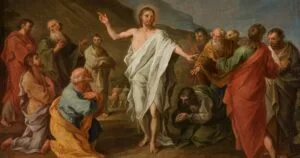
Resurrection is the rising of a dead person back to life; the resurrection of Jesus Christ is the event in which God raised him from the dead on the third day.
Behavioural objectives
By the end of the lesson, students should be able to:
- explain the meaning of resurrection;
- describe the accounts of the resurrection of Jesus in the synoptic gospels;
- state the differences between the accounts of Matthew, Mark and Luke;
- state the significance of the resurrection of Jesus Christ for Christians;
- explain why Christians worship on Sunday and how baptism relates to the resurrection.
What is resurrection?
Resurrection means coming back to life after death.
- Meaning: a dead person is raised to life by the power of God.
- Jesus Christ: his resurrection showed his victory over death.
- Christian faith: it is the basis of Christian faith and the hope of salvation.
- Synoptic gospels: Matthew, Mark and Luke are called synoptic because they tell the story in a similar way.
What do the synoptic gospels say about the resurrection?
All three synoptic gospels record that women disciples went to the tomb on the first day of the week and found that Jesus had risen.
- Women named by Mark: Mary Magdalene, Mary the mother of James, and Salome.
- Purpose of the visit: in Mark and Luke, the women brought spices to embalm the body of Jesus.
- Result: they found the tomb empty and were told that he had risen.
What is Matthew’s account?
Matthew says an angel of the Lord announced the resurrection after a great earthquake.
- There was a great earthquake.
- The angel of the Lord came down from heaven.
- The angel rolled back the stone and sat upon it.
- The angel told the women that Jesus had risen from the dead.
What is Mark’s account?
Mark says the women met a young man in a white robe inside the tomb.
- The women wondered who would roll away the stone at the entrance of the tomb.
- They found that the stone had already been rolled away.
- Inside the tomb they saw a young man sitting on the right side, dressed in a white robe, and they were amazed.
- He told them: “Do not be amazed; you seek Jesus of Nazareth who was crucified. He has risen, he is not here; see the place where they laid him” (Mark 16:6).
- He told them to inform the disciples to meet Jesus in Galilee.
- The women left the tomb trembling and astonished, and said nothing to anybody.
Mark did not report any earthquake.
What is Luke’s account?
Luke’s account is like Mark’s, but he says two men in dazzling clothes spoke to the women.
- The women: they were perplexed about what had happened to the body of Jesus.
- The messengers: two men stood by them in dazzling apparel and told them of the resurrection.
- The disciples: when the women told them the news, they did not believe.
- Earthquake: Luke did not report any.
What are the differences between the accounts of Matthew, Mark and Luke?
The three accounts agree that the tomb was empty, but they differ in the details below.
| Point | Matthew | Mark | Luke |
|---|---|---|---|
| Earthquake | Reported | Not reported | Not reported |
| Messenger | One angel of the Lord | One young man in a white robe | Two men in dazzling apparel |
| Stone | Angel rolled it back and sat on it | Women found it already rolled away | Women found it already rolled away |
| Reaction of the women | Told the news to the disciples | Trembled, were astonished and told nobody | Told the disciples, who did not believe them |
What is the significance of the resurrection of Jesus Christ?
The resurrection is the centre of Christian belief because it confirms who Jesus is and what he promised.
- Basis of faith: without his resurrection, there would be no Christian faith.
- Son of God: God raised Jesus from the dead, thereby confirming him as His Son.
- Hope of salvation: the resurrection forms the basis of the Christian hope of salvation.
- Assurance of rising: as God raised Jesus, so will God raise every Christian who dies in the Lord.
- Living Lord: Christians serve a Lord who is alive, and hope for eternal life in the kingdom of God.
- Victory: it assures Christians of Christ’s victory over sin and death.
- Boldness in preaching: it gave the early apostles confidence to preach the gospel boldly.
- Fulfilled promise: it fulfilled all that Jesus had promised, which built the disciples’ trust in him.
Why do Christians worship on Sunday?
Christians worship on Sunday because Jesus rose from the dead on the first day of the week.
- Day of the Lord: the resurrection day became the day of the Lord and the day of salvation.
- Shift of day: worship moved from the Jewish Sabbath (Saturday) to the first day of the week, Sunday.
- Purpose: Sunday is a day of devotion to God and the most memorable day for Christians.
How does baptism relate to the resurrection?
Baptism by immersion symbolises dying to sin and rising with Christ.
- The person is dipped into the water: this symbolises dying to sin.
- The person is raised from the water: this symbolises rising in faith with Christ.
- The person begins a new life as a Christian.
Evaluation
- What is resurrection?
- Name the women who went to the tomb of Jesus, according to Mark.
- State two differences between the resurrection accounts of Matthew, Mark and Luke.
- Give three reasons why the resurrection of Jesus is important to Christians.
- How does baptism symbolise the death and resurrection of Christ?
Assignment
Explain why Christians worship on Sunday instead of the Jewish Sabbath, and give one reason from the resurrection of Jesus.
This term's Christian Religious Studies topics
SS1 Third Term · 8 topics
Get Christian Religious Studies (CRS) as PDF and Word
Every week of SS1 Christian Religious Studies (CRS), Third Term, formatted and ready to print. Ad-free, and the copy lock comes off.
Get this term Card, bank transfer, USSD or OPay
SS1 Christian Religious Studies (CRS) Lesson Notes for Other Topics

Humility
Read the full lesson note.
Effective Prayer
Read the full lesson note.

Living A Life Of Witnessing For Christ
Read the full lesson note.

Living A Life Of Witnessing For Christ II
Read the full lesson note.

The Christian Attitude Towards Persecution
Read the full lesson note.
Impartiality
Read the full lesson note.

The Second Coming Of Christ
Read the full lesson note.

Jesus As The Door And Good Shepherd
Read the full lesson note.
Jesus As The Living Bread And Water
Read the full lesson note.

Jesus - The True Vine
Read the full lesson note.

Jesus - The Light Of The World
Read the full lesson note.
Justification By Faith
Read the full lesson note.

New Life In Christ
Read the full lesson note.

God's Love For Man And Man's Love For One Another
Read the full lesson note.

Sonship
Read the full lesson note.
Lesson Notes for Other Classes

SS2 Lesson Note
The complete lesson note to guide your studies.

SS3 Lesson Note
The complete lesson note to guide your studies.
