
The Christian Attitude Towards Persecution – SS1 Christian Religious Studies Lesson Note (Third Term)
Download this term · ₦1,000Lesson note at a glance
- Subject
- Christian Religious Studies
- Class
- SS1
- Term
- Third Term
- Topic
- The Christian Attitude Towards Persecution
- Order
- Topic 5 of 8 this term
- Reading time
- 4 min
Persecution is the ill-treatment of a person or group of people because of their beliefs.
Behavioural objectives
- Define persecution.
- State the forms persecution can take.
- State why Christians are persecuted.
- Explain St. Peter’s teaching on how Christians should respond to persecution.
- Describe how Jesus and the early Christians responded to persecution.
- List the lessons Christians learn from persecution.
What is persecution?
Persecution is the cruel or unfair treatment of people because of their religious or political beliefs.
- Meaning: molesting a person or group of people, which may lead to the death of the victim.
- Causes: a person’s religious or political beliefs.
- Christian focus: Christians suffer because of their faith, determination, boldness and full commitment to God’s service.
What are the forms of persecution?
There are five common forms of persecution: harassment, intimidation, oppression, imprisonment and physical assault.
- Harassment: repeated troubling or insulting of believers.
- Intimidation: threats meant to frighten believers into giving up their faith.
- Oppression: unfair treatment, such as denying believers jobs or rights.
- Imprisonment: locking believers up, as happened to Peter and Paul in Acts.
- Physical assault: beating or wounding, which may end in death, as with Stephen (Acts 7).
Why are Christians persecuted?
Christians are persecuted because their faith and way of life differ from those of the people around them.
- Uncompromising attitude: Christians refuse to copy wrong behaviour around them.
- Refusal to yield to worldly passion: they see it as dangerous to their spiritual growth.
- Different way of life: their holy living shows up the wrongdoing of others, who then resent them.
- Boldness in the faith: they speak openly about Christ and serve God fully.
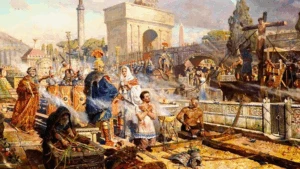
What is the Christian attitude towards persecution?
St. Peter teaches that Christians should accept persecution calmly, rejoice, and suffer only for doing right.
1. Accept trials as a test of faith
- Trials are expected: St. Peter says Christians may have to suffer various trials (1 Peter 1:6-7; 4:12).
- Purpose: the trials test the genuineness of their faith.
- Reward: their endurance brings praise, honour and glory at the revelation of Jesus Christ.
2. Rejoice in the face of persecution
- Reason to rejoice: believers share in the sufferings of Christ (1 Peter 4:13).
- Faith in the unseen: they have not seen Christ, yet they love him and believe in him (1 Peter 1:8).
- Outcome: the result of their faith is the salvation of their souls.
3. How is the faith of a Christian like gold?
Gold is passed through fire to remove impurities, and the faith of a Christian is passed through trials to prove that it is genuine.
| Gold | Faith of a Christian |
|---|---|
| Passes through fire to be refined. | Passes through persecution to be tested. |
| Fire removes impurities. | Trials show that the faith is genuine. |
| Refined gold is of greater value. | Tested faith qualifies for honour and glory. |
4. Suffer for the right reason
- Suffering as a Christian: a believer should glorify God and should not be ashamed (1 Peter 4:16).
- Suffering as a wrongdoer: a believer must not suffer as a murderer, thief or troublemaker (1 Peter 4:15).
- Trust in God: believers should keep doing good and commit themselves to their faithful Creator (1 Peter 4:19).
How did Jesus and the early Christians respond to persecution?
Jesus and the early Christians met persecution with joy, prayer and forgiveness instead of revenge.
- Jesus’ teaching: those persecuted for doing right are blessed (Matthew 5:10-12).
- Love for enemies: Jesus told his followers to love their enemies and pray for those who persecute them (Matthew 5:44).
- Christ’s example: when insulted, he did not insult back, and Christians are to follow his steps (1 Peter 2:21-23).
- The apostles: after being beaten, they rejoiced to be counted worthy to suffer for Jesus’ name (Acts 5:41).
- Stephen: he prayed for the people who were stoning him (Acts 7:60).
- Paul and Silas: they prayed and sang hymns to God in prison (Acts 16:25).
What lessons does persecution teach Christians?
Persecution teaches Christians to stay holy, stay faithful and trust God.
- Christians should not conform to carnal and worldly desires.
- They should be sober and holy, because God is holy and they must try to live holy lives.
- They should not be ashamed to share in the sufferings of Jesus Christ. They should glorify God.
- Persecution tests the genuineness of the faith of Christians.
- It is better to suffer for the sake of Christ than to suffer as a criminal.
Evaluation
- What is persecution?
- List three forms of persecution.
- Why are Christians persecuted?
- According to St. Peter, why should Christians rejoice when they are persecuted?
- State three lessons Christians learn from persecution.
Assignment
- Explain, in your own words, how the refining of gold in fire compares with the persecution of Christians.
This term's Christian Religious Studies topics
SS1 Third Term · 8 topics
- Humility
- Effective Prayer
- Living a Life of Witnessing for Christ
- Living a Life of Witnessing for Christ II
- The Christian Attitude Towards Persecution
- Impartiality
- The Resurrection
- The Second Coming of Christ
Get Christian Religious Studies (CRS) as PDF and Word
Every week of SS1 Christian Religious Studies (CRS), Third Term, formatted and ready to print. Ad-free, and the copy lock comes off.
Get this term Card, bank transfer, USSD or OPay
SS1 Christian Religious Studies (CRS) Lesson Notes for Other Topics

Humility
Read the full lesson note.
Effective Prayer
Read the full lesson note.

Living A Life Of Witnessing For Christ
Read the full lesson note.

Living A Life Of Witnessing For Christ II
Read the full lesson note.

Impartiality
Read the full lesson note.
The Resurrection
Read the full lesson note.

The Second Coming Of Christ
Read the full lesson note.

Jesus As The Door And Good Shepherd
Read the full lesson note.

Jesus As The Living Bread And Water
Read the full lesson note.

Jesus - The True Vine
Read the full lesson note.

Jesus - The Light Of The World
Read the full lesson note.

Justification By Faith
Read the full lesson note.

New Life In Christ
Read the full lesson note.

God's Love For Man And Man's Love For One Another
Read the full lesson note.

Sonship
Read the full lesson note.
Lesson Notes for Other Classes

SS2 Lesson Note
The complete lesson note to guide your studies.

SS3 Lesson Note
The complete lesson note to guide your studies.
