
Simple Machine – JSS3 Basic Science Lesson Note (Third Term)
Download this term · ₦1,000Lesson note at a glance
- Subject
- Basic Science
- Class
- JSS3
- Term
- Third Term
- Topic
- Simple Machine
- Order
- Topic 5 of 5 this term
- Reading time
- 5 min
A simple machine is a device that makes work easier by using a small effort at one point to overcome a load at another point.
Behavioural objectives
By the end of the lesson, students should be able to:
- define a simple machine and give examples;
- list the six types of simple machine;
- name the three parts of a lever;
- describe the three orders of lever and give an example of each;
- state the uses of the wheel and axle, pulley, wedge, screw and inclined plane.
What is a simple machine?
A machine is a tool or device that makes work easier by using a force (effort) at one point to overcome a resisting force (load) at another point.
- Effort: the force we apply to the machine.
- Load: the resisting force or weight the machine moves.
- Examples of machines: a plier, the human arm, a gear and a pulley.
How do machines make work easier?
- Smaller effort: a small force can move a large load.
- Change of direction: a pulley lets us pull down to lift a load up.
- Convenience: a ramp makes it easier to move a drum onto a truck.
What is mechanical advantage?
Mechanical advantage (MA) is the number of times a machine multiplies the effort applied to it.
- Formula: MA = load ÷ effort.
- Unit: none, because it is a ratio of two forces.
- Example: a load of 200 N lifted with an effort of 50 N gives MA = 200 ÷ 50 = 4.
What are the types of simple machine?
There are six types of simple machine: lever, wheel and axle, pulley, wedge, inclined plane and screw.
| Machine | Main use | Everyday example |
|---|---|---|
| Lever | Lifts or moves a load about a fulcrum | Scissors, wheelbarrow |
| Wheel and axle | Turns or draws up loads | Bicycle, wagon |
| Pulley | Lifts loads and changes the direction of pull | Crane, lift |
| Wedge | Splits or separates objects | Axe, chisel |
| Inclined plane | Raises or lowers a load over a slope | Ramp, sloping plank |
| Screw | Fastens and holds objects together | Wood screw, bottle cap |
What is a lever?
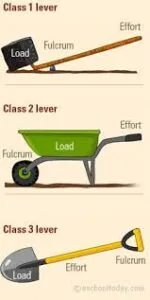
A lever is a stiff bar that rests on a pivot (the fulcrum), with a load at one point and an effort applied at another.
What are the parts of a lever?
A lever has three parts: the load, the effort and the fulcrum.
- Load: the point of the resisting force.
- Effort: the point where force is applied.
- Fulcrum: the turning point (pivot) of the lever.
What are the types of lever?
There are three orders (classes) of lever: first order, second order and third order.
- First order lever: the fulcrum is between the load and the effort (L F E). Examples: scissors, claw hammer, seesaw.
- Second order lever: the load is between the fulcrum and the effort (F L E). Examples: wheelbarrow, nutcracker, bottle opener.
- Third order lever: the effort is between the fulcrum and the load (F E L). Examples: forearm, tweezers, fishing rod.
| Order | Part in the middle | Arrangement | Examples |
|---|---|---|---|
| First | Fulcrum | Load, Fulcrum, Effort | Scissors, claw hammer, seesaw |
| Second | Load | Fulcrum, Load, Effort | Wheelbarrow, nutcracker, bottle opener |
| Third | Effort | Fulcrum, Effort, Load | Forearm, tweezers, fishing rod |
What is a wheel and axle?
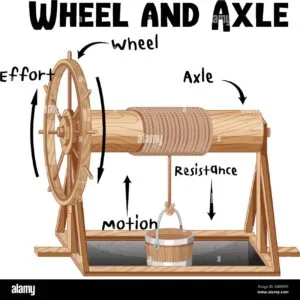
A wheel and axle is a simple machine made of a large wheel fixed to a smaller axle, both turning on the same axis.
- Effort position: the effort is usually applied to the large wheel.
- Effect: the axle turns with a larger force than the effort applied.
- Examples: bicycle, wagon, steering wheel, door knob and the winch over a well.
What are the uses of the wheel and axle?
- Drawing loads: it draws out heavy loads from depths, such as a bucket of water from a well.
- Turning effect: it creates the turning effect in a bicycle.
What is a pulley?
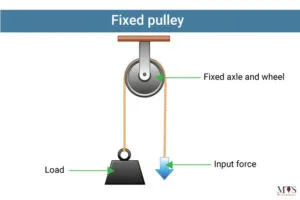
A pulley is a wheel with a groove over which a rope or chain runs, used to lift loads.
- Direction: it changes the direction of the pull.
- Combination: two or more pulleys working together reduce the force needed to lift a load.
What are the uses of the pulley?
- Cranes: it lifts and moves loads on building sites.
- Lifts (elevators): it helps raise and lower the lift car.
What is a wedge?
A wedge is a triangular tool that works as a portable inclined plane.
- Separating: it separates two objects or parts of an object.
- Lifting: it can lift an object.
- Holding: it can hold an object in place, as a door stop does.
- Examples: axe, knife, chisel and nail.
What is the use of the wedge?
- Splitting: it splits objects open, especially wood.

Cross-section of a splitting wedge with its length oriented vertically. Wedges are used to split things.
What is a screw?
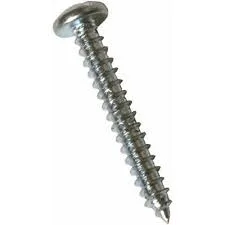
A screw is a fastener with a helical ridge, called a thread, that winds round a central shaft.
- Direction: most screws tighten when turned clockwise, and a few tighten when turned anticlockwise.
- Examples: wood screw, bolt, bottle cap and the screw jack.
What is the use of the screw?
- Fastening: it holds objects firmly together when turned into wood or other hard materials.
- Lifting: a screw jack uses it to raise heavy loads such as a car.
What is an inclined plane?
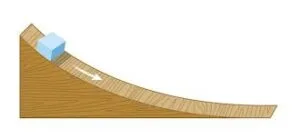
An inclined plane is a flat surface tilted at an angle, with one end higher than the other.
- Raising or lowering: it helps raise or lower a load.
- Obstacles: it is often used to move a load over a vertical obstacle.
- Examples: a ramp, a sloping plank onto a truck and a staircase.
Evaluation
- What is a machine?
- List the six types of simple machine.
- Name the three parts of a lever.
- Give one example each of a first order, second order and third order lever.
- State one use of a wedge.
Assignment
Describe the three orders of lever. For each order, state where the fulcrum, load and effort are placed and give one example.
This term's Basic Science topics
JSS3 Third Term · 5 topics
Get Basic Science as PDF and Word
Every week of JSS3 Basic Science, Third Term, formatted and ready to print. Ad-free, and the copy lock comes off.
Get this term Card, bank transfer, USSD or OPay
JSS3 Basic Science Lesson Notes for Other Topics

Family Life Education I - Teenage Pregnancy
Read the full lesson note.

Family Life Education II - Abortion
Read the full lesson note.
Radioactivity
Read the full lesson note.

Ethical Issues In Science And Development
Read the full lesson note.

Drug And Substance Abuse – I
Read the full lesson note.

Drug And Substance Abuse II
Read the full lesson note.

Family Traits
Read the full lesson note.
Environmental Hazard – Soil Erosion
Read the full lesson note.
Environmental Hazard – Bush Burning
Read the full lesson note.
Environmental Hazard – Flooding
Read the full lesson note.
Environmental Hazard – Deforestation
Read the full lesson note.
Environmental Hazard – Desertification
Read the full lesson note.
Resources From Living Things
Read the full lesson note.
Economic Importance Of Resources From Plants And Animals
Read the full lesson note.

Resources From Non-Living Things
Read the full lesson note.
Lesson Notes for Other Classes

JSS1 Lesson Note
The complete lesson note to guide your studies.

JSS2 Lesson Note
The complete lesson note to guide your studies.
